Asking People Nearby
สอบถามคนแถวนั้น
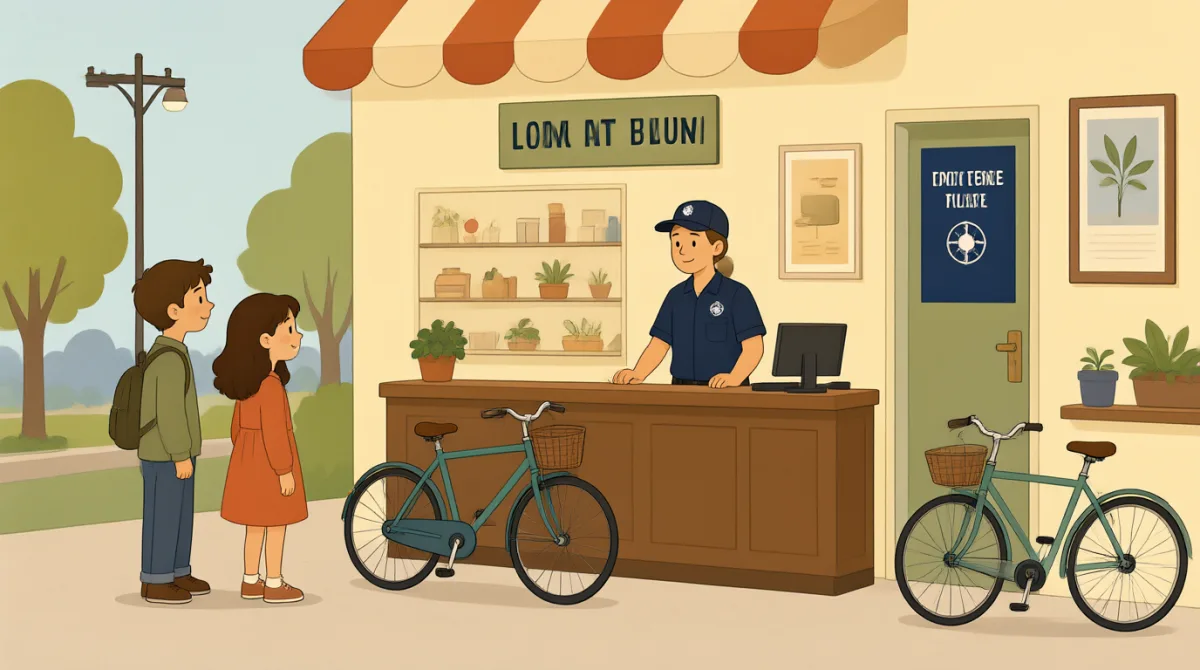
Leo and Emma ask a nearby shop worker if anyone saw the bike. They learn when it was last seen and decide to go to the police station.
ลีโอและเอ็มมาถามพนักงานร้านใกล้ ๆ ว่ามีใครเห็นจักรยานหรือไม่ ทั้งคู่รู้ว่ามีคนเห็นจักรยานครั้งสุดท้ายเมื่อไร แล้วตัดสินใจไปสถานีตำรวจ
บทสนทนา9

Hi, did you see a blue bike near the rack this morning?
สวัสดีครับ เมื่อเช้านี้คุณเห็นจักรยานสีน้ำเงินใกล้ที่จอดจักรยานไหมครับ

I work at the shop next door. What time did you leave it there?
ฉันทำงานอยู่ที่ร้านข้าง ๆ ค่ะ คุณจอดจักรยานไว้ตอนกี่โมงคะ
Around ten. I came back at noon, but it was gone.
ประมาณสิบโมงครับ ผมกลับมาตอนเที่ยง แต่จักรยานก็หายไปแล้ว

Did you notice anyone taking it, or see where they went?
คุณเห็นใครเอาจักรยานไปไหม หรือเห็นไหมว่าเขาไปทางไหน
I saw someone ride away on a blue bike around eleven thirty.
ฉันเห็นใครบางคนขี่จักรยานสีน้ำเงินออกไปประมาณสิบเอ็ดโมงครึ่งค่ะ
Was it a man or a woman? Did you see their face?
เป็นผู้ชายหรือผู้หญิงครับ คุณเห็นหน้าเขาไหม
I couldn't see their face. They wore a dark jacket and a helmet.
ฉันมองไม่เห็นหน้าค่ะ เขาใส่เสื้อแจ็กเก็ตสีเข้มกับหมวกกันน็อก
Thanks. We should go to the police station and report it now.
ขอบคุณนะ เราน่าจะไปสถานีตำรวจแล้วแจ้งความกันตอนนี้เลย
Okay. Can you come with me? I don't know what to bring.
ได้ เธอไปกับฉันได้ไหม ฉันไม่รู้ว่าต้องเอาอะไรไปบ้าง
คำศัพท์8
- next doorข้าง ๆ
This means in the building or place right beside another one. Here, Grace works at the shop beside the bike rack.
หมายถึงอยู่ในอาคารหรือสถานที่ที่ติดกัน ในบทสนทนานี้ เกรซทำงานอยู่ที่ร้านซึ่งอยู่ข้างที่จอดจักรยาน
- came backกลับมา
This means returned to a place. You can say, “I came back at noon” to explain when you returned.
หมายถึงกลับไปยังสถานที่แห่งหนึ่ง คุณพูดว่า “I came back at noon” เพื่อบอกว่ากลับมาตอนไหน
- it was goneหายไปแล้ว
This means something was no longer there. Use it to say that an item has disappeared.
หมายถึงของสิ่งนั้นไม่ได้อยู่ตรงนั้นอีกต่อไป ใช้คำนี้เพื่อบอกว่าของหายไป
- noticeสังเกตเห็น
To notice someone is to see or become aware of what they are doing. Ask, “Did you notice anyone?” when looking for information.
การสังเกตเห็นใครสักคนหมายถึงเห็นหรือรับรู้ว่าเขากำลังทำอะไรอยู่ เวลาต้องการข้อมูล คุณถามว่า “Did you notice anyone?” ได้
- ride awayขี่ออกไป
This means to leave while riding a bike or another vehicle. You can say, “She rode away” to describe someone leaving by bike.
หมายถึงออกไปโดยขี่จักรยานหรือยานพาหนะอื่น คุณพูดว่า “She rode away” เพื่อบรรยายว่ามีคนขี่จักรยานออกไป
- couldn't seeมองไม่เห็น
This means was not able to see. Use it to explain that something was difficult or impossible to see.
หมายถึงไม่สามารถมองเห็นได้ ใช้คำนี้อธิบายว่าอะไรบางอย่างมองเห็นได้ยากหรือมองไม่เห็นเลย
- police stationสถานีตำรวจ
This is a place where police officers work. People can go there to report a crime.
สถานที่ที่ตำรวจทำงาน ผู้คนไปที่นั่นเพื่อแจ้งความได้
- bringเอาไปด้วย
To bring something is to take it with you to a place. You can ask what to bring when you are not sure what you will need.
การเอาของไปด้วยหมายถึงนำของติดตัวไปยังสถานที่แห่งหนึ่ง ถ้าไม่แน่ใจว่าต้องใช้อะไร คุณถามได้ว่าควรเอาอะไรไปบ้าง
ประโยคสำคัญ8
- 1
Hi, did you see a blue bike near the rack this morning?
สวัสดีครับ เมื่อเช้านี้คุณเห็นจักรยานสีน้ำเงินใกล้ที่จอดจักรยานไหมครับ
Use this question to ask if someone saw a specific item at a particular time and place. Change “a blue bike” and “this morning” to fit your situation.
ใช้คำถามนี้ถามว่ามีใครเห็นของชิ้นหนึ่งในสถานที่และช่วงเวลาที่ระบุหรือไม่ เปลี่ยน “a blue bike” และ “this morning” ให้ตรงกับสถานการณ์ของคุณได้
- 2
What time did you leave it there?
คุณจอดจักรยานไว้ตอนกี่โมงคะ
This asks when someone left an item in a place. You can use the same question to ask about a bag, phone, or other object.
ใช้ถามว่าใครบางคนวางของไว้ที่ไหนสักแห่งตอนกี่โมง คุณใช้คำถามเดียวกันนี้ถามเรื่องกระเป๋า โทรศัพท์ หรือของอย่างอื่นได้
- 3
I came back at noon, but it was gone.
ผมกลับมาตอนเที่ยง แต่จักรยานก็หายไปแล้ว
This explains when you returned and that the item was missing. Replace “at noon” with another time to give a clear timeline.
ประโยคนี้บอกว่าคุณกลับมาตอนไหนและของหายไปแล้ว เปลี่ยน “at noon” เป็นเวลาอื่นเพื่อบอกลำดับเหตุการณ์ให้ชัดเจนได้
- 4
Did you notice anyone taking it, or see where they went?
คุณเห็นใครเอาจักรยานไปไหม หรือเห็นไหมว่าเขาไปทางไหน
Use this to ask whether someone saw a person take something or where that person went. It is useful when asking witnesses for details.
ใช้ถามว่ามีใครเห็นคนเอาของไปหรือเห็นว่าคนนั้นไปทางไหนหรือไม่ เหมาะสำหรับถามพยานเพื่อขอรายละเอียด
- 5
I couldn't see their face.
ฉันมองไม่เห็นหน้าเขาค่ะ
This is a simple way to explain that you could not identify someone. You can replace “their face” with another detail you could not see.
เป็นวิธีง่าย ๆ ที่ใช้บอกว่าคุณระบุตัวใครบางคนไม่ได้ คุณเปลี่ยน “their face” เป็นรายละเอียดอย่างอื่นที่คุณมองไม่เห็นได้
- 6
We should go to the police station and report it now.
เราน่าจะไปสถานีตำรวจแล้วแจ้งความกันตอนนี้เลย
Use “We should” to suggest an action. You can replace “report it” with another useful step, such as “call the shop.”
ใช้ “We should” เพื่อเสนอว่าควรทำอะไร คุณเปลี่ยน “report it” เป็นขั้นตอนอื่นที่มีประโยชน์ได้ เช่น “call the shop”
- 7
Can you come with me?
เธอไปกับฉันได้ไหม
This is a polite, everyday way to ask someone to go somewhere with you. Change “with me” to “with us” when inviting more than one person.
เป็นวิธีถามแบบสุภาพที่ใช้กันทั่วไปเมื่อต้องการชวนใครไปที่ไหนด้วยกัน ถ้าชวนมากกว่าหนึ่งคน ให้เปลี่ยน “with me” เป็น “with us”
- 8
I don't know what to bring.
ฉันไม่รู้ว่าต้องเอาอะไรไปบ้าง
Use this to say you are unsure which things to take with you. It is useful before going to an appointment or office.
ใช้ประโยคนี้บอกว่าคุณไม่แน่ใจว่าควรเอาของอะไรติดตัวไปด้วย เหมาะสำหรับใช้ก่อนเดินทางไปนัดหมายหรือสำนักงาน