Asking People Nearby
কাছাকাছি লোকজনকে জিজ্ঞাসা করা
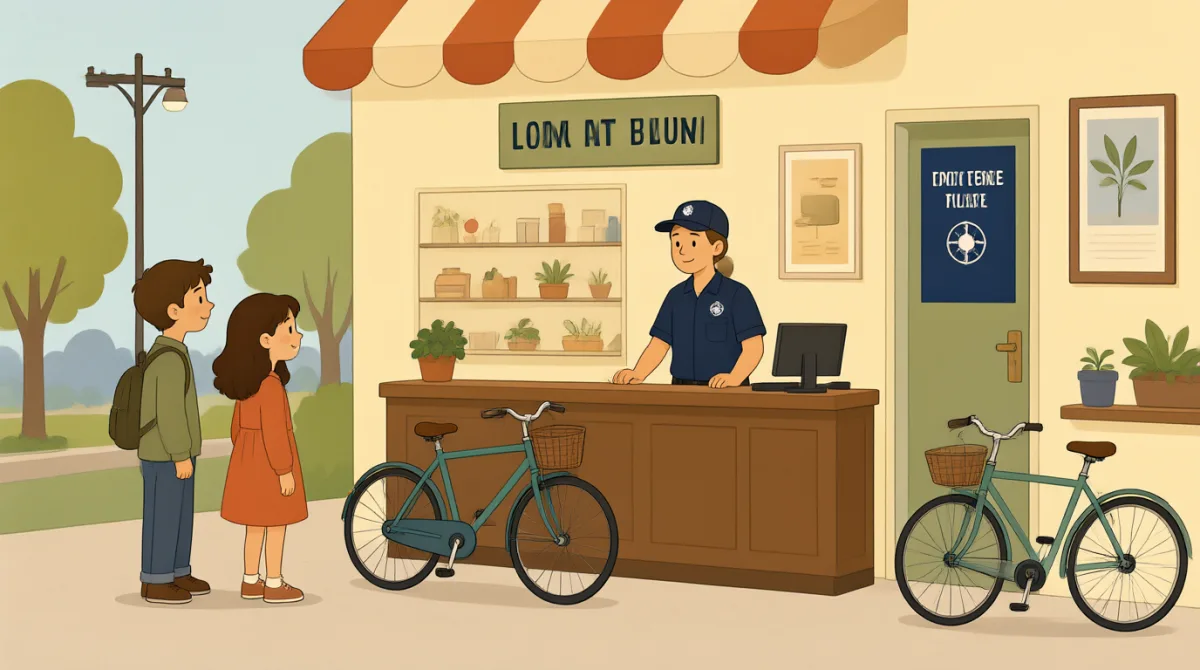
Leo and Emma ask a nearby shop worker if anyone saw the bike. They learn when it was last seen and decide to go to the police station.
লিও ও এমা কাছের একটি দোকানের কর্মীকে জিজ্ঞাসা করে কেউ সাইকেলটি দেখেছে কি না। তারা জানতে পারে সাইকেলটি শেষ কখন দেখা গিয়েছিল এবং থানায় যাওয়ার সিদ্ধান্ত নেয়।
সংলাপ9

Hi, did you see a blue bike near the rack this morning?
হ্যালো, আজ সকালে স্ট্যান্ডের কাছে একটা নীল সাইকেল দেখেছেন?

I work at the shop next door. What time did you leave it there?
আমি পাশের দোকানে কাজ করি। আপনি ওটা কখন সেখানে রেখেছিলেন?
Around ten. I came back at noon, but it was gone.
দশটার দিকে। দুপুরে ফিরে এসে দেখি, ওটা আর নেই।

Did you notice anyone taking it, or see where they went?
কেউ ওটা নিয়ে যাচ্ছে খেয়াল করেছিলেন, বা দেখেছিলেন সে কোন দিকে গেছে?
I saw someone ride away on a blue bike around eleven thirty.
সাড়ে এগারোটার দিকে কাউকে একটা নীল সাইকেল চালিয়ে চলে যেতে দেখেছিলাম।
Was it a man or a woman? Did you see their face?
লোকটা পুরুষ ছিল, না নারী? তার মুখ দেখেছিলেন?
I couldn't see their face. They wore a dark jacket and a helmet.
তার মুখ দেখতে পাইনি। গায়ে গাঢ় রঙের জ্যাকেট আর মাথায় হেলমেট ছিল।
Thanks. We should go to the police station and report it now.
ধন্যবাদ। আমাদের এখন থানায় গিয়ে রিপোর্ট করা উচিত।
Okay. Can you come with me? I don't know what to bring.
ঠিক আছে। তুমি কি আমার সঙ্গে যেতে পারবে? কী নিয়ে যেতে হবে জানি না।
শব্দভান্ডার8
- next doorপাশের
This means in the building or place right beside another one. Here, Grace works at the shop beside the bike rack.
“next door” বলতে ঠিক পাশের ভবন বা জায়গাকে বোঝায়। এখানে গ্রেস সাইকেল রাখার জায়গার পাশের দোকানে কাজ করেন।
- came backফিরে এসেছিলাম
This means returned to a place. You can say, “I came back at noon” to explain when you returned.
“came back” মানে কোনো জায়গায় ফিরে আসা। কখন ফিরেছিলেন তা জানাতে বলতে পারেন, “I came back at noon”।
- it was goneওটা আর ছিল না
This means something was no longer there. Use it to say that an item has disappeared.
“it was gone” মানে কোনো জিনিস সেখানে আর ছিল না। কোনো জিনিস হারিয়ে গেছে বোঝাতে এই কথাটি ব্যবহার করুন।
- noticeখেয়াল করা
To notice someone is to see or become aware of what they are doing. Ask, “Did you notice anyone?” when looking for information.
কাউকে “notice” করা মানে তাকে কিছু করতে দেখা বা তার কাজ সম্পর্কে সচেতন হওয়া। কোনো তথ্য জানতে চাইলে জিজ্ঞাসা করুন, “Did you notice anyone?”
- ride awayসাইকেল চালিয়ে চলে যাওয়া
This means to leave while riding a bike or another vehicle. You can say, “She rode away” to describe someone leaving by bike.
“ride away” মানে সাইকেল বা অন্য কোনো যান চালিয়ে চলে যাওয়া। কেউ সাইকেলে চলে গেছে বোঝাতে বলতে পারেন, “She rode away”।
- couldn't seeদেখতে পাইনি
This means was not able to see. Use it to explain that something was difficult or impossible to see.
“couldn't see” মানে দেখতে সক্ষম ছিলাম না। কোনো কিছু দেখা কঠিন বা অসম্ভব ছিল বোঝাতে এটি ব্যবহার করুন।
- police stationথানা
This is a place where police officers work. People can go there to report a crime.
“police station” হলো সেই জায়গা যেখানে পুলিশ কাজ করেন। কোনো অপরাধের খবর জানাতে মানুষ সেখানে যেতে পারেন।
- bringনিয়ে যাওয়া
To bring something is to take it with you to a place. You can ask what to bring when you are not sure what you will need.
কোনো কিছু “bring” করা মানে সেটি সঙ্গে করে কোনো জায়গায় নিয়ে যাওয়া। কী লাগবে নিশ্চিত না হলে জিজ্ঞাসা করতে পারেন, কী নিয়ে যেতে হবে।
গুরুত্বপূর্ণ বাক্য8
- 1
Hi, did you see a blue bike near the rack this morning?
হ্যালো, আজ সকালে স্ট্যান্ডের কাছে একটা নীল সাইকেল দেখেছেন?
Use this question to ask if someone saw a specific item at a particular time and place. Change “a blue bike” and “this morning” to fit your situation.
নির্দিষ্ট সময়ে ও জায়গায় কেউ কোনো নির্দিষ্ট জিনিস দেখেছেন কি না জানতে এই প্রশ্নটি করুন। আপনার পরিস্থিতি অনুযায়ী “a blue bike” এবং “this morning” বদলে নিতে পারেন।
- 2
What time did you leave it there?
আপনি ওটা কখন সেখানে রেখেছিলেন?
This asks when someone left an item in a place. You can use the same question to ask about a bag, phone, or other object.
কেউ কোনো জিনিস কোথায় কখন রেখে গেছেন, তা জানতে এই প্রশ্নটি করা হয়। ব্যাগ, ফোন বা অন্য কোনো জিনিস সম্পর্কেও একইভাবে জিজ্ঞাসা করতে পারেন।
- 3
I came back at noon, but it was gone.
দুপুরে ফিরে এসে দেখি, ওটা আর নেই।
This explains when you returned and that the item was missing. Replace “at noon” with another time to give a clear timeline.
এতে আপনি কখন ফিরে এসেছেন এবং জিনিসটি সেখানে ছিল না—দুটিই বোঝানো হয়। সময়টি স্পষ্ট করে জানাতে “at noon”-এর বদলে অন্য কোনো সময় বলতে পারেন।
- 4
Did you notice anyone taking it, or see where they went?
কেউ ওটা নিয়ে যাচ্ছে খেয়াল করেছিলেন, বা দেখেছিলেন সে কোন দিকে গেছে?
Use this to ask whether someone saw a person take something or where that person went. It is useful when asking witnesses for details.
কেউ কোনো ব্যক্তিকে কিছু নিতে বা সেই ব্যক্তি কোন দিকে গেছে, তা দেখেছেন কি না জানতে এই প্রশ্নটি করুন। কোনো ঘটনার সাক্ষীর কাছ থেকে বিস্তারিত জানতে এটি কাজে লাগে।
- 5
I couldn't see their face.
তার মুখ দেখতে পাইনি।
This is a simple way to explain that you could not identify someone. You can replace “their face” with another detail you could not see.
কাউকে শনাক্ত করতে পারেননি বোঝানোর এটি একটি সহজ উপায়। যে বিষয়টি দেখতে পাননি, তা জানাতে “their face”-এর বদলে অন্য কোনো বিবরণ বলতে পারেন।
- 6
We should go to the police station and report it now.
আমাদের এখন থানায় গিয়ে রিপোর্ট করা উচিত।
Use “We should” to suggest an action. You can replace “report it” with another useful step, such as “call the shop.”
কোনো কাজের পরামর্শ দিতে “We should” ব্যবহার করুন। “report it”-এর বদলে “call the shop”-এর মতো অন্য কোনো করণীয় বসাতে পারেন।
- 7
Can you come with me?
তুমি কি আমার সঙ্গে যেতে পারবে?
This is a polite, everyday way to ask someone to go somewhere with you. Change “with me” to “with us” when inviting more than one person.
কাউকে আপনার সঙ্গে কোথাও যেতে বলার এটি একটি ভদ্র, দৈনন্দিন উপায়। একাধিক ব্যক্তিকে আমন্ত্রণ জানালে “with me”-এর বদলে “with us” বলুন।
- 8
I don't know what to bring.
কী নিয়ে যেতে হবে জানি না।
Use this to say you are unsure which things to take with you. It is useful before going to an appointment or office.
কোন জিনিসগুলো সঙ্গে নিতে হবে, তা নিয়ে নিশ্চিত নন—এ কথা জানাতে এই বাক্যটি ব্যবহার করুন। কোনো সাক্ষাৎ বা অফিসে যাওয়ার আগে এটি বলা কাজে লাগে।