The Air Conditioner Is Broken
เครื่องปรับอากาศเสีย
Emma explains that the air conditioner did not work last night. Grace checks the room details and looks for a solution.
เอ็มมาแจ้งว่าเครื่องปรับอากาศไม่ทำงานเมื่อคืน เกรซตรวจสอบรายละเอียดห้องพักและหาทางแก้ไข
บทสนทนา8
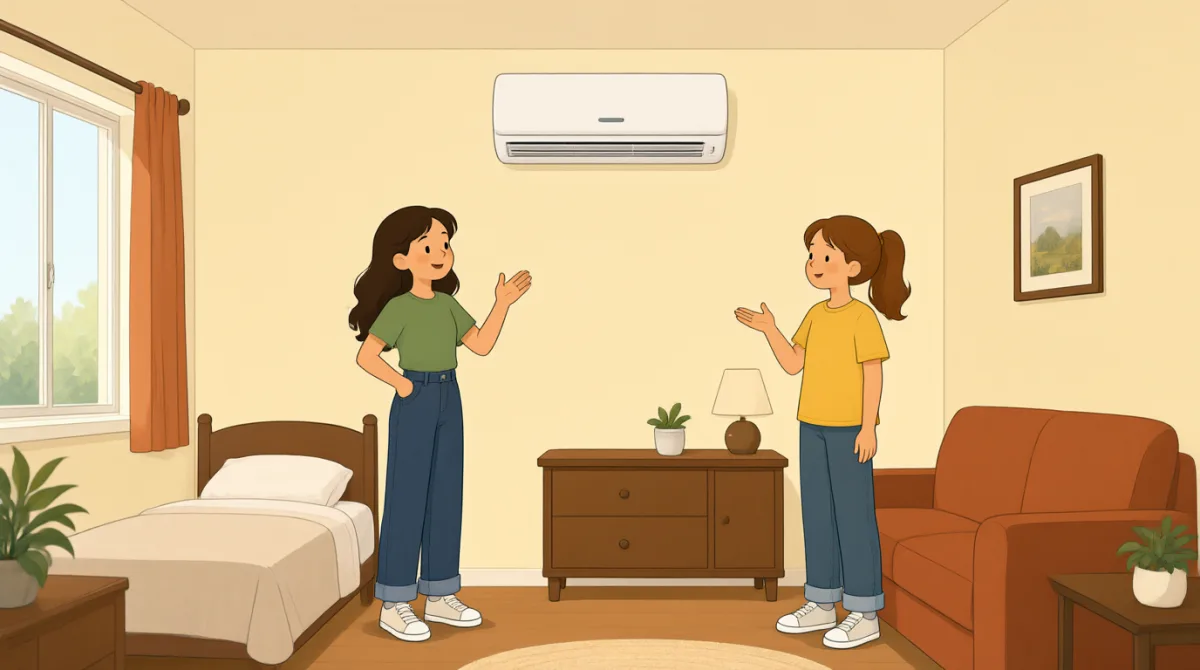

Good morning. The air conditioner in my room didn’t work last night.
สวัสดีค่ะ เครื่องปรับอากาศในห้องฉันไม่ทำงานเมื่อคืนค่ะ

I’m sorry about that. What room are you staying in?
ต้องขอโทษด้วยนะคะ พักอยู่ห้องไหนคะ
I’m in room 214. I tried to turn it on, but nothing happened.
ฉันพักอยู่ห้อง 214 ค่ะ ลองเปิดเครื่องแล้ว แต่ไม่มีอะไรเกิดขึ้นเลย
Thanks for telling me. Did you try the controls on the wall?
ขอบคุณที่แจ้งให้ทราบนะคะ ลองใช้แผงควบคุมบนผนังหรือยังคะ
Yes, I did. The screen was on, but no cool air came out.
ลองแล้วค่ะ หน้าจอติด แต่ไม่มีลมเย็นออกมาเลย
I understand. Was the room too warm for you last night?
เข้าใจแล้วค่ะ เมื่อคืนห้องร้อนเกินไปสำหรับคุณไหมคะ
Yes, it was hard to sleep. Could someone come and check it?
ใช่ค่ะ นอนหลับยากมาก พอจะให้ใครขึ้นไปตรวจดูได้ไหมคะ
Of course. I’ll ask our maintenance worker to come up and take a look.
ได้เลยค่ะ เดี๋ยวจะให้ช่างซ่อมบำรุงขึ้นไปดูให้นะคะ
คำศัพท์8
- air conditionerเครื่องปรับอากาศ
A machine that cools the air in a room. You can use this phrase when asking about cooling in a hotel room.
เครื่องที่ทำให้อากาศในห้องเย็นลง ใช้คำนี้เมื่อถามเรื่องการทำความเย็นในห้องพักโรงแรมได้
- didn’t workไม่ทำงาน
Means that something did not operate correctly. Use it to explain a problem with a machine or device.
หมายถึงอุปกรณ์ทำงานไม่ถูกต้อง ใช้คำนี้อธิบายปัญหาเกี่ยวกับเครื่องจักรหรืออุปกรณ์ได้
- turn it onเปิดเครื่อง
Means to start a machine or device. You can use it when talking about lights, air conditioners, or other equipment.
หมายถึงเริ่มใช้งานเครื่องหรืออุปกรณ์ ใช้พูดถึงการเปิดไฟ เครื่องปรับอากาศ หรืออุปกรณ์อื่น ๆ ได้
- nothing happenedไม่มีอะไรเกิดขึ้น
Means there was no result after you tried to do something. Use it to describe a device that does not respond.
หมายถึงไม่มีผลลัพธ์หลังจากที่ลองทำบางอย่าง ใช้บรรยายอุปกรณ์ที่ไม่ตอบสนองได้
- cool airลมเย็น
Air that feels cold or comfortably cool. You can use this phrase to describe what you expect an air conditioner to produce.
อากาศที่เย็นหรือเย็นสบาย ใช้คำนี้บอกสิ่งที่คาดหวังให้เครื่องปรับอากาศปล่อยออกมาได้
- hard to sleepนอนหลับยาก
Means difficult to sleep. Use it to explain how a problem, such as a warm room, affected your night.
หมายถึงหลับได้ลำบาก ใช้อธิบายว่าปัญหา เช่น ห้องร้อน ส่งผลต่อการนอนเมื่อคืนอย่างไรได้
- come upขึ้นไป
Means to go to a higher floor or to someone’s room. In a hotel, staff may come up to help a guest.
หมายถึงไปยังชั้นที่สูงขึ้นหรือไปยังห้องของใครสักคน ในโรงแรม พนักงานอาจขึ้นไปช่วยแขกได้
- take a lookตรวจดู
Means to examine or check something. You can ask someone to take a look at a problem.
หมายถึงตรวจสอบบางอย่าง ใช้ขอให้ใครช่วยตรวจดูปัญหาได้
ประโยคสำคัญ8
- 1
The air conditioner in my room didn’t work last night.
เครื่องปรับอากาศในห้องฉันไม่ทำงานเมื่อคืนค่ะ
This is a clear way to report a problem and say when it happened. You can replace “the air conditioner” with another item that did not work.
ประโยคนี้ใช้แจ้งปัญหาและบอกว่าเกิดขึ้นเมื่อไรได้อย่างชัดเจน คุณเปลี่ยน “the air conditioner” เป็นสิ่งของอื่นที่ไม่ทำงานได้
- 2
I tried to turn it on, but nothing happened.
ฉันลองเปิดเครื่องแล้ว แต่ไม่มีอะไรเกิดขึ้นเลยค่ะ
Use this sentence to explain what you did and what happened next. Replace “it” with the device you tried to use.
ใช้ประโยคนี้อธิบายว่าคุณทำอะไรและหลังจากนั้นเกิดอะไรขึ้น เปลี่ยน “it” เป็นอุปกรณ์ที่คุณลองใช้ได้
- 3
Did you try the controls on the wall?
ลองใช้แผงควบคุมบนผนังหรือยังคะ
This is a polite question to check what someone has already tried. You can use it when helping someone solve a problem.
นี่เป็นคำถามสุภาพเพื่อถามว่าอีกฝ่ายลองทำอะไรไปแล้วบ้าง ใช้ได้เมื่อต้องการช่วยใครแก้ปัญหา
- 4
The screen was on, but no cool air came out.
หน้าจอติด แต่ไม่มีลมเย็นออกมาเลยค่ะ
This sentence describes what seemed to work and what was still wrong. You can use “but” to contrast two details about a problem.
ประโยคนี้บอกว่าส่วนไหนดูเหมือนจะทำงาน และส่วนไหนยังมีปัญหา คุณใช้ “but” เพื่อแสดงความแตกต่างระหว่างรายละเอียดสองอย่างของปัญหาได้
- 5
Was the room too warm for you last night?
เมื่อคืนห้องร้อนเกินไปสำหรับคุณไหมคะ
This question asks whether the temperature caused discomfort. You can change “the room” or “last night” to ask about other situations.
คำถามนี้ถามว่าอุณหภูมิทำให้รู้สึกไม่สบายหรือไม่ คุณเปลี่ยน “the room” หรือ “last night” เพื่อถามถึงสถานการณ์อื่นได้
- 6
Yes, it was hard to sleep.
ใช่ค่ะ นอนหลับยากมาก
This is a simple way to explain how a problem affected you. You can use “It was hard to…” before an activity to describe a difficulty.
นี่เป็นวิธีง่าย ๆ ในการอธิบายว่าปัญหาส่งผลต่อคุณอย่างไร คุณใช้ “It was hard to…” นำหน้ากิจกรรมเพื่อบอกว่าทำสิ่งนั้นได้ยาก
- 7
Could someone come and check it?
พอจะให้ใครขึ้นไปตรวจดูได้ไหมคะ
This is a polite way to ask staff for help. Replace “it” with the item or problem you want someone to check.
นี่เป็นวิธีสุภาพในการขอความช่วยเหลือจากพนักงาน เปลี่ยน “it” เป็นสิ่งของหรือปัญหาที่ต้องการให้ตรวจดูได้
- 8
I’ll ask our maintenance worker to come up and take a look.
เดี๋ยวจะให้ช่างซ่อมบำรุงขึ้นไปดูให้นะคะ
This sentence explains what someone will do to help. You can reuse “I’ll ask [person] to…” when offering to arrange assistance.
ประโยคนี้อธิบายว่าอีกฝ่ายจะทำอะไรเพื่อช่วยเหลือ คุณนำ “I’ll ask [person] to…” ไปใช้ซ้ำเมื่อต้องการเสนอว่าจะจัดการขอความช่วยเหลือให้ได้