The Air Conditioner Is Broken
एयर कंडीशनर खराब है
Emma explains that the air conditioner did not work last night. Grace checks the room details and looks for a solution.
एमा बताती हैं कि पिछली रात उनके कमरे का एयर कंडीशनर काम नहीं कर रहा था। ग्रेस कमरे की जानकारी देखकर इसका समाधान ढूँढ़ती हैं।
संवाद8
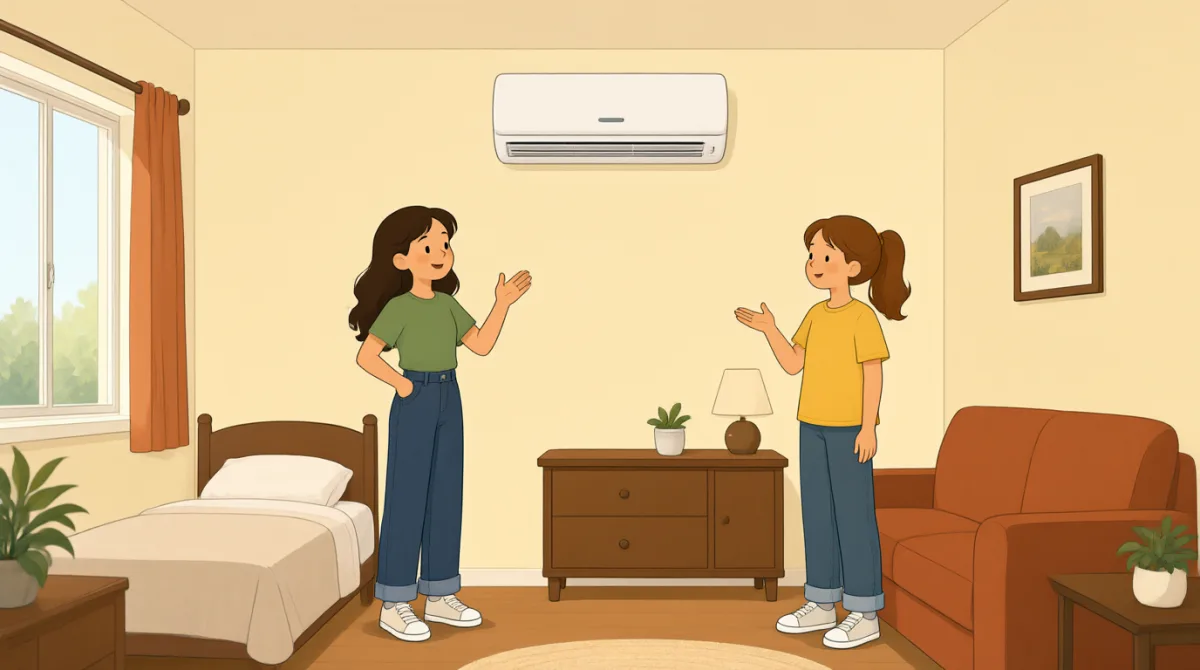

Good morning. The air conditioner in my room didn’t work last night.
सुप्रभात। पिछली रात मेरे कमरे का एयर कंडीशनर काम नहीं कर रहा था।

I’m sorry about that. What room are you staying in?
इसके लिए माफ़ कीजिए। आप किस कमरे में ठहरी हैं?
I’m in room 214. I tried to turn it on, but nothing happened.
मैं कमरा 214 में ठहरी हूँ। मैंने उसे चालू करने की कोशिश की, लेकिन कुछ नहीं हुआ।
Thanks for telling me. Did you try the controls on the wall?
बताने के लिए धन्यवाद। क्या आपने दीवार पर लगे कंट्रोल इस्तेमाल करके देखे?
Yes, I did. The screen was on, but no cool air came out.
जी, देखा था। स्क्रीन चालू थी, लेकिन ठंडी हवा नहीं आ रही थी।
I understand. Was the room too warm for you last night?
मैं समझती हूँ। क्या पिछली रात कमरा आपके लिए बहुत गर्म था?
Yes, it was hard to sleep. Could someone come and check it?
जी, सोना मुश्किल हो गया था। क्या कोई आकर इसे देख सकता है?
Of course. I’ll ask our maintenance worker to come up and take a look.
बिल्कुल। मैं हमारे मेंटेनेंस कर्मचारी से ऊपर आकर इसे देखने के लिए कहती हूँ।
शब्दावली8
- air conditionerएयर कंडीशनर
A machine that cools the air in a room. You can use this phrase when asking about cooling in a hotel room.
कमरे की हवा को ठंडा करने वाली मशीन। होटल के कमरे को ठंडा करने के बारे में पूछते समय आप इस शब्द का इस्तेमाल कर सकते हैं।
- didn’t workकाम नहीं किया
Means that something did not operate correctly. Use it to explain a problem with a machine or device.
इसका मतलब है कि कोई चीज़ ठीक से काम नहीं कर रही थी। किसी मशीन या उपकरण की समस्या बताने के लिए इसका इस्तेमाल करें।
- turn it onचालू करना
Means to start a machine or device. You can use it when talking about lights, air conditioners, or other equipment.
इसका मतलब है किसी मशीन या उपकरण को शुरू करना। लाइट, एयर कंडीशनर या दूसरे उपकरणों के बारे में बात करते समय आप इसका इस्तेमाल कर सकते हैं।
- nothing happenedकुछ नहीं हुआ
Means there was no result after you tried to do something. Use it to describe a device that does not respond.
इसका मतलब है कि कुछ करने की कोशिश करने के बाद भी कोई नतीजा नहीं निकला। जब कोई उपकरण प्रतिक्रिया न दे, तो उसका वर्णन करने के लिए इसका इस्तेमाल करें।
- cool airठंडी हवा
Air that feels cold or comfortably cool. You can use this phrase to describe what you expect an air conditioner to produce.
ऐसी हवा जो ठंडी या आरामदायक रूप से ठंडी महसूस हो। एयर कंडीशनर से निकलने वाली हवा का वर्णन करने के लिए आप इस शब्द का इस्तेमाल कर सकते हैं।
- hard to sleepसोना मुश्किल होना
Means difficult to sleep. Use it to explain how a problem, such as a warm room, affected your night.
इसका मतलब है कि सो पाना कठिन था। गर्म कमरे जैसी समस्या ने आपकी रात को कैसे प्रभावित किया, यह बताने के लिए इसका इस्तेमाल करें।
- come upऊपर आना
Means to go to a higher floor or to someone’s room. In a hotel, staff may come up to help a guest.
इसका मतलब है ऊपरी मंज़िल पर या किसी के कमरे तक जाना। होटल में, मेहमान की मदद के लिए कर्मचारी ऊपर आ सकते हैं।
- take a lookदेखना
Means to examine or check something. You can ask someone to take a look at a problem.
इसका मतलब है किसी चीज़ की जाँच करना। किसी से किसी समस्या को देखने के लिए कहने में आप इसका इस्तेमाल कर सकते हैं।
मुख्य वाक्य8
- 1
The air conditioner in my room didn’t work last night.
पिछली रात मेरे कमरे का एयर कंडीशनर काम नहीं कर रहा था।
This is a clear way to report a problem and say when it happened. You can replace “the air conditioner” with another item that did not work.
समस्या बताने और यह कहने का यह एक स्पष्ट तरीका है कि वह कब हुई। “the air conditioner” की जगह आप किसी दूसरी ऐसी चीज़ का नाम रख सकते हैं जो काम नहीं कर रही थी।
- 2
I tried to turn it on, but nothing happened.
मैंने उसे चालू करने की कोशिश की, लेकिन कुछ नहीं हुआ।
Use this sentence to explain what you did and what happened next. Replace “it” with the device you tried to use.
आपने क्या किया और उसके बाद क्या हुआ, यह बताने के लिए इस वाक्य का इस्तेमाल करें। “it” की जगह उस उपकरण का नाम रखें जिसे आपने इस्तेमाल करने की कोशिश की।
- 3
Did you try the controls on the wall?
क्या आपने दीवार पर लगे कंट्रोल इस्तेमाल करके देखे?
This is a polite question to check what someone has already tried. You can use it when helping someone solve a problem.
यह पूछने का विनम्र तरीका है कि सामने वाले ने पहले से क्या-क्या करने की कोशिश की है। किसी समस्या का समाधान ढूँढ़ने में मदद करते समय आप इसका इस्तेमाल कर सकते हैं।
- 4
The screen was on, but no cool air came out.
स्क्रीन चालू थी, लेकिन ठंडी हवा नहीं आ रही थी।
This sentence describes what seemed to work and what was still wrong. You can use “but” to contrast two details about a problem.
यह वाक्य बताता है कि क्या काम करता हुआ लग रहा था और फिर भी क्या समस्या थी। किसी समस्या की दो बातों के बीच अंतर दिखाने के लिए आप “but” का इस्तेमाल कर सकते हैं।
- 5
Was the room too warm for you last night?
क्या पिछली रात कमरा आपके लिए बहुत गर्म था?
This question asks whether the temperature caused discomfort. You can change “the room” or “last night” to ask about other situations.
यह सवाल पूछता है कि क्या तापमान से आपको परेशानी हुई। दूसरी परिस्थितियों के बारे में पूछने के लिए आप “the room” या “last night” बदल सकते हैं।
- 6
Yes, it was hard to sleep.
जी, सोना मुश्किल हो गया था।
This is a simple way to explain how a problem affected you. You can use “It was hard to…” before an activity to describe a difficulty.
किसी समस्या ने आपको कैसे प्रभावित किया, यह बताने का यह एक आसान तरीका है। किसी काम में कठिनाई बताने के लिए आप किसी गतिविधि से पहले “It was hard to…” का इस्तेमाल कर सकते हैं।
- 7
Could someone come and check it?
क्या कोई आकर इसे देख सकता है?
This is a polite way to ask staff for help. Replace “it” with the item or problem you want someone to check.
कर्मचारियों से मदद माँगने का यह एक विनम्र तरीका है। “it” की जगह उस चीज़ या समस्या का नाम रखें जिसे आप किसी से जाँचने के लिए कहना चाहते हैं।
- 8
I’ll ask our maintenance worker to come up and take a look.
मैं हमारे मेंटेनेंस कर्मचारी से ऊपर आकर इसे देखने के लिए कहती हूँ।
This sentence explains what someone will do to help. You can reuse “I’ll ask [person] to…” when offering to arrange assistance.
यह वाक्य बताता है कि मदद के लिए कोई क्या करेगा। मदद का इंतज़ाम करने की पेशकश करते समय आप “I’ll ask [person] to…” का फिर से इस्तेमाल कर सकते हैं।