The Air Conditioner Is Broken
کولر خراب است
Emma explains that the air conditioner did not work last night. Grace checks the room details and looks for a solution.
اما توضیح میدهد که کولر دیشب کار نمیکرد. گریس جزئیات اتاق را بررسی میکند و دنبال راهحلی میگردد.
گفتوگو8
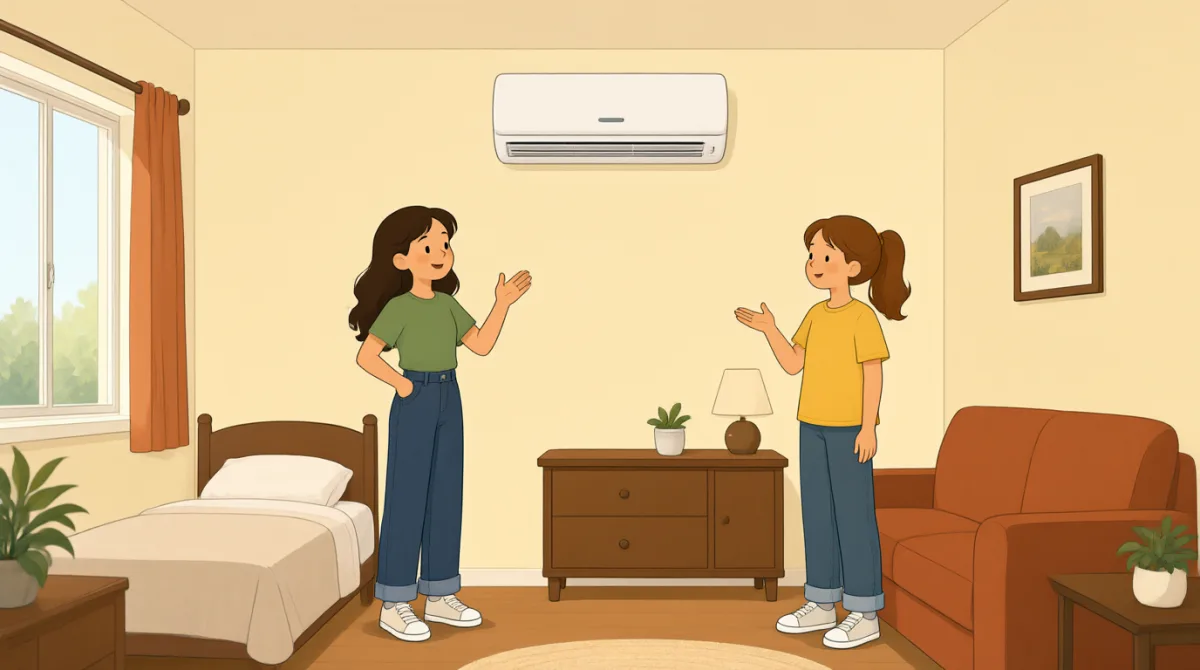

Good morning. The air conditioner in my room didn’t work last night.
صبح بخیر. کولر اتاقم دیشب کار نمیکرد.

I’m sorry about that. What room are you staying in?
متأسفم که اینطور شده. در کدام اتاق اقامت دارید؟
I’m in room 214. I tried to turn it on, but nothing happened.
اتاق ۲۱۴ هستم. سعی کردم روشنش کنم، اما هیچ اتفاقی نیفتاد.
Thanks for telling me. Did you try the controls on the wall?
ممنون که گفتید. کنترلهای روی دیوار را امتحان کردید؟
Yes, I did. The screen was on, but no cool air came out.
بله، امتحان کردم. نمایشگر روشن بود، اما هوای خنکی بیرون نمیآمد.
I understand. Was the room too warm for you last night?
متوجهام. دیشب اتاق برایتان خیلی گرم بود؟
Yes, it was hard to sleep. Could someone come and check it?
بله، خوابیدن سخت بود. ممکن است کسی بیاید و آن را بررسی کند؟
Of course. I’ll ask our maintenance worker to come up and take a look.
حتماً. از همکار بخش تعمیرات میخواهم بیاید بالا و نگاهی به آن بیندازد.
واژگان8
- air conditionerکولر
A machine that cools the air in a room. You can use this phrase when asking about cooling in a hotel room.
دستگاهی که هوای اتاق را خنک میکند. وقتی دربارهٔ خنککردن اتاق هتل سؤال میکنید، میتوانید از این عبارت استفاده کنید.
- didn’t workکار نکردن
Means that something did not operate correctly. Use it to explain a problem with a machine or device.
یعنی چیزی درست کار نکرده است. برای توضیح مشکلی در یک دستگاه یا وسیله از این عبارت استفاده کنید.
- turn it onروشن کردن
Means to start a machine or device. You can use it when talking about lights, air conditioners, or other equipment.
یعنی دستگاه یا وسیلهای را به کار انداختن. وقتی دربارهٔ چراغها، کولر یا وسایل دیگر صحبت میکنید، میتوانید از این عبارت استفاده کنید.
- nothing happenedهیچ اتفاقی نیفتادن
Means there was no result after you tried to do something. Use it to describe a device that does not respond.
یعنی بعد از تلاش برای انجام کاری، نتیجهای حاصل نشد. برای توصیف دستگاهی که واکنشی نشان نمیدهد از این عبارت استفاده کنید.
- cool airهوای خنک
Air that feels cold or comfortably cool. You can use this phrase to describe what you expect an air conditioner to produce.
هوایی که سرد یا بهطرز مطبوعی خنک است. میتوانید از این عبارت برای توصیف چیزی که انتظار دارید کولر تولید کند، استفاده کنید.
- hard to sleepسخت بودنِ خوابیدن
Means difficult to sleep. Use it to explain how a problem, such as a warm room, affected your night.
یعنی خوابیدن دشوار است. برای توضیح تأثیر مشکلی مثل گرمبودن اتاق بر شبتان از این عبارت استفاده کنید.
- come upآمدن به طبقهٔ بالا
Means to go to a higher floor or to someone’s room. In a hotel, staff may come up to help a guest.
یعنی به طبقهای بالاتر یا به اتاق کسی رفتن. در هتل، کارکنان ممکن است برای کمک به مهمان به طبقهٔ بالا بیایند.
- take a lookنگاهی انداختن
Means to examine or check something. You can ask someone to take a look at a problem.
یعنی چیزی را بررسی کردن. میتوانید از کسی بخواهید برای بررسی مشکلی نگاهی به آن بیندازد.
جملات کلیدی8
- 1
The air conditioner in my room didn’t work last night.
کولر اتاقم دیشب کار نمیکرد.
This is a clear way to report a problem and say when it happened. You can replace “the air conditioner” with another item that did not work.
این روش روشنی برای گزارش یک مشکل و گفتن زمان وقوع آن است. میتوانید بهجای «کولر» وسیلهٔ دیگری را بگویید که کار نمیکرده است.
- 2
I tried to turn it on, but nothing happened.
سعی کردم روشنش کنم، اما هیچ اتفاقی نیفتاد.
Use this sentence to explain what you did and what happened next. Replace “it” with the device you tried to use.
از این جمله برای توضیح کاری که انجام دادید و اتفاقی که بعد از آن افتاد استفاده کنید. میتوانید بهجای “it” نام دستگاهی را بگذارید که سعی کردید از آن استفاده کنید.
- 3
Did you try the controls on the wall?
کنترلهای روی دیوار را امتحان کردید؟
This is a polite question to check what someone has already tried. You can use it when helping someone solve a problem.
این پرسشی مؤدبانه برای فهمیدن این است که کسی قبلاً چه چیزهایی را امتحان کرده است. وقتی به کسی برای حل مشکلی کمک میکنید، میتوانید از آن استفاده کنید.
- 4
The screen was on, but no cool air came out.
نمایشگر روشن بود، اما هوای خنکی بیرون نمیآمد.
This sentence describes what seemed to work and what was still wrong. You can use “but” to contrast two details about a problem.
این جمله توضیح میدهد که چه چیزی ظاهراً کار میکرد و چه مشکلی هنوز باقی بود. برای نشاندادن تفاوت میان دو نکته دربارهٔ یک مشکل، میتوانید از “but” استفاده کنید.
- 5
Was the room too warm for you last night?
دیشب اتاق برایتان خیلی گرم بود؟
This question asks whether the temperature caused discomfort. You can change “the room” or “last night” to ask about other situations.
این پرسش میپرسد که آیا دما باعث ناراحتی شده است یا نه. میتوانید “the room” یا “last night” را تغییر دهید و دربارهٔ موقعیتهای دیگری بپرسید.
- 6
Yes, it was hard to sleep.
بله، خوابیدن سخت بود.
This is a simple way to explain how a problem affected you. You can use “It was hard to…” before an activity to describe a difficulty.
این روش سادهای برای توضیح تأثیر یک مشکل بر شماست. برای بیان دشواریِ انجام یک فعالیت، میتوانید پیش از آن از “It was hard to…” استفاده کنید.
- 7
Could someone come and check it?
ممکن است کسی بیاید و آن را بررسی کند؟
This is a polite way to ask staff for help. Replace “it” with the item or problem you want someone to check.
این روش مؤدبانهای برای درخواست کمک از کارکنان است. بهجای “it” نام وسیله یا مشکلی را بگذارید که میخواهید کسی بررسی کند.
- 8
I’ll ask our maintenance worker to come up and take a look.
از همکار بخش تعمیرات میخواهم بیاید بالا و نگاهی به آن بیندازد.
This sentence explains what someone will do to help. You can reuse “I’ll ask [person] to…” when offering to arrange assistance.
این جمله توضیح میدهد که کسی برای کمک چه کاری انجام خواهد داد. وقتی میخواهید هماهنگی برای کمک را پیشنهاد دهید، میتوانید از “I’ll ask [person] to…” دوباره استفاده کنید.