Buying Drinks
ड्रिंक्स खरीदना
At the store, Emma and Jack choose drinks for the party. They compare a few options and check the prices.
दुकान पर एमा और जैक पार्टी के लिए ड्रिंक्स चुनते हैं। वे कुछ विकल्पों की तुलना करते हैं और कीमतें देखते हैं।
संवाद8
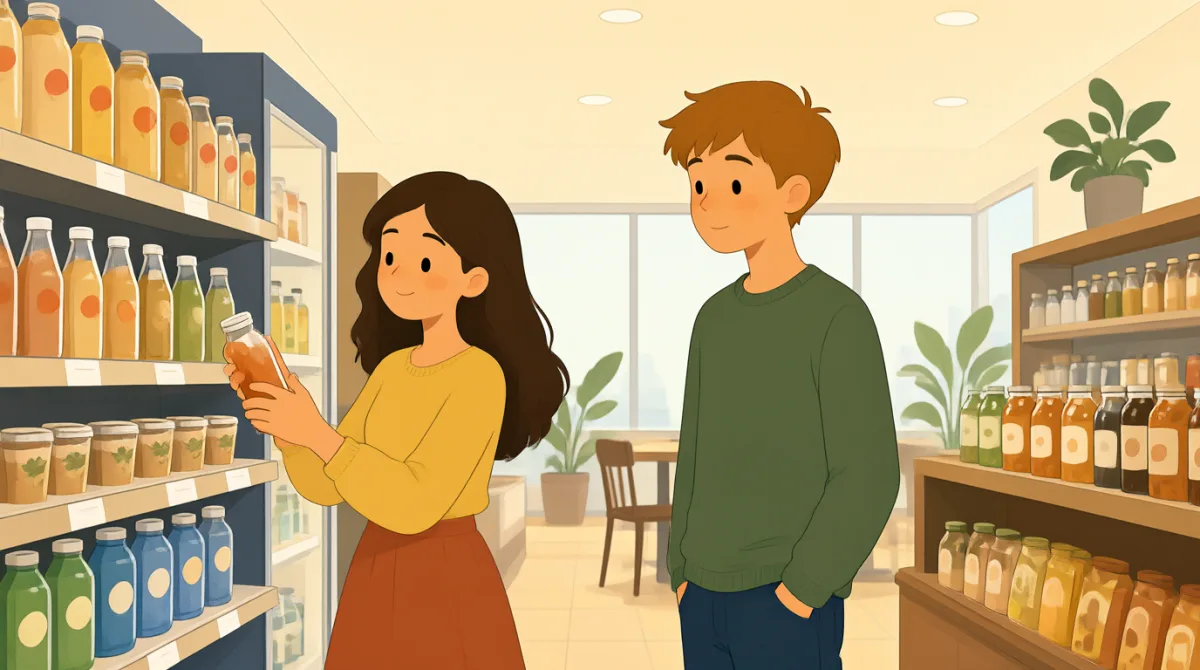

We need drinks for the party. What should we get?
हमें पार्टी के लिए ड्रिंक्स चाहिए। क्या लेना चाहिए?

Let's get water, juice, and soda. How many people are coming?
पानी, जूस और सोडा ले लेते हैं। कितने लोग आ रहे हैं?
About twelve. Maybe we need two bottles of juice and some soda.
लगभग बारह। शायद हमें जूस की दो बोतलें और थोड़ा सोडा चाहिए।
This big bottle is cheaper, but it has a lot of sugar.
यह बड़ी बोतल सस्ती है, लेकिन इसमें बहुत ज़्यादा चीनी है।
How much is the smaller one? I think people may like it better.
छोटी वाली कितने की है? मुझे लगता है लोगों को वह ज़्यादा पसंद आएगी।
It's three dollars. The big one is four dollars, so it's a better deal.
तीन डॉलर की है। बड़ी वाली चार डॉलर की है, तो वह ज़्यादा फ़ायदे का सौदा है।
Let's get the big one, then. We can also buy sparkling water.
तो बड़ी वाली ले लेते हैं। हम स्पार्कलिंग वॉटर भी खरीद सकते हैं।
Good idea. I'll get two packs of water, and you can pick the juice.
अच्छा विचार है। मैं पानी के दो पैक लेता हूँ, और तुम जूस चुन लेना।
शब्दावली7
- What should we get?क्या लेना चाहिए?
This is a way to ask what items to buy. You can use it when choosing things with someone.
यह पूछने का एक तरीका है कि कौन-सी चीज़ें खरीदनी चाहिए। किसी के साथ चीज़ें चुनते समय आप इसका इस्तेमाल कर सकते हैं।
- How many people are coming?कितने लोग आ रहे हैं?
This question asks about the number of people who will attend. Use it to help decide how much food or drink to buy.
इस सवाल से पता चलता है कि कितने लोग आएँगे। कितना खाना या पीना खरीदना है, यह तय करने में मदद के लिए इसका इस्तेमाल करें।
- a lot of sugarबहुत ज़्यादा चीनी
This means a large amount of sugar. You can use it to talk about what is in food or drinks.
इसका मतलब है चीनी की बहुत बड़ी मात्रा। खाने या पीने की चीज़ों में क्या-क्या है, इस बारे में बात करते समय आप इसका इस्तेमाल कर सकते हैं।
- How much is the smaller one?छोटी वाली कितने की है?
This question asks for the price of a smaller item. Use it when comparing prices in a store.
इस सवाल से किसी छोटी चीज़ की कीमत पूछी जाती है। दुकान में कीमतों की तुलना करते समय इसका इस्तेमाल करें।
- a better dealज़्यादा फ़ायदे का सौदा
This means a choice gives you more for your money. You can use it when comparing prices and sizes.
इसका मतलब है कि किसी विकल्प में आपके पैसे के बदले ज़्यादा चीज़ मिलती है। कीमतों और आकारों की तुलना करते समय आप इसका इस्तेमाल कर सकते हैं।
- Let's get the big one, then.तो बड़ी वाली ले लेते हैं।
This is a way to make a choice after comparing options. You can replace “the big one” with another item.
विकल्पों की तुलना करने के बाद फ़ैसला करने का यह एक तरीका है। आप “the big one” की जगह कोई दूसरी चीज़ रख सकते हैं।
- pick the juiceजूस चुनना
Here, “pick” means choose. You can use “pick” when asking someone to choose an item.
यहाँ “pick” का मतलब है चुनना। किसी से कोई चीज़ चुनने के लिए कहते समय आप “pick” का इस्तेमाल कर सकते हैं।
मुख्य वाक्य8
- 1
We need drinks for the party.
हमें पार्टी के लिए ड्रिंक्स चाहिए।
This clearly explains what you need and why. You can replace “drinks” with another item, such as snacks or plates.
इस वाक्य से साफ़ पता चलता है कि आपको क्या चाहिए और क्यों। आप “drinks” की जगह कोई दूसरी चीज़, जैसे स्नैक्स या प्लेटें, रख सकते हैं।
- 2
How many people are coming?
कितने लोग आ रहे हैं?
Use this question to find out how many people will attend. The answer can help you plan how much to buy.
कितने लोग आएँगे, यह जानने के लिए यह सवाल पूछें। जवाब से आपको यह तय करने में मदद मिलेगी कि कितना सामान खरीदना है।
- 3
Maybe we need two bottles of juice and some soda.
शायद हमें जूस की दो बोतलें और थोड़ा सोडा चाहिए।
This is a simple way to suggest an amount to buy. Use “Maybe we need” to make a suggestion without sounding too certain.
खरीदने की मात्रा सुझाने का यह एक आसान तरीका है। बिना ज़्यादा यकीन जताए सुझाव देने के लिए “Maybe we need” का इस्तेमाल करें।
- 4
This big bottle is cheaper, but it has a lot of sugar.
यह बड़ी बोतल सस्ती है, लेकिन इसमें बहुत ज़्यादा चीनी है।
This sentence compares an item's price with another feature. You can use “cheaper, but…” to mention both an advantage and a concern.
इस वाक्य में किसी चीज़ की कीमत की तुलना उसकी एक और विशेषता से की गई है। फ़ायदे और चिंता, दोनों का ज़िक्र करने के लिए “cheaper, but…” का इस्तेमाल कर सकते हैं।
- 5
How much is the smaller one?
छोटी वाली कितने की है?
This is a useful question for checking a price in a store. You can replace “the smaller one” with the item you want to ask about.
दुकान में कीमत पूछने के लिए यह एक उपयोगी सवाल है। “the smaller one” की जगह उस चीज़ का नाम रख सकते हैं जिसकी कीमत पूछनी है।
- 6
It's three dollars.
यह तीन डॉलर की है।
This is a simple way to state a price. You can change the number and currency to give the price of another item.
कीमत बताने का यह एक आसान तरीका है। किसी दूसरी चीज़ की कीमत बताने के लिए संख्या और मुद्रा बदल सकते हैं।
- 7
Let's get the big one, then.
तो बड़ी वाली ले लेते हैं।
Use this to make a decision after discussing the options. Replace “the big one” with the item you choose.
विकल्पों पर बात करने के बाद फ़ैसला करने के लिए इसका इस्तेमाल करें। “the big one” की जगह चुनी हुई चीज़ का नाम रख सकते हैं।
- 8
I'll get two packs of water, and you can pick the juice.
मैं पानी के दो पैक लेता हूँ, और तुम जूस चुन लेना।
This sentence divides shopping tasks between two people. You can use “I'll get…” and “you can pick…” to say who will buy or choose each item.
इस वाक्य में दो लोगों के बीच खरीदारी के काम बाँटे गए हैं। कौन क्या खरीदेगा या चुनेगा, यह बताने के लिए “I'll get…” और “you can pick…” का इस्तेमाल कर सकते हैं।