Clearing a Paper Jam
पेपर जाम हटाना
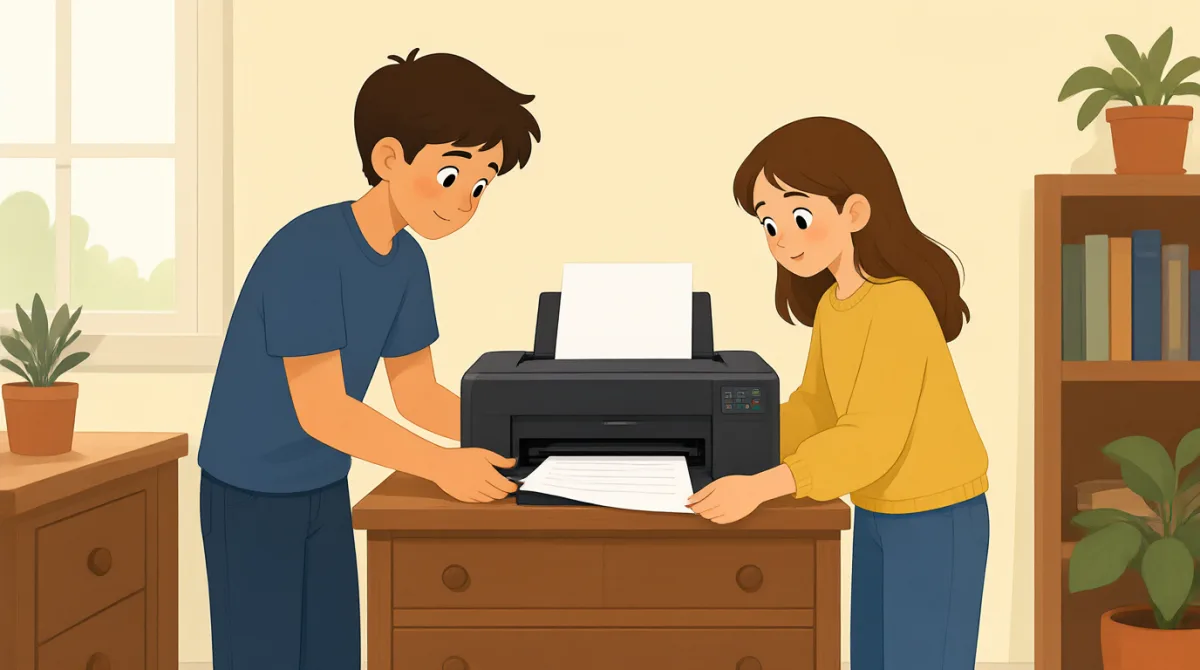
Jack opens the printer and finds a paper jam. Emma helps him pull out the paper carefully.
जैक प्रिंटर खोलकर देखता है कि उसमें कागज़ फँसा हुआ है। एमा उसे सावधानी से कागज़ निकालने में मदद करती है।
संवाद9

I found the paper jam. The paper is stuck near the back.
मुझे कागज़ फँसा हुआ मिला। कागज़ पीछे की तरफ़ अटका है।

Can I help? Should I pull it out?
क्या मैं मदद करूँ? क्या मैं इसे बाहर खींचूँ?
Yes, but pull slowly. We don’t want to tear the paper.
हाँ, लेकिन धीरे-धीरे खींचना। हम कागज़ फाड़ना नहीं चाहते।
Okay, I can see the edge. I’ll pull it gently.
ठीक है, मुझे किनारा दिख रहा है। मैं इसे धीरे से खींचूँगी।
That’s right. Keep it straight, and don’t pull too hard.
हाँ, ऐसे ही। इसे सीधा रखना और ज़्यादा ज़ोर से मत खींचना।
It’s coming out now. Oh, the paper tore a little.
यह अब बाहर आ रहा है। ओह, कागज़ थोड़ा फट गया।
That’s fine. Let’s take out the small piece, too.
कोई बात नहीं। चलो, छोटा-सा टुकड़ा भी निकाल लेते हैं।
Got it. Is the printer ready to use now?
हो गया। क्या अब प्रिंटर इस्तेमाल करने के लिए तैयार है?
Yes. Close the cover, then try printing your report again.
हाँ। कवर बंद करो, फिर अपनी रिपोर्ट दोबारा प्रिंट करने की कोशिश करो।
शब्दावली8
- paper jamकागज़ का जाम
A paper jam happens when paper gets stuck inside a printer. You can use this phrase to describe the problem.
प्रिंटर के अंदर कागज़ फँस जाने पर इसे “paper jam” कहते हैं। इस वाक्यांश का इस्तेमाल इस समस्या के बारे में बताने के लिए करें।
- stuck near the backपीछे की तरफ़ अटका हुआ
This means the paper cannot move and is close to the back of the printer. Use “stuck” to describe something that cannot move.
इसका मतलब है कि कागज़ हिल नहीं पा रहा है और प्रिंटर के पिछले हिस्से के पास है। जो चीज़ हिल नहीं सकती, उसके लिए “stuck” का इस्तेमाल करें।
- pull it outखींचकर बाहर निकालना
This means to take something out by pulling it. You can use it when removing paper or another object.
इसका मतलब है किसी चीज़ को खींचकर बाहर निकालना। कागज़ या कोई दूसरी चीज़ निकालते समय इसका इस्तेमाल कर सकते हैं।
- tear the paperकागज़ फाड़ना
This means to rip the paper into pieces. Use “tear” when paper breaks while you are pulling it.
इसका मतलब है कागज़ को टुकड़ों में फाड़ देना। खींचते समय कागज़ फट जाए, तो इसके लिए “tear” का इस्तेमाल करें।
- pull it gentlyधीरे से खींचना
This means to pull something carefully and not too strongly. You can use it when an object might break or tear.
इसका मतलब है किसी चीज़ को सावधानी से और बहुत ज़ोर लगाए बिना खींचना। जब कोई चीज़ टूट या फट सकती हो, तब इसका इस्तेमाल करें।
- coming outबाहर आ रहा है
Here, this means the paper is moving out of the printer. Use “coming out” to describe something that is being removed.
यहाँ इसका मतलब है कि कागज़ प्रिंटर से बाहर निकल रहा है। किसी चीज़ को बाहर निकाले जाने का वर्णन करने के लिए “coming out” का इस्तेमाल करें।
- small pieceछोटा-सा टुकड़ा
A small piece is a little part of something. You can use this phrase for a piece of paper, food, or another object.
छोटा-सा टुकड़ा किसी चीज़ का छोटा हिस्सा होता है। इस वाक्यांश का इस्तेमाल कागज़, खाने या किसी दूसरी चीज़ के टुकड़े के लिए कर सकते हैं।
- ready to useइस्तेमाल करने के लिए तैयार
This means something can be used now. You can ask “Is it ready to use?” when checking if a machine or item is working.
इसका मतलब है कि किसी चीज़ का इस्तेमाल अब किया जा सकता है। मशीन या सामान काम कर रहा है या नहीं, यह पूछने के लिए “Is it ready to use?” कह सकते हैं।
मुख्य वाक्य8
- 1
Can I help?
क्या मैं मदद करूँ?
This is a simple, friendly way to offer help. Use it when someone is having difficulty with a task.
मदद की पेशकश करने का यह एक सरल और दोस्ताना तरीका है। जब किसी को कोई काम करने में परेशानी हो रही हो, तब इसका इस्तेमाल करें।
- 2
Should I pull it out?
क्या मैं इसे बाहर खींचूँ?
Use this question to ask if you should remove something. Replace “pull it out” with another action to check what to do.
किसी चीज़ को निकालना चाहिए या नहीं, यह पूछने के लिए इस सवाल का इस्तेमाल करें। क्या करना है, यह जानने के लिए “pull it out” की जगह कोई दूसरी कार्रवाई रखें।
- 3
We don’t want to tear the paper.
हम कागज़ फाड़ना नहीं चाहते।
This explains why someone should be careful. You can use “We don’t want to…” to give a simple reason for an action.
यह बताता है कि किसी को सावधानी क्यों बरतनी चाहिए। किसी काम की वजह सरलता से बताने के लिए “We don’t want to…” का इस्तेमाल करें।
- 4
I’ll pull it gently.
मैं इसे धीरे से खींचूँगी।
This tells someone what you plan to do carefully. Use “I’ll” plus an action to describe what you will do next.
इससे आप किसी को बताते हैं कि आप सावधानी से क्या करने वाली हैं। आगे आप क्या करेंगे, यह बताने के लिए “I’ll” के बाद कोई कार्रवाई रखें।
- 5
Keep it straight, and don’t pull too hard.
इसे सीधा रखना और ज़्यादा ज़ोर से मत खींचना।
This gives two clear instructions. Use “Keep it…” and “Don’t…” to guide someone doing a task.
यह दो स्पष्ट निर्देश देता है। किसी काम को करते हुए व्यक्ति का मार्गदर्शन करने के लिए “Keep it…” और “Don’t…” का इस्तेमाल करें।
- 6
Let’s take out the small piece, too.
चलो, छोटा-सा टुकड़ा भी निकाल लेते हैं।
Use “Let’s” to suggest doing something together. “Take out” means to remove something from inside.
साथ मिलकर कुछ करने का सुझाव देने के लिए “Let’s” का इस्तेमाल करें। “Take out” का मतलब है अंदर से कोई चीज़ निकालना।
- 7
Is the printer ready to use now?
क्या अब प्रिंटर इस्तेमाल करने के लिए तैयार है?
This is a useful way to check if a machine can be used. Replace “the printer” with another item, such as “the computer” or “the room.”
यह जाँचने का एक उपयोगी तरीका है कि मशीन का इस्तेमाल किया जा सकता है या नहीं। “the printer” की जगह कोई दूसरी चीज़ रखें, जैसे “the computer” या “the room”।
- 8
Close the cover, then try printing your report again.
कवर बंद करो, फिर अपनी रिपोर्ट दोबारा प्रिंट करने की कोशिश करो।
This gives two steps in the right order. Use “then” to show what to do after the first action.
इसमें सही क्रम में दो चरण बताए गए हैं। पहली कार्रवाई के बाद क्या करना है, यह बताने के लिए “then” का इस्तेमाल करें।