Changing the Ink
स्याही बदलना
The printer says the ink is low. Jack shows Emma how to replace the ink cartridge.
प्रिंटर बता रहा है कि स्याही कम है। जैक एमा को स्याही का कार्ट्रिज बदलना सिखाता है।
संवाद9
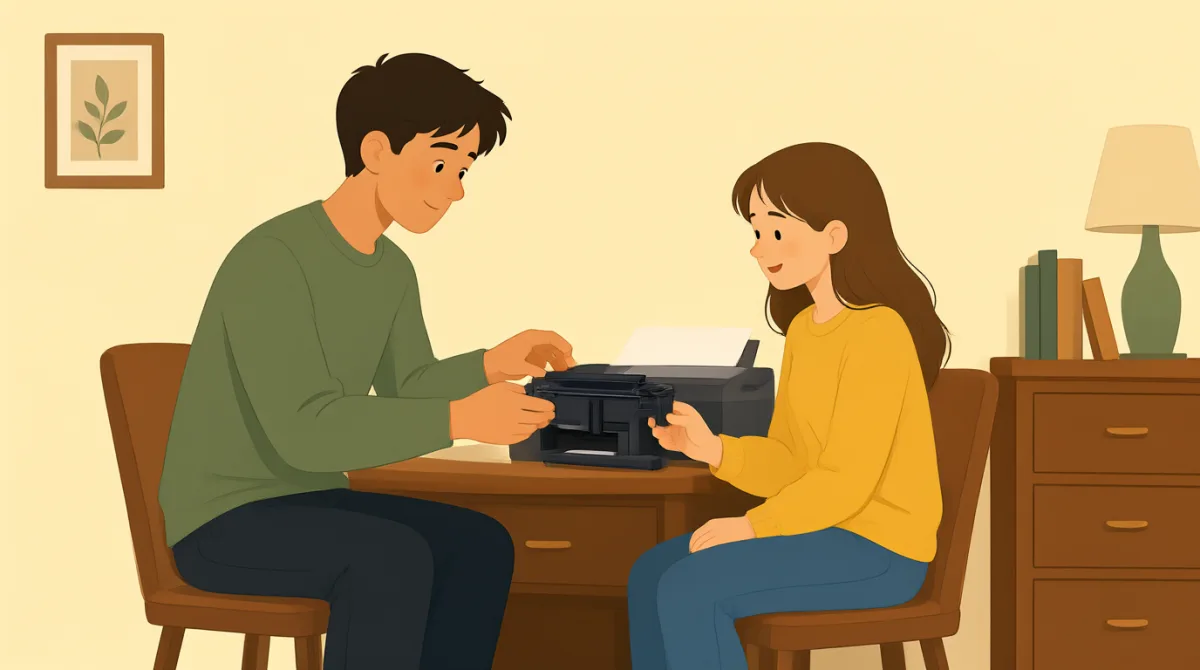

The printer says the ink is low. Can you show me how to change it?
प्रिंटर बता रहा है कि स्याही कम है। क्या तुम मुझे इसे बदलना सिखा सकते हो?

Sure. First, open the front cover. The ink cartridge is inside.
ज़रूर। पहले, आगे का ढक्कन खोलो। स्याही का कार्ट्रिज अंदर है।
I see it. Should I pull the old cartridge out now?
मुझे दिख रहा है। क्या मैं अभी पुराना कार्ट्रिज बाहर निकाल दूँ?
Yes. Press this small tab, then pull the cartridge out gently.
हाँ। इस छोटे-से टैब को दबाओ, फिर कार्ट्रिज को धीरे से बाहर खींचो।
Okay, it’s out. Where does the new one go?
ठीक है, निकल गया। नया वाला कहाँ लगेगा?
Slide it into the same slot until you hear a click.
उसे उसी स्लॉट में तब तक सरकाओ, जब तक क्लिक की आवाज़ न सुनाई दे।
I heard a click. Do I need to close the cover now?
मुझे क्लिक की आवाज़ सुनाई दी। क्या अब ढक्कन बंद कर दूँ?
Yes, close it. The printer may take a minute to get ready.
हाँ, इसे बंद कर दो। प्रिंटर को तैयार होने में एक मिनट लग सकता है।
Great, the warning is gone. I’ll print my report again.
बढ़िया, चेतावनी चली गई। मैं अपनी रिपोर्ट फिर से प्रिंट करूँगी।
शब्दावली8
- the ink is lowस्याही कम है
This means the printer does not have much ink left. You can use it to describe a low supply of something.
इसका मतलब है कि प्रिंटर में ज़्यादा स्याही नहीं बची है। किसी चीज़ की कम बची हुई मात्रा बताने के लिए भी इसका इस्तेमाल कर सकते हो।
- open the front coverआगे का ढक्कन खोलना
This means to lift or pull open the printer's front panel. You can use “open the...” to give a simple instruction.
इसका मतलब है प्रिंटर का आगे वाला पैनल उठाकर या खींचकर खोलना। “open the...” का इस्तेमाल करके तुम आसानी से कोई निर्देश दे सकते हो।
- pull the old cartridge outपुराना कार्ट्रिज बाहर निकालना
This means to remove the used ink cartridge. “Pull ... out” is a common way to talk about taking something from inside a space.
इसका मतलब है इस्तेमाल किया हुआ स्याही का कार्ट्रिज निकालना। किसी चीज़ को अंदर की जगह से बाहर निकालने के लिए “Pull ... out” एक आम तरीका है।
- gentlyधीरे से
This means to do something carefully and without using much force. It is useful when giving instructions for handling delicate things.
इसका मतलब है कोई काम सावधानी से और ज़्यादा ज़ोर लगाए बिना करना। नाज़ुक चीज़ों को संभालने के निर्देश देते समय यह शब्द काम आता है।
- the same slotवही स्लॉट
This means the place where the old cartridge was. You can use “the same” to show that something goes back in its original place.
इसका मतलब है वह जगह जहाँ पुराना कार्ट्रिज लगा था। “the same” से बताया जाता है कि कोई चीज़ अपनी पहले वाली जगह पर वापस जा रही है।
- until you hear a clickजब तक क्लिक की आवाज़ न सुनाई दे
This means to keep sliding the cartridge in until it makes a clicking sound. You can use “until” to describe when to stop an action.
इसका मतलब है कार्ट्रिज को तब तक अंदर सरकाते रहना, जब तक क्लिक की आवाज़ न आए। कोई काम कब रोकना है, यह बताने के लिए “until” का इस्तेमाल कर सकते हो।
- get readyतैयार होना
Here, it means the printer needs a short time before it can work. You can also use “get ready” when a person or machine prepares to do something.
यहाँ इसका मतलब है कि प्रिंटर को काम करने लायक होने से पहले थोड़ा समय चाहिए। किसी व्यक्ति या मशीन के कुछ करने की तैयारी के लिए भी “get ready” कह सकते हो।
- the warning is goneचेतावनी चली गई है
This means the printer no longer shows its warning message. You can use “is gone” to say that a problem or message has disappeared.
इसका मतलब है कि प्रिंटर अब चेतावनी वाला संदेश नहीं दिखा रहा। किसी समस्या या संदेश के गायब हो जाने की बात कहने के लिए “is gone” इस्तेमाल कर सकते हो।
मुख्य वाक्य7
- 1
Can you show me how to change it?
क्या तुम मुझे इसे बदलना सिखा सकते हो?
Use this to ask someone to teach you how to do something. Replace “change it” with another action, such as “use this machine.”
किसी से कोई काम करना सीखने के लिए यह वाक्य कहो। “change it” की जगह कोई दूसरी गतिविधि रखो, जैसे “use this machine.”
- 2
First, open the front cover.
पहले, आगे का ढक्कन खोलो।
This is a simple instruction that starts a set of steps. You can change the action to give the first step in another task.
यह निर्देशों के क्रम की शुरुआत करने का एक आसान तरीका है। किसी दूसरे काम का पहला चरण बताने के लिए इसमें कार्रवाई बदल सकते हो।
- 3
Should I pull the old cartridge out now?
क्या मैं अभी पुराना कार्ट्रिज बाहर निकाल दूँ?
Use “Should I...?” to check what action to take next. Replace the action with another task, such as “Should I press this button now?”
अगला कदम क्या होना चाहिए, यह पूछने के लिए “Should I...?” कहो। इसकी जगह कोई दूसरा काम रखो, जैसे “Should I press this button now?”
- 4
Press this small tab, then pull the cartridge out gently.
इस छोटे-से टैब को दबाओ, फिर कार्ट्रिज को धीरे से बाहर खींचो।
This gives two clear steps in order. Use “then” to show what to do after the first action.
यह क्रम से किए जाने वाले दो साफ़-साफ़ कदम बताता है। पहले काम के बाद क्या करना है, यह दिखाने के लिए “then” का इस्तेमाल करो।
- 5
Slide it into the same slot until you hear a click.
उसे उसी स्लॉट में तब तक सरकाओ, जब तक क्लिक की आवाज़ न सुनाई दे।
This explains where to put something and when to stop. You can reuse “Slide it into...” for items that fit into a space.
यह बताता है कि कोई चीज़ कहाँ रखनी है और कब रुकना है। ऐसी चीज़ों के लिए जो किसी जगह में फिट होती हैं, “Slide it into...” का दोबारा इस्तेमाल कर सकते हो।
- 6
The printer may take a minute to get ready.
प्रिंटर को तैयार होने में एक मिनट लग सकता है।
Use “may” to say something might happen. You can change “the printer” to another machine or person.
किसी चीज़ के होने की संभावना बताने के लिए “may” का इस्तेमाल करो। “the printer” की जगह कोई दूसरी मशीन या व्यक्ति रख सकते हो।
- 7
I’ll print my report again.
मैं अपनी रिपोर्ट फिर से प्रिंट करूँगी।
Use “I’ll” to talk about a decision or action you will do. Add “again” when you are repeating something.
अपने किसी फैसले या काम के बारे में बताने के लिए “I’ll” का इस्तेमाल करो। कोई काम दोबारा करने की बात हो, तो “again” जोड़ो।