Explaining Food and Walks
खाना और सैर के बारे में बताना
Emma shows Jack where the dog food and leash are. She explains when Buddy eats and how often he needs walks.
एमा जैक को दिखाती है कि कुत्ते का खाना और पट्टा कहाँ रखा है। वह बताती है कि बडी कब खाना खाता है और उसे कितनी बार सैर पर ले जाना चाहिए।
संवाद8
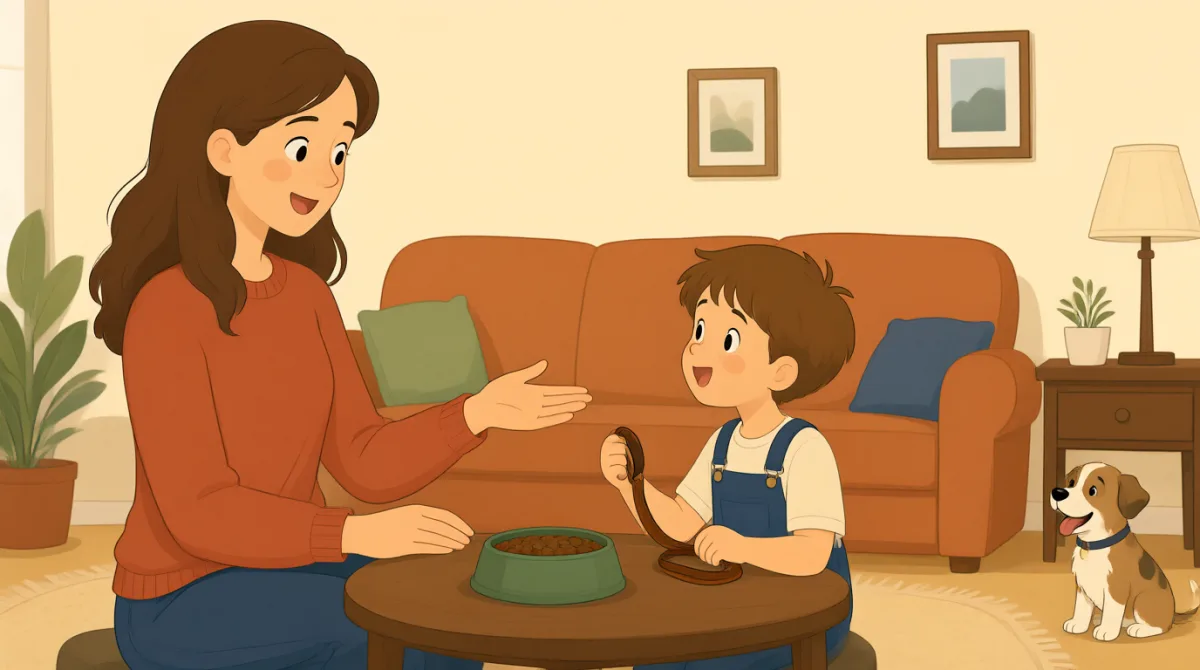

The dog food is in this bin. Buddy eats one cup in the morning and one at night.
कुत्ते का खाना इस डिब्बे में है। बडी सुबह एक कप और रात को एक कप खाता है।

Got it. Should I give him breakfast before or after his walk?
समझ गया। उसे नाश्ता सैर से पहले दूँ या बाद में?
After his morning walk, please. He likes to eat when he gets back.
उसकी सुबह की सैर के बाद, प्लीज़। उसे लौटकर खाना पसंद है।
Okay. Where do you keep his leash?
ठीक है। उसका पट्टा कहाँ रखते हो?
It’s hanging by the front door. Please take him out three times a day.
वह सामने वाले दरवाज़े के पास टँगा है। उसे दिन में तीन बार बाहर ले जाना, प्लीज़।
How long should each walk be?
हर बार कितनी देर सैर करानी चाहिए?
About twenty minutes is good. Keep him on the leash, please.
लगभग बीस मिनट ठीक रहेंगे। उसे पट्टे से बाँधे रखना, प्लीज़।
Sure. I’ll take him out after breakfast, in the afternoon, and before dinner.
ज़रूर। मैं उसे नाश्ते के बाद, दोपहर में और रात के खाने से पहले बाहर ले जाऊँगा।
शब्दावली8
- dog foodकुत्ते का खाना
Food that is made for dogs. You can use this phrase when talking about what a dog eats.
ऐसा खाना जो कुत्तों के लिए बनाया जाता है। कुत्ता क्या खाता है, इस बारे में बात करते समय आप इस वाक्यांश का इस्तेमाल कर सकते हैं।
- one cupएक कप
A measurement for the amount of food Buddy should eat. You can use it to explain how much to give someone or something.
यह बडी के खाने की मात्रा बताने का माप है। किसी व्यक्ति या जानवर को कितना देना है, यह बताने के लिए आप इसका इस्तेमाल कर सकते हैं।
- morning walkसुबह की सैर
A walk taken in the morning. You can use this phrase to talk about a regular daily activity.
सुबह की जाने वाली सैर। रोज़ की किसी नियमित गतिविधि के बारे में बात करते समय आप इस वाक्यांश का इस्तेमाल कर सकते हैं।
- gets backलौटता है
Returns to a place. Here, Buddy gets back home after his walk.
किसी जगह वापस आता है। यहाँ, बडी सैर के बाद घर लौटता है।
- leashपट्टा
A strap used to keep a dog safely beside you while walking. You can ask where someone keeps a pet’s leash.
सैर के दौरान कुत्ते को सुरक्षित रूप से अपने पास रखने के लिए इस्तेमाल की जाने वाली पट्टी। आप पूछ सकते हैं कि कोई अपने पालतू जानवर का पट्टा कहाँ रखता है।
- take him outउसे बाहर ले जाना
Take Buddy outside, usually for a walk. You can use this phrase when talking about caring for a dog.
बडी को बाहर ले जाना, आम तौर पर सैर के लिए। कुत्ते की देखभाल के बारे में बात करते समय आप इस वाक्यांश का इस्तेमाल कर सकते हैं।
- three times a dayदिन में तीन बार
Three times during each day. You can use this phrase to explain how often an activity should happen.
हर दिन तीन बार। किसी गतिविधि को कितनी बार करना चाहिए, यह बताने के लिए आप इस वाक्यांश का इस्तेमाल कर सकते हैं।
- keep him on the leashउसे पट्टे से बाँधे रखना
Make sure Buddy stays attached to his leash. You can use this phrase to give a simple safety instruction.
ध्यान रखना कि बडी का पट्टा उससे जुड़ा रहे। सुरक्षा के लिए सरल निर्देश देते समय आप इस वाक्यांश का इस्तेमाल कर सकते हैं।
मुख्य वाक्य8
- 1
Buddy eats one cup in the morning and one at night.
बडी सुबह एक कप और रात को एक कप खाता है।
This sentence explains a daily feeding schedule. Reuse the pattern “one [amount] in the morning and one at night” to describe routines.
इस वाक्य में रोज़ाना खाना देने का समय बताया गया है। रोज़मर्रा की दिनचर्या बताने के लिए “one [amount] in the morning and one at night” (सुबह एक [मात्रा] और रात को एक) वाले ढाँचे का फिर से इस्तेमाल करें।
- 2
Should I give him breakfast before or after his walk?
उसे नाश्ता सैर से पहले दूँ या बाद में?
This is a polite way to ask about the order of two activities. Replace “breakfast” and “his walk” with other tasks to ask about a routine.
दो गतिविधियों के क्रम के बारे में पूछने का यह एक विनम्र तरीका है। दिनचर्या के बारे में पूछने के लिए “breakfast” और “his walk” की जगह दूसरे कामों के नाम रख सकते हैं।
- 3
After his morning walk, please.
उसकी सुबह की सैर के बाद, प्लीज़।
This gives a short, clear answer about when to do something. You can use “After [activity], please” to give a simple instruction.
इससे किसी काम को कब करना है, इसका छोटा और स्पष्ट जवाब मिलता है। सरल निर्देश देने के लिए “After [activity], please” ([गतिविधि] के बाद, प्लीज़) का इस्तेमाल कर सकते हैं।
- 4
It’s hanging by the front door.
वह सामने वाले दरवाज़े के पास टँगा है।
This tells someone where an item is. Reuse “It’s hanging by…” to describe where something can be found.
इससे किसी को बताया जाता है कि कोई चीज़ कहाँ है। किसी चीज़ की जगह बताने के लिए “It’s hanging by…” (वह … के पास टँगा है) वाले ढाँचे का फिर से इस्तेमाल करें।
- 5
Please take him out three times a day.
उसे दिन में तीन बार बाहर ले जाना, प्लीज़।
This politely explains how often Buddy needs to go outside. You can use “Please [action] [number] times a day” for regular instructions.
इसमें विनम्रता से बताया गया है कि बडी को कितनी बार बाहर जाना चाहिए। नियमित निर्देश देने के लिए “Please [action] [number] times a day” (कृपया दिन में [संख्या] बार [काम] करें) का इस्तेमाल कर सकते हैं।
- 6
About twenty minutes is good.
लगभग बीस मिनट ठीक रहेंगे।
This gives an approximate amount of time. Use “About [length of time] is good” to suggest how long an activity should last.
इससे समय की अनुमानित अवधि बताई जाती है। किसी गतिविधि के लिए सुझाई गई अवधि बताने हेतु “About [length of time] is good” (लगभग [समयावधि] ठीक रहेगी) का इस्तेमाल करें।
- 7
Keep him on the leash, please.
उसे पट्टे से बाँधे रखना, प्लीज़।
This is a polite safety instruction. You can use “Keep [someone or something] on…” to explain what should stay attached or in place.
यह सुरक्षा के लिए दिया गया एक विनम्र निर्देश है। यह बताने के लिए कि किसी व्यक्ति या चीज़ को किससे जुड़ा या कहाँ रखा जाना चाहिए, “Keep [someone or something] on…” ([किसी व्यक्ति या चीज़] को … से जुड़ा/पर रखो) का इस्तेमाल कर सकते हैं।
- 8
I’ll take him out after breakfast, in the afternoon, and before dinner.
मैं उसे नाश्ते के बाद, दोपहर में और रात के खाने से पहले बाहर ले जाऊँगा।
This sentence lays out a plan for the day using clear time expressions. Reuse “I’ll [action] after…, in…, and before…” to describe a schedule.
इस वाक्य में समय के स्पष्ट संकेतों का इस्तेमाल करके दिन की योजना बताई गई है। अपना कार्यक्रम बताने के लिए “I’ll [action] after…, in…, and before…” (मैं … के बाद, … में और … से पहले [काम] करूँगा) वाले ढाँचे का फिर से इस्तेमाल करें।