Requesting a Power Outlet
पावर आउटलेट के बारे में पूछना
The customer's laptop battery is running low. They might politely ask a staff member if there's a power outlet available or if they can move to a table near one.
ग्राहक के लैपटॉप की बैटरी खत्म होने वाली है। वे किसी कर्मचारी से विनम्रता से पूछ सकते हैं कि क्या पावर आउटलेट के पास कोई मेज़ खाली है या वे वहाँ बैठने जा सकते हैं।
संवाद8
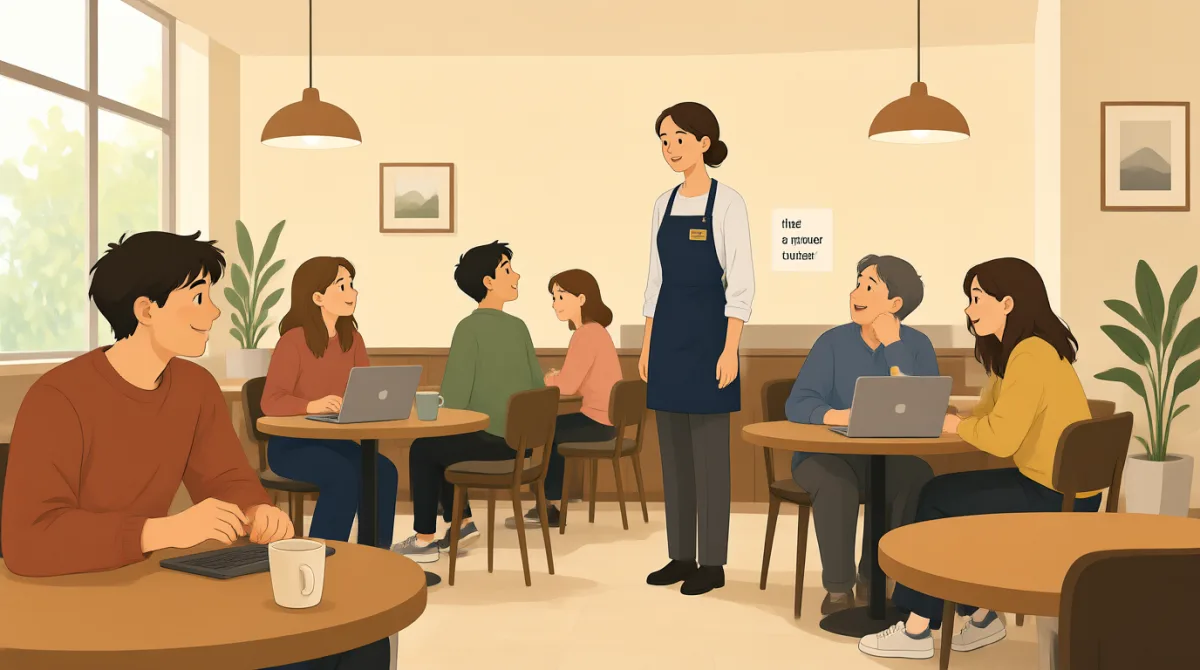

Excuse me, I was just wondering if there are any tables available near a power outlet?
माफ़ कीजिए, मैं पूछना चाह रहा था कि क्या पावर आउटलेट के पास कोई मेज़ खाली है?

Let me check for you. Your laptop battery running low?
मैं आपके लिए देखती हूँ। आपके लैपटॉप की बैटरी खत्म होने वाली है?
Yes, unfortunately. It's almost dead.
हाँ, बदकिस्मती से। इसकी बैटरी लगभग खत्म हो गई है।
No problem! We have a few spots in the back by the window. There are outlets right underneath those tables.
कोई बात नहीं! पीछे खिड़की के पास कुछ जगहें खाली हैं। उन मेज़ों के ठीक नीचे आउटलेट हैं।
Oh, that would be perfect! Is it usually quieter back there as well?
ओह, वह तो बहुत अच्छा रहेगा! क्या वहाँ आम तौर पर शांति भी रहती है?
Generally, yes. It's a bit more tucked away from the main counter noise. Feel free to move your things over if you'd like.
आमतौर पर, हाँ। वहाँ मुख्य काउंटर के शोर से थोड़ी दूरी है। चाहें तो अपना सामान वहाँ ले जा सकते हैं।
Great, thanks so much for your help!
बहुत बढ़िया, आपकी मदद के लिए बहुत-बहुत धन्यवाद!
You're welcome! Let me know if you need anything else.
कोई बात नहीं! अगर आपको किसी और चीज़ की ज़रूरत हो, तो मुझे बताइएगा।
शब्दावली7
- power outletपावर आउटलेट
A socket on the wall where you can plug in devices like a laptop charger to get electricity.
दीवार में लगा वह सॉकेट जिसमें बिजली पाने के लिए लैपटॉप चार्जर जैसे उपकरणों का प्लग लगाया जाता है।
- running lowकम होते जाना
When something, like battery power, is almost finished or getting very low.
जब कोई चीज़, जैसे बैटरी की चार्ज, लगभग खत्म होने वाली हो या बहुत कम रह गई हो।
- unfortunatelyबदकिस्मती से
A word used to express regret or bad luck about a situation.
किसी स्थिति पर अफ़सोस या दुर्भाग्य जताने के लिए इस्तेमाल होने वाला शब्द।
- spotsजगहें
Informal way to say places or seats, often used in casual settings like a coffee shop.
जगहों या बैठने की सीटों के लिए अनौपचारिक शब्द, जो अक्सर कॉफ़ी शॉप जैसी जगहों पर इस्तेमाल होता है।
- tucked awayएकांत में होना
Hidden or in a quiet, less visible area, away from busy parts.
व्यस्त हिस्सों से दूर, किसी छिपे हुए या शांत और कम दिखाई देने वाले स्थान पर होना।
- feel freeबेझिझक
An expression giving permission to do something without worry or hesitation.
किसी को यह बताने वाला वाक्यांश कि वह बिना चिंता या हिचकिचाहट के कुछ कर सकता है।
- You're welcomeकोई बात नहीं
A polite response to someone saying 'thank you,' showing it's no trouble.
किसी के 'thank you' कहने पर दिया जाने वाला विनम्र जवाब, जिससे पता चलता है कि मदद करने में कोई परेशानी नहीं हुई।
मुख्य वाक्य8
- 1
Excuse me, I was just wondering if there are any tables available near a power outlet?
माफ़ कीजिए, मैं पूछना चाह रहा था कि क्या पावर आउटलेट के पास कोई मेज़ खाली है?
This is a polite way to ask a question in public. 'I was just wondering' softens the request, making it less direct. Use it when inquiring about availability in places like shops.
सार्वजनिक जगह पर सवाल पूछने का यह एक विनम्र तरीका है। 'I was just wondering' (मैं बस पूछना चाह रहा था) अनुरोध को थोड़ा नरम बनाता है, ताकि वह बहुत सीधा न लगे। दुकानों जैसी जगहों पर उपलब्धता के बारे में पूछने के लिए इसका इस्तेमाल करें।
- 2
Let me check for you.
मैं आपके लिए देखती हूँ।
A helpful offer to look into something for someone else. It's common in service situations and shows good customer service. The structure uses 'let me' for permission to help.
यह किसी के लिए कुछ पता करने की मददगार पेशकश है। सेवा-संबंधी बातचीत में यह आम है और अच्छी ग्राहक सेवा दर्शाता है। इसमें 'let me' का इस्तेमाल मदद करने की पेशकश करने के लिए होता है।
- 3
Yes, unfortunately. It's almost dead.
हाँ, बदकिस्मती से। इसकी बैटरी लगभग खत्म हो गई है।
'Unfortunately' adds a tone of regret. 'Almost dead' is informal slang for a battery that's nearly out of power. Useful for explaining problems casually.
'Unfortunately' अफ़सोस का भाव जोड़ता है। 'Almost dead' बैटरी की चार्ज लगभग खत्म होने के लिए इस्तेमाल होने वाला अनौपचारिक मुहावरा है। रोज़मर्रा की बातचीत में किसी समस्या को बताने के लिए यह उपयोगी है।
- 4
No problem! We have a few spots in the back by the window. There are outlets right underneath those tables.
कोई बात नहीं! पीछे खिड़की के पास कुछ जगहें खाली हैं। उन मेज़ों के ठीक नीचे आउटलेट हैं।
'No problem' reassures the person. This sentence describes locations clearly, using prepositions like 'in the back' and 'underneath' to give directions. Great for guiding someone in a store.
'No problem' सामने वाले को आश्वस्त करता है। इस वाक्य में जगह बताने के लिए 'in the back' और 'underneath' जैसे संबंधसूचक शब्दों का इस्तेमाल हुआ है। दुकान में किसी को रास्ता बताने के लिए यह वाक्य उपयोगी है।
- 5
Oh, that would be perfect! Is it usually quieter back there as well?
ओह, वह तो बहुत अच्छा रहेगा! क्या वहाँ आम तौर पर शांति भी रहती है?
'That would be perfect' expresses strong approval. The follow-up question uses 'as well' meaning 'also.' This pattern is useful for asking additional details politely.
'That would be perfect' से आप अपनी खुशी या सहमति ज़ाहिर करते हैं। इसके बाद के सवाल में 'as well' का मतलब 'also' (भी) है। किसी और जानकारी के बारे में विनम्रता से पूछने के लिए यह तरीका उपयोगी है।
- 6
Generally, yes. It's a bit more tucked away from the main counter noise.
आमतौर पर, हाँ। वहाँ मुख्य काउंटर के शोर से थोड़ी दूरी है।
'Generally' means 'usually' or 'in most cases.' This explains a situation with comparisons like 'a bit more' for slight differences. Helpful for describing environments.
'Generally' का मतलब 'usually' या 'in most cases' (आमतौर पर या ज़्यादातर मामलों में) है। 'A bit more' जैसे शब्दों से थोड़े अंतर की तुलना करके स्थिति बताई जाती है। माहौल का वर्णन करने के लिए यह उपयोगी है।
- 7
Great, thanks so much for your help!
बहुत बढ़िया, आपकी मदद के लिए बहुत-बहुत धन्यवाद!
A enthusiastic way to say thank you. 'Thanks so much' emphasizes gratitude. Use this after receiving assistance to end interactions positively.
धन्यवाद कहने का यह उत्साहपूर्ण तरीका है। 'Thanks so much' आभार पर ज़ोर देता है। मदद मिलने के बाद बातचीत को अच्छे अंदाज़ में समाप्त करने के लिए इसका इस्तेमाल करें।
- 8
You're welcome! Let me know if you need anything else.
कोई बात नहीं! अगर आपको किसी और चीज़ की ज़रूरत हो, तो मुझे बताइएगा।
Standard polite reply to thanks, followed by an open offer for more help. 'Let me know' invites future requests. Common in customer service to build rapport.
यह धन्यवाद के जवाब में बोला जाने वाला आम विनम्र वाक्य है, जिसके बाद और मदद की पेशकश की जाती है। 'Let me know' आगे कोई ज़रूरत पड़ने पर बताने का न्योता देता है। ग्राहकों के साथ अच्छा तालमेल बनाने के लिए सेवा-संबंधी बातचीत में इसका इस्तेमाल आम है।