Leaving Work for the Day
काम के बाद घर जाना
A colleague is leaving the office at the end of the workday and says goodbye to co-workers still present.
काम का दिन खत्म होने पर एक सहकर्मी दफ़्तर से निकलते हुए वहाँ मौजूद सहकर्मियों को अलविदा कहता है।
संवाद6
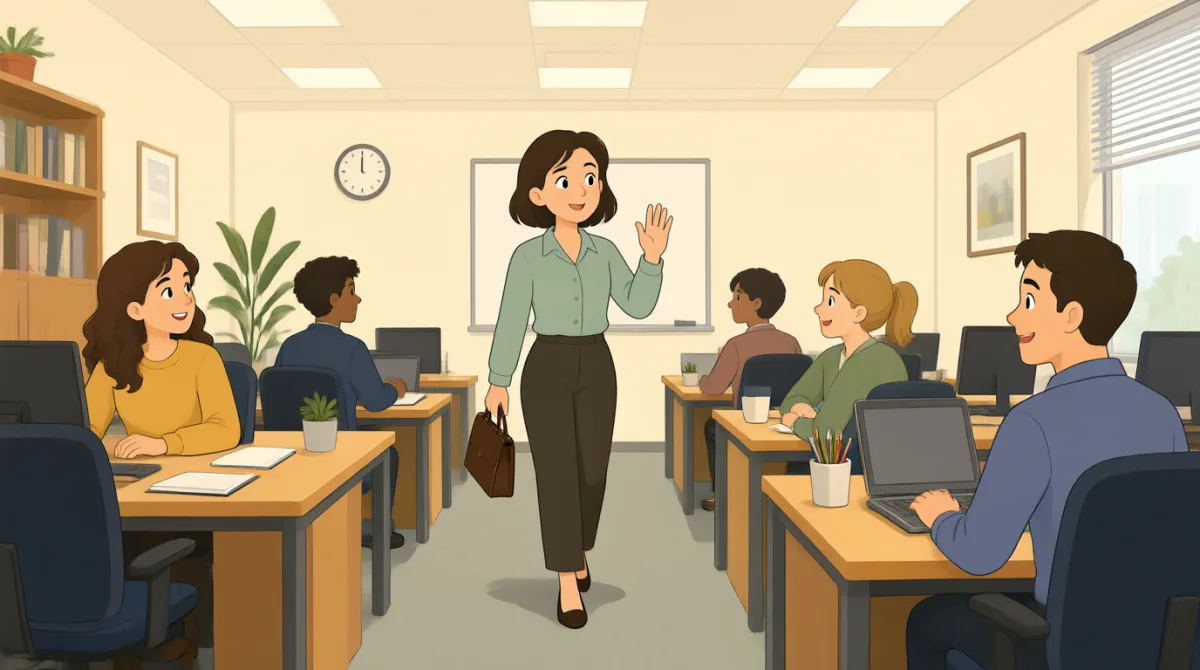

Alright everyone, I'm heading out. Have a good evening!
अच्छा, सब लोग, मैं निकलता हूँ। आपकी शाम अच्छी हो!

See ya, Jack! You too. Have a good one.
फिर मिलते हैं, जैक! तुम्हारी भी। अच्छा समय बिताना।

Later, Jack. Drive safe!
फिर मिलेंगे, जैक। गाड़ी संभलकर चलाना!
Thanks, guys! See you all tomorrow.
शुक्रिया, दोस्तों! कल आप सब से मिलूँगा।

Bye, Jack! Enjoy your evening.
अलविदा, जैक! तुम्हारी शाम अच्छी बीते।
You too, Grace. Good night!
तुम्हारी भी, ग्रेस। शुभ रात्रि!
शब्दावली8
- heading outनिकलना
This phrase means leaving or going away from a place, like leaving work. It's casual and common in everyday situations.
इस वाक्यांश का मतलब है किसी जगह से जाना या वहाँ से निकलना, जैसे काम से निकलना। यह अनौपचारिक है और रोज़मर्रा की बातचीत में आम है।
- eveningशाम
This refers to the time of day after afternoon and before night. Use it in goodbyes like 'Have a good evening' to wish someone a nice time after work.
दिन का वह समय जो दोपहर के बाद और रात से पहले आता है। काम के बाद किसी के लिए अच्छी शाम की कामना करने के लिए 'Have a good evening' जैसे अलविदा कहते समय इसका इस्तेमाल करें।
- see yaफिर मिलते हैं
An informal way to say 'see you later' or goodbye. It's short for 'see you' and used with friends or colleagues in casual settings.
'See you later' या अलविदा कहने का अनौपचारिक तरीका। यह 'see you' का छोटा रूप है और दोस्तों या सहकर्मियों के साथ अनौपचारिक माहौल में इस्तेमाल होता है।
- laterफिर मिलेंगे
A casual slang for 'see you later' or goodbye. It's very common among friends and coworkers to say when parting ways.
'See you later' या अलविदा कहने का एक अनौपचारिक, बोलचाल वाला तरीका। विदा होते समय दोस्त और सहकर्मी अक्सर इसका इस्तेमाल करते हैं।
- drive safeगाड़ी संभलकर चलाना
This means 'drive carefully' to wish someone a safe journey home by car. It's a polite and caring way to say goodbye when someone is driving.
इसका मतलब है 'गाड़ी सावधानी से चलाना'। कार से घर जा रहे किसी व्यक्ति के सुरक्षित सफ़र की कामना करने के लिए कहते हैं। विदा लेते समय चिंता और अपनापन जताने का यह विनम्र तरीका है।
- guysदोस्तों
An informal word for a group of people, like 'everyone' or 'you all.' It's used casually with colleagues or friends, regardless of gender.
लोगों के समूह के लिए इस्तेमाल होने वाला अनौपचारिक शब्द, जैसे 'everyone' या 'you all'। सहकर्मियों या दोस्तों से अनौपचारिक ढंग से बात करते समय यह किसी भी लिंग के लोगों के लिए इस्तेमाल हो सकता है।
- enjoyआनंद लेना
To get pleasure from something. In goodbyes, say 'Enjoy your evening' to wish someone a fun or relaxing time after leaving.
किसी चीज़ से खुशी या मज़ा पाना। विदा लेते समय 'Enjoy your evening' कहकर आप किसी के काम के बाद के समय के मज़ेदार या सुकूनभरे होने की कामना करते हैं।
- good nightशुभ रात्रि
A standard farewell used in the evening or before bed. It means wishing someone a peaceful night, often at the end of the day.
शाम को या सोने से पहले कहे जाने वाला आम विदाई-संबंधी अभिवादन। इसका मतलब है किसी की रात शांतिपूर्ण होने की कामना करना; अक्सर दिन के अंत में इसका इस्तेमाल होता है।
मुख्य वाक्य6
- 1
Alright everyone, I'm heading out. Have a good evening!
अच्छा, सब लोग, मैं निकलता हूँ। आपकी शाम अच्छी हो!
This is a casual way to announce you're leaving work and wish others well. 'Alright everyone' gets attention politely; 'Have a good evening' is a common farewell for the end of the day. Useful for office settings to say goodbye to the group.
काम से निकलते समय दूसरों को बताने और उनके लिए शुभकामना देने का यह अनौपचारिक तरीका है। 'Alright everyone' कहकर आप विनम्रता से सबका ध्यान खींचते हैं; 'Have a good evening' दिन के अंत में विदा लेने का आम तरीका है। दफ़्तर में समूह को अलविदा कहने के लिए यह उपयोगी है।
- 2
See ya, Jack! You too. Have a good one.
फिर मिलते हैं, जैक! तुम्हारी भी। अच्छा समय बिताना।
'See ya' is informal for goodbye, and 'You too' mirrors the other person's wish. 'Have a good one' means 'have a good day/evening' vaguely. This pattern is great for quick, friendly responses in casual conversations.
'See ya' अलविदा कहने का अनौपचारिक तरीका है, और 'You too' सामने वाले की शुभकामना का जवाब देता है। 'Have a good one' का धुँधला-सा मतलब है 'तुम्हारा दिन/शाम अच्छा रहे'। अनौपचारिक बातचीत में तुरंत और दोस्ताना जवाब देने के लिए यह ढाँचा बढ़िया है।
- 3
Later, Jack. Drive safe!
फिर मिलेंगे, जैक। गाड़ी संभलकर चलाना!
'Later' is slang for goodbye, and 'Drive safe' adds a caring note for someone driving home. Use this when you know the person will drive; it's short and shows concern, common among coworkers.
'Later' अलविदा कहने का बोलचाल वाला तरीका है, और 'Drive safe' घर गाड़ी चलाकर जा रहे व्यक्ति के लिए चिंता जताता है। इसका इस्तेमाल तब करें जब आपको पता हो कि वह व्यक्ति गाड़ी चलाकर जाएगा। यह छोटा-सा वाक्य सहकर्मियों के बीच आम है और परवाह दिखाता है।
- 4
Thanks, guys! See you all tomorrow.
शुक्रिया, दोस्तों! कल आप सब से मिलूँगा।
'Thanks, guys' acknowledges well-wishes informally, and 'See you all tomorrow' plans to meet again soon. The future tense 'see' here expresses expectation; ideal for work goodbyes when you'll return the next day.
'Thanks, guys' अनौपचारिक ढंग से शुभकामनाओं का जवाब देता है, और 'See you all tomorrow' बताता है कि आप जल्द ही फिर मिलेंगे। यहाँ भविष्यसूचक 'see' से मिलने की उम्मीद ज़ाहिर होती है। अगले दिन लौटने वाले हों, तो काम के बाद विदा लेते समय यह वाक्य बिल्कुल सही है।
- 5
Bye, Jack! Enjoy your evening.
अलविदा, जैक! तुम्हारी शाम अच्छी बीते।
'Bye' is a simple farewell, and 'Enjoy your evening' wishes relaxation after work. Use the verb 'enjoy' to make it positive; this sentence is polite and versatile for any end-of-day goodbye.
'Bye' विदा कहने का आसान तरीका है, और 'Enjoy your evening' काम के बाद आरामदायक समय बिताने की शुभकामना देता है। बात को सकारात्मक बनाने के लिए 'enjoy' क्रिया का इस्तेमाल करें। दिन के अंत में किसी को विदा कहने के लिए यह विनम्र और कई स्थितियों में काम आने वाला वाक्य है।
- 6
You too, Grace. Good night!
तुम्हारी भी, ग्रेस। शुभ रात्रि!
'You too' returns the wish politely, and 'Good night' is a standard evening farewell. It's a reciprocal pattern useful in conversations to keep things friendly and balanced.
'You too' सामने वाले की शुभकामना का विनम्रता से जवाब देता है, और 'Good night' शाम को विदा कहने का आम तरीका है। बातचीत में एक-दूसरे को शुभकामना देने और अपनापन बनाए रखने के लिए यह जवाबी ढाँचा उपयोगी है।