Short Visit Farewell
छोटी मुलाक़ात के बाद विदाई
Someone has made a brief visit to a friend's house or a store, and is now leaving with a simple goodbye.
कोई दोस्त के घर या दुकान पर थोड़ी देर के लिए आया है और अब एक साधारण अलविदा कहकर जा रहा है।
संवाद6
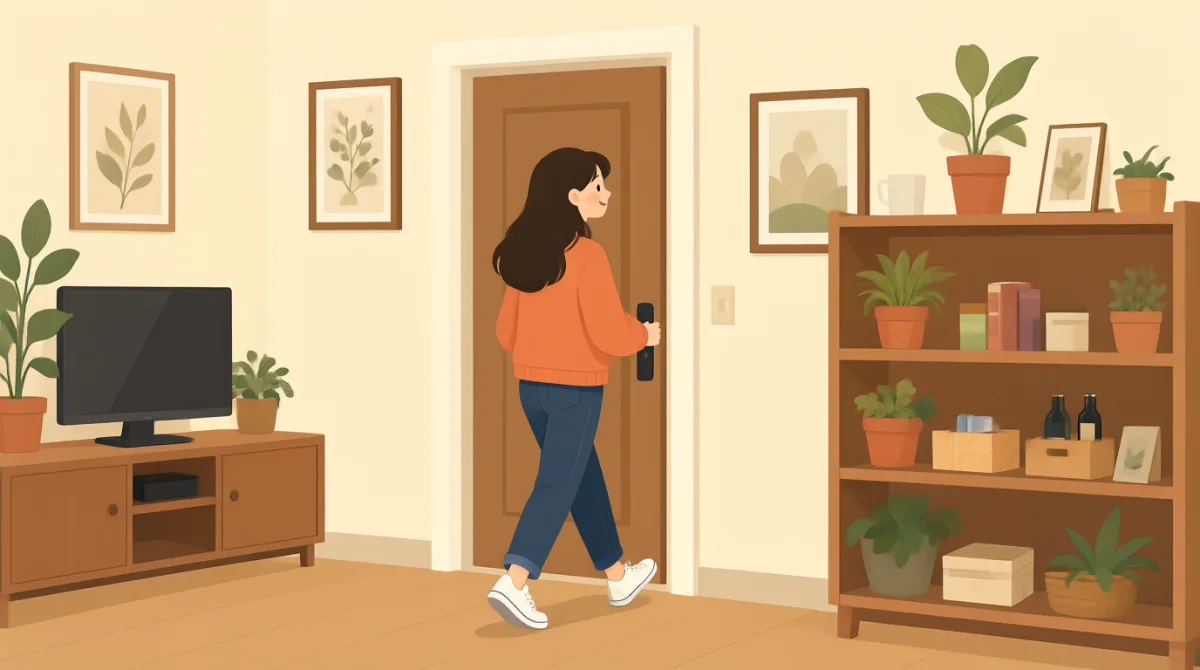

Well, it was great seeing you! I should probably head out now.
अच्छा, तुमसे मिलकर बहुत अच्छा लगा! अब शायद मुझे निकलना चाहिए।

Oh, already? Time flies when you're having fun! Thanks for stopping by, Emma.
अरे, इतनी जल्दी? मज़े करते हुए समय का पता ही नहीं चलता! एमा, आने के लिए शुक्रिया।
It really does! It was lovely catching up. Say hi to the family for me.
सच में! इतने दिनों बाद बातें करके बहुत अच्छा लगा। मेरी तरफ़ से घरवालों को नमस्ते कहना।
I will. Drive safe!
ज़रूर। गाड़ी संभलकर चलाना!
You too! Bye for now!
तुम भी! अभी के लिए अलविदा!
Bye, Emma!
अलविदा, एमा!
शब्दावली6
- head outनिकल पड़ना
This phrasal verb means to leave a place or start a journey. It's casual and common when saying goodbye after a short visit, like 'I need to head out now.'
यह phrasal verb किसी जगह से जाने या सफ़र शुरू करने के लिए बोला जाता है। थोड़ी देर की मुलाक़ात के बाद विदा लेते समय यह आम और अनौपचारिक है, जैसे 'I need to head out now.' (मुझे अब निकलना चाहिए।)
- time fliesसमय का तेज़ी से बीतना
An idiom meaning time passes very quickly, especially when you are enjoying yourself. Use it to express surprise that time has gone so fast during a fun meeting.
यह मुहावरा बताता है कि समय बहुत तेज़ी से बीत रहा है, खासकर जब आप आनंद ले रहे हों। मज़ेदार मुलाक़ात के दौरान समय इतनी जल्दी बीत जाने पर हैरानी जताने के लिए इसका इस्तेमाल करें।
- stopping byथोड़ी देर के लिए आना
This phrase means making a quick, unplanned visit to someone's place. It's polite to thank someone for 'stopping by' when they leave after a brief stay.
इस वाक्यांश का मतलब है किसी के घर थोड़ी देर के लिए, अक्सर बिना पहले से तय किए, जाना। थोड़ी देर रुककर जाने वाले मेहमान को 'stopping by' के लिए धन्यवाद कहना अच्छा लगता है।
- catching upहालचाल की बातें करना
This gerund form means talking and sharing news with someone you haven't seen for a while. It's useful in goodbyes to show you enjoyed reconnecting.
क्रिया का यह रूप ऐसे व्यक्ति से बातें करने और ख़बरें साझा करने के लिए है, जिससे आप कुछ समय से नहीं मिले हों। विदा लेते समय इससे पता चलता है कि दोबारा मिलकर और बातें करके आपको अच्छा लगा।
- say hiनमस्ते कहना
An informal way to ask someone to greet or say hello to another person on your behalf. It's friendly and common when mentioning family or friends.
किसी से अपनी ओर से दूसरे व्यक्ति को नमस्ते कहने का यह अनौपचारिक तरीका है। परिवार या दोस्तों का ज़िक्र करते समय यह दोस्ताना और आम है।
- drive safeगाड़ी संभलकर चलाना
A casual shortening of 'drive safely,' used to wish someone a safe journey by car. It's a common goodbye when the person is driving away.
यह 'drive safely' का अनौपचारिक छोटा रूप है, जिसका इस्तेमाल कार से जा रहे व्यक्ति के सुरक्षित सफ़र की कामना करने के लिए होता है। गाड़ी से जा रहे किसी व्यक्ति को विदा करते समय यह आम है।
मुख्य वाक्य5
- 1
Well, it was great seeing you! I should probably head out now.
अच्छा, तुमसे मिलकर बहुत अच्छा लगा! अब शायद मुझे निकलना चाहिए।
This is a polite way to say goodbye after a short visit. 'Well' is a filler for smooth transition; 'great seeing you' expresses enjoyment; 'should probably' softens the need to leave. Useful for ending casual meetings naturally.
छोटी मुलाक़ात के बाद विदा कहने का यह एक विनम्र तरीका है। 'Well' बात को सहजता से आगे बढ़ाने के लिए कहा जाता है; 'great seeing you' बताता है कि मिलकर अच्छा लगा; और 'should probably' जाने की ज़रूरत को थोड़ा नरम ढंग से कहता है। अनौपचारिक मुलाक़ात को स्वाभाविक रूप से ख़त्म करने के लिए यह उपयोगी है।
- 2
Time flies when you're having fun!
मज़े करते हुए समय का पता ही नहीं चलता!
An idiomatic expression to explain why time feels short during enjoyable times. The structure uses present continuous ('you're having') for ongoing action. Say it when surprised by how quickly a visit ends.
यह मुहावरेदार अभिव्यक्ति बताती है कि मज़ेदार समय बिताते हुए वक्त छोटा क्यों लगता है। इसकी बनावट में जारी काम के लिए present continuous ('you're having') का इस्तेमाल हुआ है। मुलाक़ात इतनी जल्दी ख़त्म होने पर हैरानी जताने के लिए यह कहें।
- 3
Thanks for stopping by, Emma.
आने के लिए शुक्रिया, एमा।
A thankful goodbye phrase after a brief visit. 'Thanks for' + gerund ('stopping by') shows gratitude. It's practical for hosts to use when guests leave unexpectedly or quickly.
थोड़ी देर की मुलाक़ात के बाद धन्यवाद के साथ विदा कहने का यह तरीका है। 'Thanks for' के बाद gerund ('stopping by') लगाकर आभार जताया जाता है। मेहमान के अचानक या थोड़ी देर के लिए आने पर मेज़बान यह कह सकते हैं।
- 4
It was lovely catching up. Say hi to the family for me.
इतने दिनों बाद बातें करके बहुत अच्छा लगा। मेरी तरफ़ से घरवालों को नमस्ते कहना।
Expresses pleasure in talking about recent events ('catching up' in past continuous). 'Say hi to... for me' is a request to pass on greetings. Use this in goodbyes to friends to keep connections warm.
यह हाल की बातों के बारे में चर्चा करके खुशी जताता है ('catching up' past continuous में है)। 'Say hi to... for me' किसी से अपनी ओर से नमस्ते पहुँचाने का अनुरोध है। दोस्तों से विदा लेते समय अपनापन बनाए रखने के लिए इसका इस्तेमाल करें।
- 5
Drive safe! You too! Bye for now!
गाड़ी संभलकर चलाना! तुम भी! अभी के लिए अलविदा!
Short, reciprocal well-wishes: 'Drive safe' is imperative for safety; 'You too' mirrors it back; 'Bye for now' implies temporary farewell. Grammar is simple imperatives. Ideal for quick, friendly partings when leaving by car.
ये एक-दूसरे को दी गई छोटी शुभकामनाएँ हैं: 'Drive safe' सुरक्षित रहने का निर्देश है; 'You too' उसी शुभकामना को लौटाता है; और 'Bye for now' का मतलब है कि अभी के लिए विदा ले रहे हैं। इनमें सरल imperative वाक्यों का इस्तेमाल है। कार से जाते समय जल्दी और दोस्ताना विदाई के लिए ये बिल्कुल सही हैं।