Quick Check Before Sitting
बैठने से पहले जल्दी से पूछ लें
The person spots an empty seat and quickly asks the nearest person if it's available before fully committing to sitting down.
किसी को एक खाली सीट दिखती है और बैठने से पहले वह पास खड़े व्यक्ति से जल्दी से पूछता है कि क्या सीट खाली है।
संवाद4
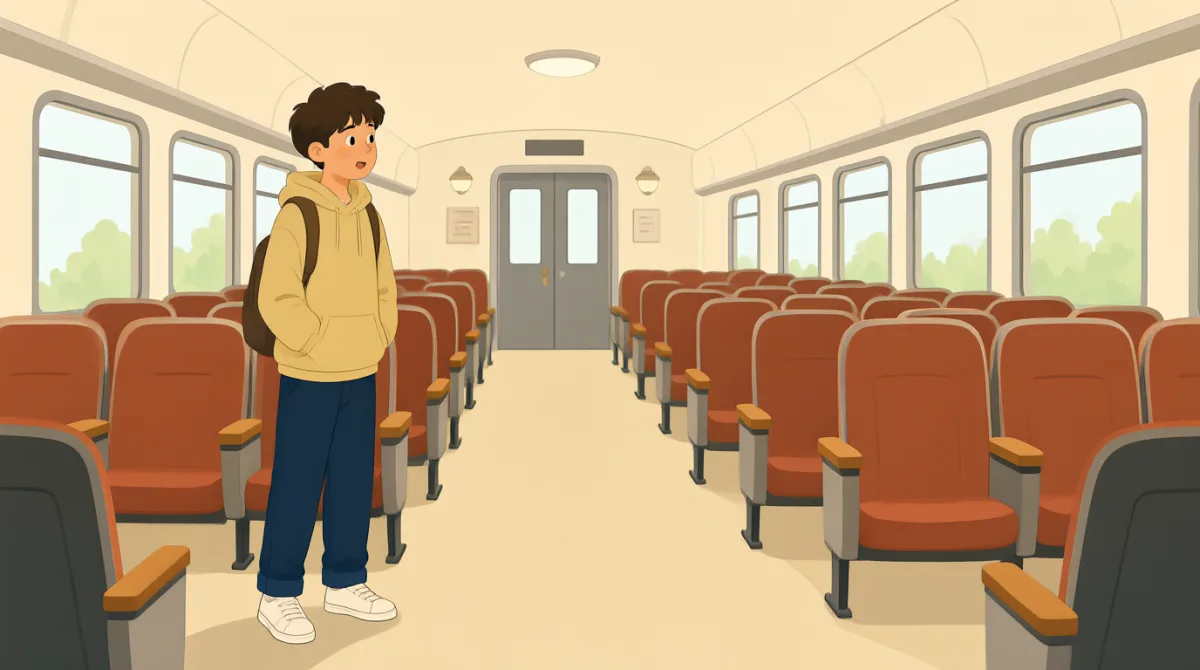

Excuse me, is this seat taken?
माफ़ कीजिए, क्या इस सीट पर कोई बैठा है?

No, it's not. Go ahead.
नहीं, कोई नहीं बैठा है। आप बैठ जाइए।
Great, thanks!
बहुत अच्छा, धन्यवाद!
No problem.
कोई बात नहीं।
शब्दावली4
- Excuse meExcuse me — माफ़ कीजिए
A polite way to get someone's attention or interrupt briefly, often used before asking a question in public places.
किसी का ध्यान खींचने या थोड़ी देर के लिए बीच में बोलने का एक विनम्र तरीका। सार्वजनिक जगहों पर सवाल पूछने से पहले इसका इस्तेमाल अक्सर किया जाता है।
- seatseat — सीट
A place to sit, like a chair or spot in a bus, theater, or restaurant; useful when checking availability in shared spaces.
बैठने की जगह, जैसे कुर्सी या बस, थिएटर अथवा रेस्तराँ में कोई जगह। साझा जगहों पर यह पूछने के लिए उपयोगी है कि जगह खाली है या नहीं।
- takentaken — किसी के बैठने से घिरी हुई
Means occupied or in use by someone else; commonly used with 'seat' or 'table' to ask if something is available.
इसका मतलब है कि जगह पर कोई बैठा है या कोई उसका इस्तेमाल कर रहा है। यह शब्द अक्सर 'seat' या 'table' के साथ इस्तेमाल होता है, यह पूछने के लिए कि जगह खाली है या नहीं।
- Go aheadGo ahead — ज़रूर, कर लीजिए
An informal expression giving permission to do something, like sitting down; it's friendly and encouraging.
किसी काम की अनुमति देने वाला अनौपचारिक वाक्यांश, जैसे बैठने की अनुमति देना। इसका लहजा दोस्ताना और प्रोत्साहित करने वाला होता है।
मुख्य वाक्य4
- 1
Excuse me, is this seat taken?
माफ़ कीजिए, क्या इस सीट पर कोई बैठा है?
This is a polite question to check if a seat is free before sitting; use it in public to avoid awkwardness. The structure uses 'is + noun + past participle' for present state.
बैठने से पहले यह पूछने का एक विनम्र तरीका है कि सीट खाली है या नहीं। असहज स्थिति से बचने के लिए सार्वजनिक जगहों पर इसका इस्तेमाल करें। इस वाक्य की बनावट 'is + noun + past participle' है, जिसका इस्तेमाल वर्तमान स्थिति बताने के लिए होता है।
- 2
No, it's not. Go ahead.
नहीं, कोई नहीं बैठा है। आप बैठ जाइए।
A helpful response confirming the seat is available and inviting the person to sit; 'it's not' is a contraction of 'it is not,' and 'go ahead' means proceed. Useful for being courteous in everyday interactions.
यह जवाब बताता है कि सीट खाली है और सामने वाले को बैठने के लिए कहता है। 'it's not' दरअसल 'it is not' का छोटा रूप है, और 'go ahead' का मतलब है आगे बढ़कर कुछ करना। रोज़मर्रा की बातचीत में विनम्रता दिखाने के लिए यह उपयोगी है।
- 3
Great, thanks!
बहुत अच्छा, धन्यवाद!
A quick way to express appreciation and relief; 'great' shows positivity. Use this short response after receiving permission to keep conversations light and polite.
आभार और राहत जताने का एक छोटा-सा तरीका। 'great' से सकारात्मकता झलकती है। बैठने की अनुमति मिलने के बाद बातचीत को सहज और विनम्र बनाए रखने के लिए इस छोटे जवाब का इस्तेमाल करें।
- 4
No problem.
कोई बात नहीं।
A casual reply to 'thank you,' meaning it's no trouble at all; common in informal English to acknowledge thanks without formality. Helps end exchanges smoothly.
'धन्यवाद' के जवाब में कहे जाने वाला एक अनौपचारिक वाक्यांश, जिसका मतलब है कि इसमें कोई परेशानी नहीं हुई। अनौपचारिक अंग्रेज़ी में धन्यवाद स्वीकार करने के लिए यह आम है। इससे बातचीत सहजता से समाप्त होती है।