Getting Directions to a Public Transport Hub
सार्वजनिक परिवहन केंद्र तक पहुँचने का रास्ता पूछना
A person asks for directions to the nearest bus stop, subway station, or train station to continue their journey.
एक व्यक्ति अपनी यात्रा जारी रखने के लिए पास के बस स्टॉप, मेट्रो स्टेशन या रेलवे स्टेशन का रास्ता पूछता है।
संवाद8
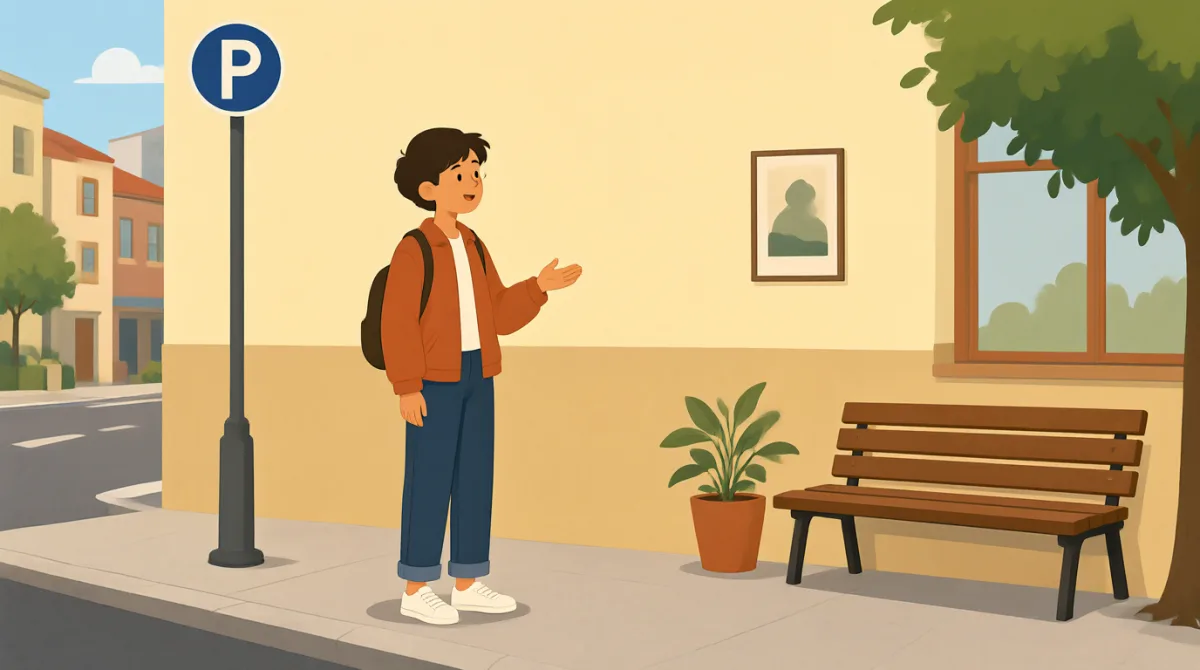

Excuse me, I'm a bit lost. Could you tell me how to get to the nearest bus stop?
माफ़ कीजिए, मैं थोड़ा रास्ता भटक गया हूँ। क्या आप बता सकते हैं कि सबसे नज़दीकी बस स्टॉप तक कैसे पहुँचूँ?

Certainly! There are a few bus stops nearby. Which direction are you heading?
ज़रूर! यहाँ पास में कुछ बस स्टॉप हैं। आप किस दिशा में जा रहे हैं?
I need to get to the city center, so I'm looking for a bus that goes that way.
मुझे शहर के केंद्र जाना है, इसलिए मैं उस तरफ़ जाने वाली बस ढूँढ़ रहा हूँ।
Okay, the easiest one for you would be to just walk straight down this street, past the traffic lights, and you'll see a bus stop right on the corner.
ठीक है, आपके लिए सबसे आसान रास्ता होगा कि इस सड़क पर सीधे चलते जाएँ, ट्रैफ़िक लाइट पार करके। आपको कोने पर ही बस स्टॉप दिख जाएगा।
Straight down this street, past the traffic lights, on the corner. Got it. About how far is that?
इस सड़क पर सीधे, ट्रैफ़िक लाइट पार करके, कोने पर। समझ गया। वहाँ तक पहुँचने में कितना समय लगेगा?
It's not far at all. Maybe a five-minute walk, tops. You can't miss it.
बिलकुल पास ही है। पैदल जाएँ तो शायद पाँच मिनट लगेंगे, ज़्यादा से ज़्यादा। आपको आसानी से दिख जाएगा।
Perfect, thank you so much for your help! I really appreciate it.
बहुत बढ़िया, आपकी मदद के लिए बहुत-बहुत धन्यवाद! मैं सचमुच आपका आभारी हूँ।
You're welcome! Have a good journey.
कोई बात नहीं! आपकी यात्रा मंगलमय हो।
शब्दावली11
- lostरास्ता भटका हुआ
Feeling confused and not knowing where you are, often used when asking for directions.
जब आप उलझन में हों और आपको पता न हो कि आप कहाँ हैं, तो यह शब्द इस्तेमाल होता है। रास्ता पूछते समय भी यह आम तौर पर कहा जाता है।
- nearestसबसे नज़दीकी
The closest one in distance, useful for asking about locations like stops or stations.
दूरी के हिसाब से सबसे पास वाला। बस स्टॉप या स्टेशन जैसी जगहों के बारे में पूछते समय यह काम आता है।
- bus stopबस स्टॉप
A place on the street where buses stop to let people get on or off.
सड़क पर वह जगह जहाँ बसें यात्रियों को चढ़ाने या उतारने के लिए रुकती हैं।
- headingकिस दिशा में जा रहे हैं
The direction you are going or traveling towards, common in travel conversations.
आप जिस दिशा में जा रहे या यात्रा कर रहे हैं। यात्रा के बारे में बातचीत में यह आम तौर पर इस्तेमाल होता है।
- city centerशहर का केंद्र
The main or central area of a city where shops, offices, and attractions are located.
शहर का मुख्य या बीच का इलाका, जहाँ दुकानें, दफ़्तर और घूमने-फिरने की जगहें होती हैं।
- straightसीधे
In a direct line without turning left or right, often used in giving directions.
बाएँ या दाएँ मुड़े बिना एक ही दिशा में जाना। रास्ता बताने में यह शब्द अक्सर इस्तेमाल होता है।
- traffic lightsट्रैफ़िक लाइटें
Signals at intersections that control vehicle and pedestrian traffic with red, yellow, and green lights.
चौराहों पर लगे वे संकेत, जिनकी लाल, पीली और हरी बत्तियाँ वाहनों और पैदल चलने वालों की आवाजाही नियंत्रित करती हैं।
- cornerकोना
The point where two streets meet, often where landmarks or stops are located.
वह जगह जहाँ दो सड़कें मिलती हैं। वहाँ अक्सर पहचान की जगहें या बस स्टॉप होते हैं।
- topsज़्यादा से ज़्यादा
Informal for 'at the most' or the maximum time or amount, like in estimates.
यह अनौपचारिक शब्द किसी अनुमान में अधिकतम समय या मात्रा बताता है।
- can't miss itआसानी से दिख जाएगा
An expression meaning it's very easy to see or find, used to reassure someone.
इस अभिव्यक्ति का मतलब है कि कोई चीज़ आसानी से दिखाई देगी या मिल जाएगी। इसका इस्तेमाल किसी को भरोसा दिलाने के लिए किया जाता है।
- appreciateआभारी होना
To feel grateful for someone's help or kindness, polite way to say thank you.
किसी की मदद या दयालुता के लिए कृतज्ञ महसूस करना। धन्यवाद कहने का यह एक विनम्र तरीका है।
मुख्य वाक्य8
- 1
Excuse me, I'm a bit lost. Could you tell me how to get to the nearest bus stop?
माफ़ कीजिए, मैं थोड़ा रास्ता भटक गया हूँ। क्या आप बता सकते हैं कि सबसे नज़दीकी बस स्टॉप तक कैसे पहुँचूँ?
This polite way to start asking for directions uses 'Excuse me' to get attention and 'Could you tell me' for a request; useful for beginners when you're unsure of your location.
रास्ता पूछने की यह विनम्र शुरुआत ध्यान खींचने के लिए 'Excuse me' और अनुरोध करने के लिए 'Could you tell me' का इस्तेमाल करती है। अगर आपको अपनी जगह का पता न हो, तो शुरुआती स्तर पर यह वाक्य काम आता है।
- 2
Certainly! There are a few bus stops nearby. Which direction are you heading?
ज़रूर! यहाँ पास में कुछ बस स्टॉप हैं। आप किस दिशा में जा रहे हैं?
A helpful response offering options; 'Certainly' means 'of course,' and 'Which direction are you heading?' asks for more details using present continuous tense for ongoing travel.
यह जवाब मदद की पेशकश करता है और विकल्प बताता है। 'Certainly' का मतलब है 'बिलकुल', और 'Which direction are you heading?' मौजूदा यात्रा के बारे में पूछते हुए और जानकारी माँगता है।
- 3
I need to get to the city center, so I'm looking for a bus that goes that way.
मुझे शहर के केंद्र जाना है, इसलिए मैं उस तरफ़ जाने वाली बस ढूँढ़ रहा हूँ।
Explains your goal with 'I need to get to' for purpose and 'so' to connect reasons; practical for specifying destinations in transport queries.
'I need to get to' का इस्तेमाल अपना लक्ष्य बताने के लिए और 'so' का इस्तेमाल वजह जोड़ने के लिए किया गया है। यात्रा के दौरान अपनी मंज़िल बताने में यह वाक्य काम आता है।
- 4
Okay, the easiest one for you would be to just walk straight down this street, past the traffic lights, and you'll see a bus stop right on the corner.
ठीक है, आपके लिए सबसे आसान रास्ता होगा कि इस सड़क पर सीधे चलते जाएँ, ट्रैफ़िक लाइट पार करके। आपको कोने पर ही बस स्टॉप दिख जाएगा।
Gives clear directions using imperative 'walk straight down' and sequence words like 'past' and 'and you'll see'; 'would be' suggests the best option conditionally.
इसमें साफ़ निर्देश देने के लिए 'walk straight down' और क्रम बताने वाले शब्द जैसे 'past' और 'and you'll see' इस्तेमाल किए गए हैं। 'would be' शर्तिया अंदाज़ में सबसे अच्छा विकल्प सुझाता है।
- 5
Straight down this street, past the traffic lights, on the corner. Got it. About how far is that?
इस सड़क पर सीधे, ट्रैफ़िक लाइट पार करके, कोने पर। समझ गया। वहाँ तक पहुँचने में कितना समय लगेगा?
Repeats directions to confirm understanding with 'Got it,' then asks for distance; useful pattern for checking and clarifying in conversations.
'Got it' कहकर वक्ता यह पक्का करने के लिए निर्देश दोहराता है कि उसने उन्हें समझ लिया है, फिर दूरी के बारे में पूछता है। बातचीत में बात की पुष्टि करने और उसे स्पष्ट करने का यह एक उपयोगी तरीका है।
- 6
It's not far at all. Maybe a five-minute walk, tops. You can't miss it.
बिलकुल पास ही है। पैदल जाएँ तो शायद पाँच मिनट लगेंगे, ज़्यादा से ज़्यादा। आपको आसानी से दिख जाएगा।
Reassures with negation 'not far at all' and estimate 'five-minute walk'; 'tops' means maximum, and 'can't miss it' is idiomatic for easy to find.
'not far at all' कहकर भरोसा दिलाया जाता है कि जगह पास है और 'five-minute walk' से अनुमानित समय बताया जाता है। 'tops' का मतलब है अधिकतम, जबकि 'can't miss it' एक मुहावरा है जिसका अर्थ है कि जगह आसानी से मिल जाएगी।
- 7
Perfect, thank you so much for your help! I really appreciate it.
बहुत बढ़िया, आपकी मदद के लिए बहुत-बहुत धन्यवाद! मैं सचमुच आपका आभारी हूँ।
Expresses thanks emphatically with 'thank you so much' and 'I really appreciate it'; 'Perfect' shows satisfaction, common in polite endings.
'thank you so much' और 'I really appreciate it' के ज़रिए ज़ोर देकर धन्यवाद दिया जाता है। 'Perfect' से संतुष्टि ज़ाहिर होती है। विनम्रता से बातचीत ख़त्म करते समय ये वाक्य आम हैं।
- 8
You're welcome! Have a good journey.
कोई बात नहीं! आपकी यात्रा मंगलमय हो।
Standard response to thanks; 'You're welcome' is polite, and 'Have a good journey' wishes well using imperative for future travel.
यह धन्यवाद के जवाब में कहे जाने वाला आम वाक्य है। 'You're welcome' विनम्र जवाब है और 'Have a good journey' आगे की यात्रा के लिए शुभकामना देता है।