Paying and Waiting for Order
भुगतान करना और ऑर्डर का इंतज़ार करना
After placing an order, the customer pays for their items and is informed about how long the wait will be and where to pick up their order.
ऑर्डर देने के बाद ग्राहक अपने सामान का भुगतान करता है और उसे बताया जाता है कि इंतज़ार में कितना समय लगेगा और ऑर्डर कहाँ से लेना है।
संवाद7
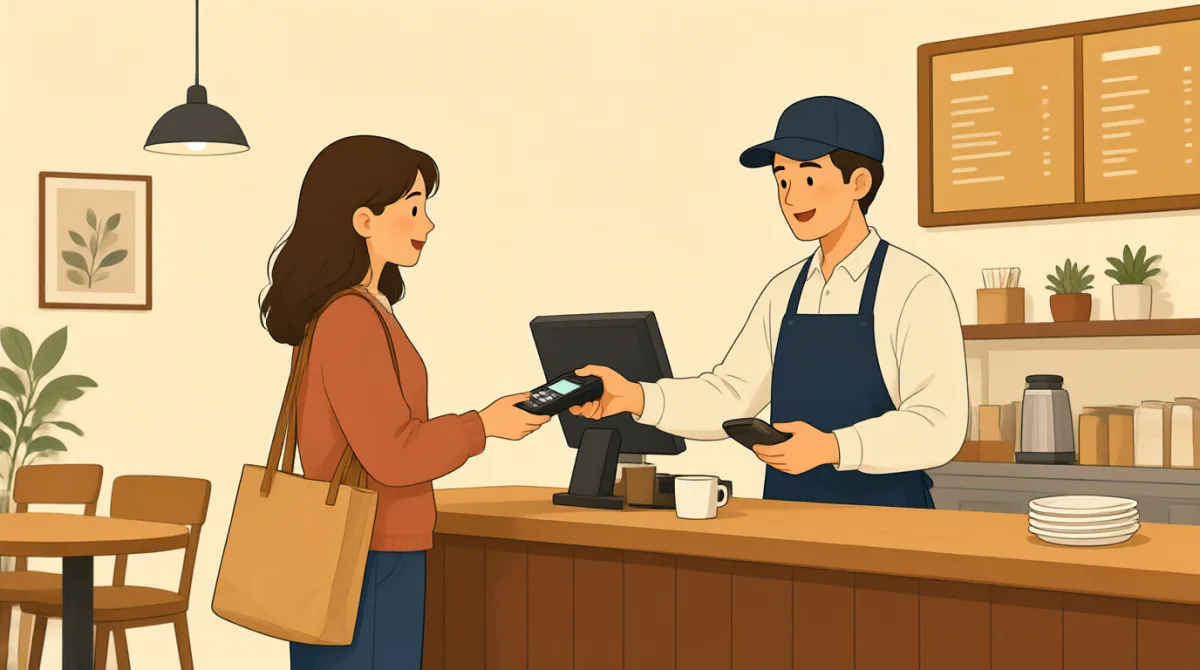

That'll be $8.50. Will that be cash or card?
कुल $8.50 होंगे। नकद देंगे या कार्ड से?

Card, please. Here you go.
कार्ड से, कृपया। ये लीजिए।
Thanks. Just insert your card here. And would you like a receipt?
धन्यवाद। बस अपना कार्ड यहाँ डाल दीजिए। और क्या आपको रसीद चाहिए?
No, thanks. How long will it be?
नहीं, धन्यवाद। कितना समय लगेगा?
It should be about 5 to 7 minutes. We'll call your name when it's ready. You can pick it up at the counter over there.
लगभग 5 से 7 मिनट लगने चाहिए। तैयार होने पर हम आपका नाम पुकारेंगे। आप वहाँ काउंटर से अपना ऑर्डर ले सकते हैं।
Okay, sounds good. Thanks!
ठीक है, बढ़िया। धन्यवाद!
You're welcome. Enjoy your day!
कोई बात नहीं। आपका दिन अच्छा रहे!
शब्दावली6
- cashनकद
Money in physical form, like bills and coins, used for paying at stores or shops.
कागज़ी नोटों और सिक्कों जैसे भौतिक पैसे, जिनसे दुकानों में भुगतान किया जाता है।
- cardकार्ड
A plastic payment card, like a credit or debit card, used to pay without using cash.
क्रेडिट या डेबिट कार्ड जैसा प्लास्टिक का भुगतान कार्ड, जिससे नकद दिए बिना पैसे चुकाए जाते हैं।
- receiptरसीद
A small piece of paper or digital record that shows what you bought and how much you paid.
कागज़ का छोटा पर्चा या डिजिटल रिकॉर्ड, जिसमें खरीदी गई चीज़ें और चुकाई गई रकम दर्ज होती है।
- insertडालना
To put something into a slot or opening, like sliding a card into a machine to pay.
किसी चीज़ को किसी स्लॉट या छेद के भीतर रखना, जैसे भुगतान के लिए मशीन में कार्ड डालना।
- counterकाउंटर
A long flat surface in a shop where customers order and pick up items, like food or drinks.
दुकान में लंबी, समतल जगह जहाँ ग्राहक ऑर्डर देते हैं और खाना या पेय जैसी चीज़ें लेते हैं।
- pick upले लेना
To go and get something that is ready for you, like collecting your order at a shop.
तैयार रखी हुई चीज़ लेने जाना, जैसे दुकान से अपना ऑर्डर लेना।
मुख्य वाक्य6
- 1
That'll be $8.50. Will that be cash or card?
कुल $8.50 होंगे। नकद देंगे या कार्ड से?
This is a common way for a cashier to ask for payment after ordering. 'That'll be' means 'the total is', and it's polite to offer choices like cash or card. Use this when working in a shop to total the bill.
ऑर्डर देने के बाद भुगतान पूछने का यह कैशियर का आम तरीका है। 'That'll be' का मतलब है 'कुल रकम होगी'। नकद या कार्ड जैसे विकल्प विनम्रता से पूछे जाते हैं। दुकान में बिल की कुल रकम बताने के लिए इस वाक्य का इस्तेमाल करें।
- 2
Card, please. Here you go.
कार्ड से, कृपया। ये लीजिए।
A simple response when choosing to pay with a card. 'Here you go' means handing over the item politely. This is useful for customers paying quickly and naturally in everyday situations.
कार्ड से भुगतान करने का चुनाव करते समय यह एक आसान जवाब है। 'Here you go' का मतलब है कोई चीज़ विनम्रता से आगे बढ़ाकर देना। रोज़मर्रा की स्थितियों में ग्राहक जल्दी और सहजता से भुगतान करते हुए यह कह सकते हैं।
- 3
Just insert your card here. And would you like a receipt?
बस अपना कार्ड यहाँ डाल दीजिए। और क्या आपको रसीद चाहिए?
Instructions for payment plus a polite offer. 'Just' makes it sound easy and helpful. 'Would you like' is a courteous way to ask for preferences. Use this in service roles to guide customers.
इसमें भुगतान करने का निर्देश देने के साथ एक विनम्र पेशकश भी है। 'Just' से बात आसान और मददगार लगती है। 'Would you like' पसंद पूछने का एक विनम्र तरीका है। ग्राहकों को राह दिखाते समय सेवा से जुड़े कामों में इसका इस्तेमाल करें।
- 4
No, thanks. How long will it be?
नहीं, धन्यवाद। कितना समय लगेगा?
Declining something politely with 'No, thanks', then asking about wait time. This shows good manners and helps manage expectations. Useful for customers inquiring about order readiness.
पहले 'No, thanks' कहकर किसी चीज़ के लिए विनम्रता से मना किया जाता है, फिर इंतज़ार के समय के बारे में पूछा जाता है। इससे शिष्टाचार भी बना रहता है और ग्राहक को पता रहता है कि क्या उम्मीद करनी है। ऑर्डर तैयार होने का समय पूछने के लिए यह वाक्य काम आता है।
- 5
It should be about 5 to 7 minutes. We'll call your name when it's ready.
लगभग 5 से 7 मिनट लगने चाहिए। तैयार होने पर हम आपका नाम पुकारेंगे।
Giving an estimated time with 'should be about' for approximation, and explaining the process. 'We'll call your name' means announcing when ready. This is practical for informing customers in busy places like coffee shops.
'should be about' से अंदाज़न समय बताया जाता है, और आगे की प्रक्रिया भी समझाई जाती है। 'We'll call your name' का मतलब है कि ऑर्डर तैयार होने पर आपका नाम पुकारा जाएगा। कॉफ़ी शॉप जैसी व्यस्त जगहों पर ग्राहकों को जानकारी देने के लिए यह उपयोगी है।
- 6
You're welcome. Enjoy your day!
कोई बात नहीं। आपका दिन अच्छा रहे!
A standard polite response to 'thanks'. 'You're welcome' acknowledges gratitude, and 'Enjoy your day' is a friendly goodbye. Use this to end interactions positively in service settings.
'thanks' के जवाब में यह एक आम और विनम्र प्रतिक्रिया है। 'You're welcome' कहकर धन्यवाद स्वीकार किया जाता है, और 'Enjoy your day' दोस्ताना अंदाज़ में विदा कहता है। सेवा से जुड़ी बातचीत का अच्छा अंत करने के लिए इसका इस्तेमाल करें।