Addressing an Order Mistake
गलत ऑर्डर की शिकायत करना
A customer receives an incorrect order or notices a mistake and politely informs the barista to have it corrected.
ग्राहक को गलत ऑर्डर मिलता है या उसमें कोई गलती नज़र आती है, तो वह बरिस्ता को विनम्रता से बताता है ताकि उसे ठीक किया जा सके।
संवाद8
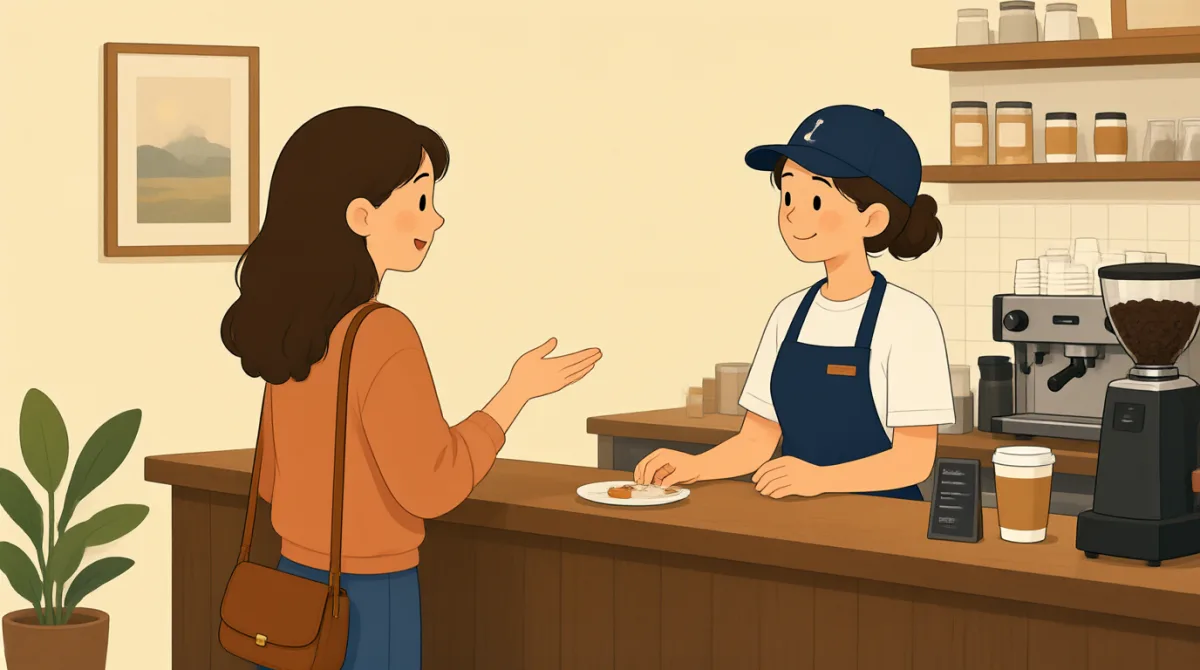

Excuse me, I think there might be a mistake with my order.
माफ़ कीजिए, लगता है मेरे ऑर्डर में शायद कोई गलती हो गई है।

Oh, I'm sorry to hear that. What's the issue?
ओह, यह सुनकर मुझे अफ़सोस हुआ। क्या समस्या है?
I ordered a large iced latte with oat milk, but this seems to be a regular latte with dairy milk.
मैंने ओट मिल्क वाला बड़ा आइस्ड लाटे ऑर्डर किया था, लेकिन यह तो सामान्य लाटे लग रहा है, जिसमें डेयरी वाला दूध है।
I see. My apologies for that. Let me check your receipt. What was your order number?
समझ गया। इसके लिए माफ़ी चाहता हूँ। मैं आपकी रसीद देखता हूँ। आपका ऑर्डर नंबर क्या था?
It's 145. I paid with a credit card.
145। मैंने क्रेडिट कार्ड से भुगतान किया था।
Okay, 145. Yes, I see it here. Large iced oat milk latte. We'll get a new one made for you right away. So sorry for the wait.
ठीक है, 145। हाँ, मुझे यहाँ दिख रहा है। ओट मिल्क वाला बड़ा आइस्ड लाटे। हम अभी आपके लिए नया बनवा देते हैं। इंतज़ार करवाने के लिए बहुत माफ़ी चाहता हूँ।
No problem, thank you.
कोई बात नहीं, धन्यवाद।
It should be ready in about two minutes. You can wait over there, and I'll call your name.
यह लगभग दो मिनट में तैयार हो जाएगा। आप वहाँ इंतज़ार कर सकते हैं, मैं आपका नाम पुकारूँगा।
शब्दावली6
- mistakeगलती
A mistake is an error or something done wrong, like getting the wrong drink in an order. Use it to politely point out problems.
“Mistake” का मतलब है कोई त्रुटि या गलत काम, जैसे ऑर्डर में गलत पेय मिलना। किसी समस्या की ओर विनम्रता से ध्यान दिलाने के लिए इस शब्द का इस्तेमाल करें।
- issueसमस्या
An issue means a problem or concern. It's a polite way to ask about what's wrong without sounding too direct.
“Issue” का मतलब है समस्या या चिंता। बिना बहुत सीधे लगे, यह पूछने का विनम्र तरीका है कि क्या गड़बड़ है।
- receiptरसीद
A receipt is a piece of paper or digital record showing what you bought and paid for. It's useful for checking orders or returns.
“Receipt” कागज़ की पर्ची या डिजिटल रिकॉर्ड होता है, जिसमें खरीदी गई चीज़ों और उनके भुगतान की जानकारी होती है। ऑर्डर की जाँच करने या सामान लौटाने में यह काम आती है।
- order numberऑर्डर नंबर
An order number is a unique code given to your purchase to track it. It's common in stores and cafes to identify your items quickly.
“Order number” आपकी खरीदारी को पहचानने और ट्रैक करने के लिए दिया गया एक खास नंबर या कोड होता है। दुकानों और कैफ़े में इससे आपकी चीज़ें जल्दी पहचानने में मदद मिलती है।
- apologiesमाफ़ी
Apologies means 'I'm sorry' in a formal way. Use it to express regret for a mistake, especially in customer service.
“Apologies” औपचारिक ढंग से “मुझे माफ़ कीजिए” कहने का तरीका है। किसी गलती के लिए खेद जताने में, खासकर ग्राहक सेवा में, इसका इस्तेमाल करें।
- right awayतुरंत
Right away means immediately or without delay. It's used to promise quick action, like fixing an order fast.
“Right away” का मतलब है तुरंत या बिना देर किए। किसी काम को जल्दी करने का भरोसा देने के लिए इसका इस्तेमाल होता है, जैसे ऑर्डर को फटाफट ठीक करना।
मुख्य वाक्य6
- 1
Excuse me, I think there might be a mistake with my order.
माफ़ कीजिए, लगता है मेरे ऑर्डर में शायद कोई गलती हो गई है।
This is a polite way to start a conversation and point out a problem. 'Might be' softens the statement to sound less accusatory. Use it when noticing an error in service.
बातचीत शुरू करने और किसी समस्या की ओर ध्यान दिलाने का यह एक विनम्र तरीका है। “Might be” कहने से बात कम पक्की और कम आरोप लगाने वाली लगती है। सेवा में कोई गलती नज़र आने पर आप इसका इस्तेमाल कर सकते हैं।
- 2
Oh, I'm sorry to hear that. What's the issue?
ओह, यह सुनकर मुझे अफ़सोस हुआ। क्या समस्या है?
This shows empathy and asks for details. 'I'm sorry to hear that' expresses regret for the customer's inconvenience. It's useful for service workers to respond calmly.
इससे सहानुभूति ज़ाहिर होती है और आप समस्या के बारे में और जानकारी पूछते हैं। “I'm sorry to hear that” ग्राहक को हुई असुविधा के लिए खेद जताता है। सेवा-कर्मियों के लिए शांत ढंग से जवाब देने में यह उपयोगी है।
- 3
I ordered a large iced latte with oat milk, but this seems to be a regular latte with dairy milk.
मैंने ओट मिल्क वाला बड़ा आइस्ड लाटे ऑर्डर किया था, लेकिन यह तो सामान्य लाटे लग रहा है, जिसमें डेयरी वाला दूध है।
This contrasts what was ordered with what was received using 'but'. It's helpful for clearly describing the mistake in orders, including specifics like size and ingredients.
“But” का इस्तेमाल करके यह बताया गया है कि आपने क्या ऑर्डर किया था और आपको क्या मिला। ऑर्डर की गलती साफ़-साफ़ बताने के लिए यह वाक्य उपयोगी है। आप इसमें आकार और सामग्री जैसी खास बातें भी बता सकते हैं।
- 4
My apologies for that. Let me check your receipt. What was your order number?
इसके लिए माफ़ी चाहता हूँ। मैं आपकी रसीद देखता हूँ। आपका ऑर्डर नंबर क्या था?
This apologizes and offers to verify. 'My apologies' is formal politeness. Use it in customer service to take responsibility and gather info to fix the issue.
इसमें माफ़ी माँगने के साथ जानकारी की जाँच करने की पेशकश भी है। “My apologies” माफ़ी जताने का औपचारिक और विनम्र तरीका है। ग्राहक सेवा में ज़िम्मेदारी लेते हुए समस्या ठीक करने के लिए जानकारी जुटाने में इसका इस्तेमाल करें।
- 5
We'll get a new one made for you right away. So sorry for the wait.
हम अभी आपके लिए नया बनवा देते हैं। इंतज़ार करवाने के लिए बहुत माफ़ी चाहता हूँ।
This promises quick correction and another apology. 'Right away' means immediately. It's practical for reassuring customers during delays or errors.
इसमें गलती को जल्दी ठीक करने का भरोसा दिया गया है और फिर से माफ़ी माँगी गई है। “Right away” का मतलब है “तुरंत”। देरी या गलती होने पर ग्राहक को भरोसा दिलाने के लिए यह कहना काम आता है।
- 6
No problem, thank you.
कोई बात नहीं, धन्यवाद।
This is a polite, forgiving response. 'No problem' means it's okay, and 'thank you' shows appreciation. Use it to end interactions positively after a fix.
यह विनम्रता और समझदारी से दिया गया जवाब है। “No problem” का मतलब है कि कोई बात नहीं, और “thank you” कहने से आभार ज़ाहिर होता है। समस्या ठीक होने के बाद बातचीत को अच्छे ढंग से समाप्त करने के लिए इसका इस्तेमाल करें।