Bringing the Food
آوردن غذا
Grace asks Mia to bring the food to the table. Mia checks that everything is ready.
گریس از میا میخواهد غذا را سر میز بیاورد. میا بررسی میکند که همهچیز آماده باشد.
گفتوگو7
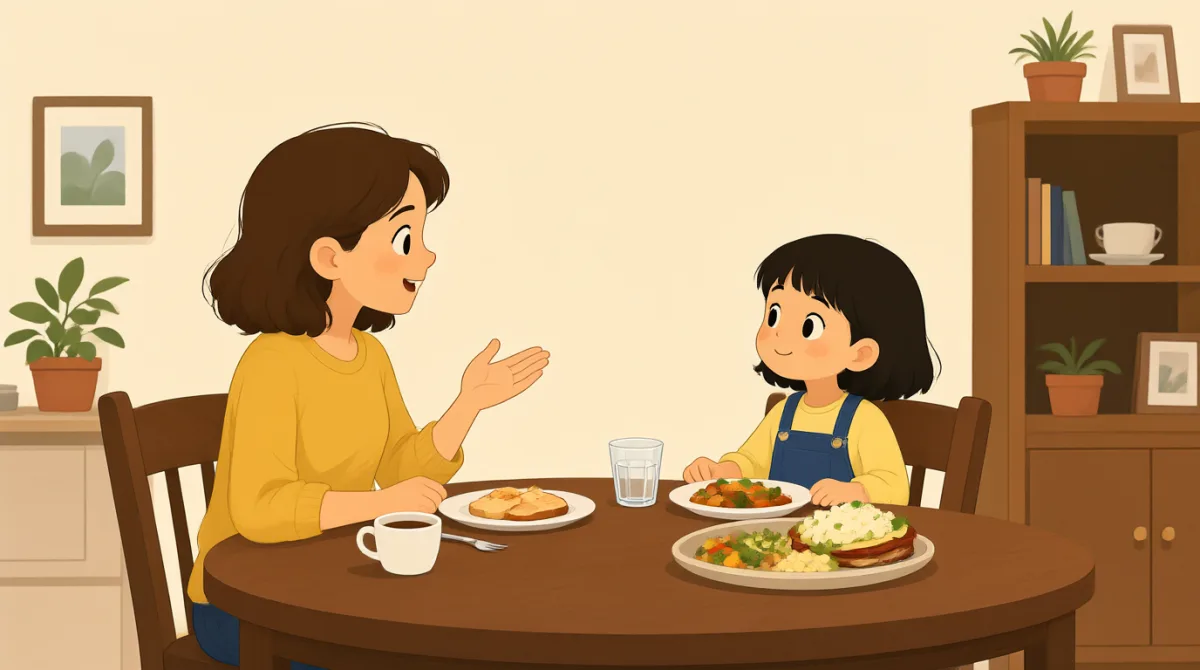

Mia, can you bring the food to the table?
میا، میتونی غذا رو سر میز بیاری؟

Sure. Is dinner ready?
حتماً. شام آمادهست؟
Yes, the soup and bread are ready.
آره، سوپ و نون آمادهان.
Great. Are the plates and forks on the table?
عالیه. بشقابها و چنگالها روی میزن؟
Yes, and there is a glass by each plate.
آره، کنار هر بشقاب یه لیوان هست.
Good. I’ll bring the soup first.
خوبه. اول سوپ رو میارم.
Thanks, Mia. I’ll bring the bread.
ممنون، میا. من نون رو میارم.
واژگان7
- bring the food to the tableغذا را سر میز آوردن
To carry the food to the place where people will eat. You can use this phrase when asking someone to serve a meal.
یعنی غذا را به جایی ببری که قرار است همه آنجا غذا بخورند. میتوانی از این عبارت برای درخواست از کسی که غذا را سر میز میآورد استفاده کنی.
- Is dinner ready?شام آماده است؟
A way to ask if the meal is prepared. You can replace “dinner” with another meal, such as “lunch.”
روشی برای پرسیدن اینکه غذا آماده شده است یا نه. میتوانی بهجای “dinner” (شام)، اسم وعدهٔ دیگری مثل “lunch” (ناهار) را به کار ببری.
- soupسوپ
A hot or cold liquid food, often eaten from a bowl. Here, it is part of the dinner.
غذایی مایع که میتواند گرم یا سرد باشد و معمولاً در کاسه خورده میشود. اینجا بخشی از شام است.
- breadنان
A common food made from flour. It is served with the soup in this conversation.
غذایی رایج که از آرد درست میشود. در این گفتوگو آن را همراه سوپ سرو میکنند.
- plates and forksبشقابها و چنگالها
Plates hold the food, and forks help people eat it. These are common things to prepare before a meal.
غذا را در بشقاب میگذارند و با چنگال میخورند. اینها از وسایلی هستند که معمولاً پیش از غذا آماده میشوند.
- by each plateکنار هر بشقاب
This means next to every plate. Use “by” to say that something is beside another thing.
یعنی کنار همهٔ بشقابها. از “by” برای گفتن اینکه چیزی کنار چیز دیگری است استفاده میکنیم.
- bring the soup firstاول سوپ را آوردن
This means to carry the soup before bringing anything else. “First” tells the order of actions.
یعنی پیش از آوردن هر چیز دیگری، سوپ را بیاوری. “First” ترتیب انجام کارها را نشان میدهد.
جملات کلیدی8
- 1
Mia, can you bring the food to the table?
میا، میتونی غذا رو سر میز بیاری؟
This is a polite way to ask someone to carry food to the table. You can reuse “Can you bring the [item] to the [place]?” for simple requests.
این راهی مؤدبانه برای درخواست از کسی است که غذا را سر میز بیاورد. برای درخواستهای ساده میتوانی از الگوی “Can you bring the [item] to the [place]?” (میتونی [وسیله] رو به [مکان] بیاری؟) استفاده کنی.
- 2
Sure.
حتماً.
This is a short, friendly way to agree to do something. You can use it when someone asks you for help.
این پاسخی کوتاه و دوستانه برای قبول کردن انجام کاری است. وقتی کسی از تو کمک میخواهد، میتوانی از آن استفاده کنی.
- 3
Is dinner ready?
شام آماده است؟
This is a simple way to ask whether a meal is prepared. Replace “dinner” with “breakfast” or “lunch” to ask about another meal.
این راهی ساده برای پرسیدن این است که آیا غذا آماده شده است یا نه. برای پرسیدن دربارهٔ وعدهای دیگر، بهجای “dinner” از “breakfast” یا “lunch” استفاده کن.
- 4
Yes, the soup and bread are ready.
آره، سوپ و نون آمادهان.
This sentence says that two foods are prepared. Use “X and Y are ready” to talk about more than one thing.
این جمله میگوید دو نوع غذا آماده شدهاند. برای صحبت دربارهٔ بیش از یک چیز از الگوی “X and Y are ready” (X و Y آمادهاند) استفاده کن.
- 5
Are the plates and forks on the table?
بشقابها و چنگالها روی میزن؟
This asks whether two items are in the right place. You can use “Are the [items] on the [surface]?” to check where things are.
این جمله میپرسد آیا دو وسیله در جای درستشان هستند یا نه. برای بررسی جای چیزها میتوانی از الگوی “Are the [items] on the [surface]?” (آیا [وسایل] روی [سطح] هستند؟) استفاده کنی.
- 6
Yes, and there is a glass by each plate.
آره، کنار هر بشقاب یه لیوان هست.
This tells someone that every plate has a glass beside it. Use “there is a [thing] by each [item]” to describe one thing next to every item.
این جمله به کسی میگوید که کنار هر بشقاب یک لیوان گذاشته شده است. برای توصیف چیزی که کنار هر یک از چند وسیله قرار دارد، از الگوی “there is a [thing] by each [item]” (کنار هر [وسیله] یک [چیز] هست) استفاده کن.
- 7
I’ll bring the soup first.
اول سوپ رو میارم.
This says what the speaker plans to carry and when. Use “I’ll bring the [item] first” to say what you will carry before other things.
این جمله میگوید گوینده قصد دارد چه چیزی را بیاورد و آن را چه زمانی میآورد. برای گفتن اینکه پیش از بقیهٔ چیزها چه چیزی را میآوری، از الگوی “I’ll bring the [item] first” (اول [وسیله] را میآورم) استفاده کن.
- 8
Thanks, Mia. I’ll bring the bread.
ممنون، میا. من نون رو میارم.
This thanks someone and says what the speaker will do. You can use “I’ll bring the [item]” to offer to carry something.
این جمله از کسی تشکر میکند و میگوید گوینده چه کاری انجام خواهد داد. برای پیشنهاد آوردن چیزی میتوانی از الگوی “I’ll bring the [item]” ([وسیله] را میآورم) استفاده کنی.