Bringing the Food
음식 가져오기
Grace asks Mia to bring the food to the table. Mia checks that everything is ready.
그레이스가 미아에게 음식을 식탁으로 가져와 달라고 해요. 미아는 모든 준비가 끝났는지 확인해요.
대화7
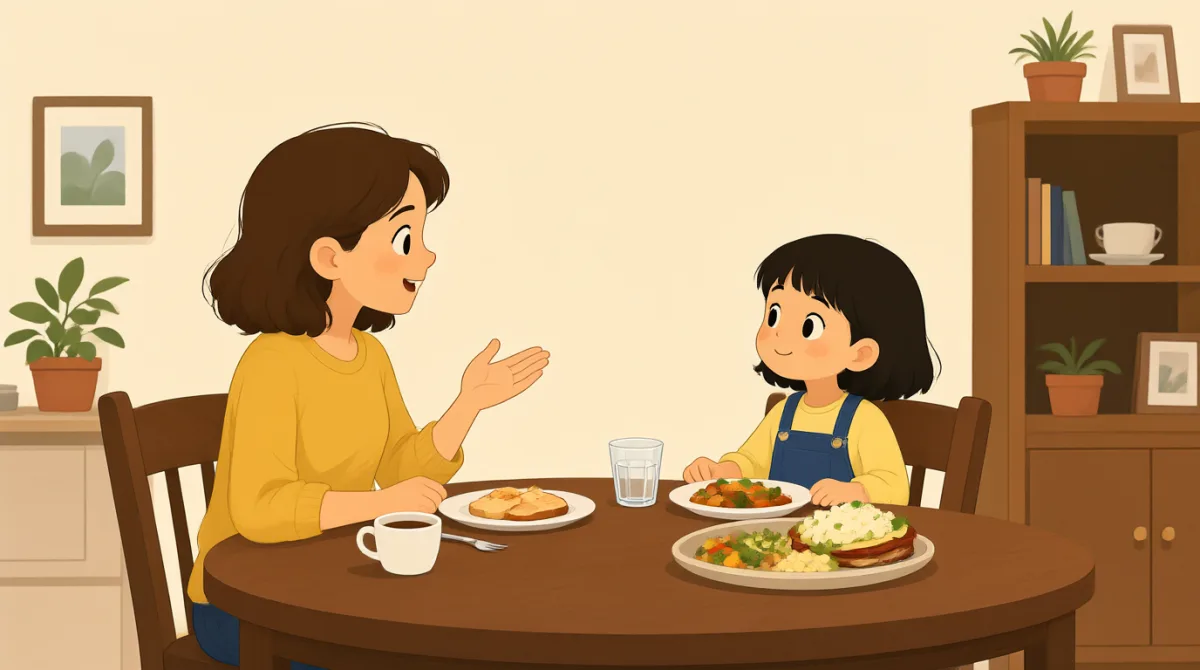

Mia, can you bring the food to the table?
미아, 음식 식탁으로 가져다줄래?

Sure. Is dinner ready?
응. 저녁 준비 다 됐어?
Yes, the soup and bread are ready.
응, 수프랑 빵은 준비됐어.
Great. Are the plates and forks on the table?
좋아. 접시랑 포크는 식탁에 있어?
Yes, and there is a glass by each plate.
응, 접시마다 옆에 유리컵도 있어.
Good. I’ll bring the soup first.
좋아. 내가 수프부터 가져갈게.
Thanks, Mia. I’ll bring the bread.
고마워, 미아. 내가 빵 가져갈게.
어휘7
- bring the food to the table음식을 식탁으로 가져오다
To carry the food to the place where people will eat. You can use this phrase when asking someone to serve a meal.
사람들이 먹을 곳으로 음식을 가져가는 거예요. 누군가에게 식사를 내오라고 부탁할 때 쓸 수 있는 표현이에요.
- Is dinner ready?저녁 준비 다 됐어?
A way to ask if the meal is prepared. You can replace “dinner” with another meal, such as “lunch.”
식사가 준비됐는지 묻는 표현이에요. “dinner” 대신 “lunch”처럼 다른 식사 이름을 넣어도 돼요.
- soup수프
A hot or cold liquid food, often eaten from a bowl. Here, it is part of the dinner.
뜨겁거나 차갑게 먹는 액체 음식으로, 보통 그릇에 담아 먹어요. 여기서는 저녁 식사의 일부예요.
- bread빵
A common food made from flour. It is served with the soup in this conversation.
밀가루로 만드는 흔한 음식이에요. 이 대화에서는 수프와 함께 내요.
- plates and forks접시와 포크
Plates hold the food, and forks help people eat it. These are common things to prepare before a meal.
접시에는 음식을 담고 포크로 음식을 먹어요. 식사 전에 준비하는 흔한 물건들이에요.
- by each plate각 접시 옆에
This means next to every plate. Use “by” to say that something is beside another thing.
모든 접시의 옆에 있다는 뜻이에요. “by”는 어떤 것이 다른 것의 옆에 있다고 말할 때 써요.
- bring the soup first수프를 먼저 가져오다
This means to carry the soup before bringing anything else. “First” tells the order of actions.
다른 것을 가져오기 전에 수프를 가져온다는 뜻이에요. “First”는 행동의 순서를 알려 줘요.
핵심 문장8
- 1
Mia, can you bring the food to the table?
미아, 음식 식탁으로 가져다줄래?
This is a polite way to ask someone to carry food to the table. You can reuse “Can you bring the [item] to the [place]?” for simple requests.
누군가에게 음식을 식탁으로 가져다 달라고 부탁하는 공손한 표현이에요. 간단히 부탁할 때 “Can you bring the [item] to the [place]?”라는 문형을 활용할 수 있어요.
- 2
Sure.
Sure. (그래.)
This is a short, friendly way to agree to do something. You can use it when someone asks you for help.
무언가를 하겠다고 친근하게 동의하는 짧은 표현이에요. 누군가 도움을 부탁할 때 쓸 수 있어요.
- 3
Is dinner ready?
Is dinner ready? (저녁 준비 다 됐어?)
This is a simple way to ask whether a meal is prepared. Replace “dinner” with “breakfast” or “lunch” to ask about another meal.
식사가 준비됐는지 간단히 묻는 표현이에요. 다른 식사가 궁금하면 “dinner” 대신 “breakfast”나 “lunch”를 넣어 보세요.
- 4
Yes, the soup and bread are ready.
Yes, the soup and bread are ready. (응, 수프랑 빵은 준비됐어.)
This sentence says that two foods are prepared. Use “X and Y are ready” to talk about more than one thing.
두 가지 음식이 준비됐다고 말하는 문장이에요. 여러 가지가 준비됐다고 말할 때 “X and Y are ready”를 써요.
- 5
Are the plates and forks on the table?
Are the plates and forks on the table? (접시랑 포크는 식탁에 있어?)
This asks whether two items are in the right place. You can use “Are the [items] on the [surface]?” to check where things are.
두 가지 물건이 제자리에 있는지 묻는 표현이에요. 물건의 위치를 확인할 때 “Are the [items] on the [surface]?”라고 물어볼 수 있어요.
- 6
Yes, and there is a glass by each plate.
Yes, and there is a glass by each plate. (응, 접시마다 옆에 유리컵도 있어.)
This tells someone that every plate has a glass beside it. Use “there is a [thing] by each [item]” to describe one thing next to every item.
모든 접시 옆에 유리컵이 하나씩 있다고 알려 주는 문장이에요. 각 물건 옆에 다른 물건이 하나씩 있다고 말할 때 “there is a [thing] by each [item]”을 써요.
- 7
I’ll bring the soup first.
I’ll bring the soup first. (내가 수프부터 가져갈게.)
This says what the speaker plans to carry and when. Use “I’ll bring the [item] first” to say what you will carry before other things.
화자가 무엇을 언제 가져갈 계획인지 말하는 문장이에요. 다른 것보다 먼저 어떤 물건을 가져가겠다고 할 때 “I’ll bring the [item] first”를 써요.
- 8
Thanks, Mia. I’ll bring the bread.
Thanks, Mia. I’ll bring the bread. (고마워, 미아. 내가 빵 가져갈게.)
This thanks someone and says what the speaker will do. You can use “I’ll bring the [item]” to offer to carry something.
상대에게 고맙다고 말하고 자신이 할 일을 알려 주는 문장이에요. 무언가를 가져가겠다고 제안할 때 “I’ll bring the [item]”을 쓸 수 있어요.