Bringing the Food
ยกอาหารไปที่โต๊ะ
Grace asks Mia to bring the food to the table. Mia checks that everything is ready.
เกรซขอให้มีอายกอาหารไปที่โต๊ะ มีอาเช็กว่าทุกอย่างพร้อมแล้วหรือยัง
บทสนทนา7
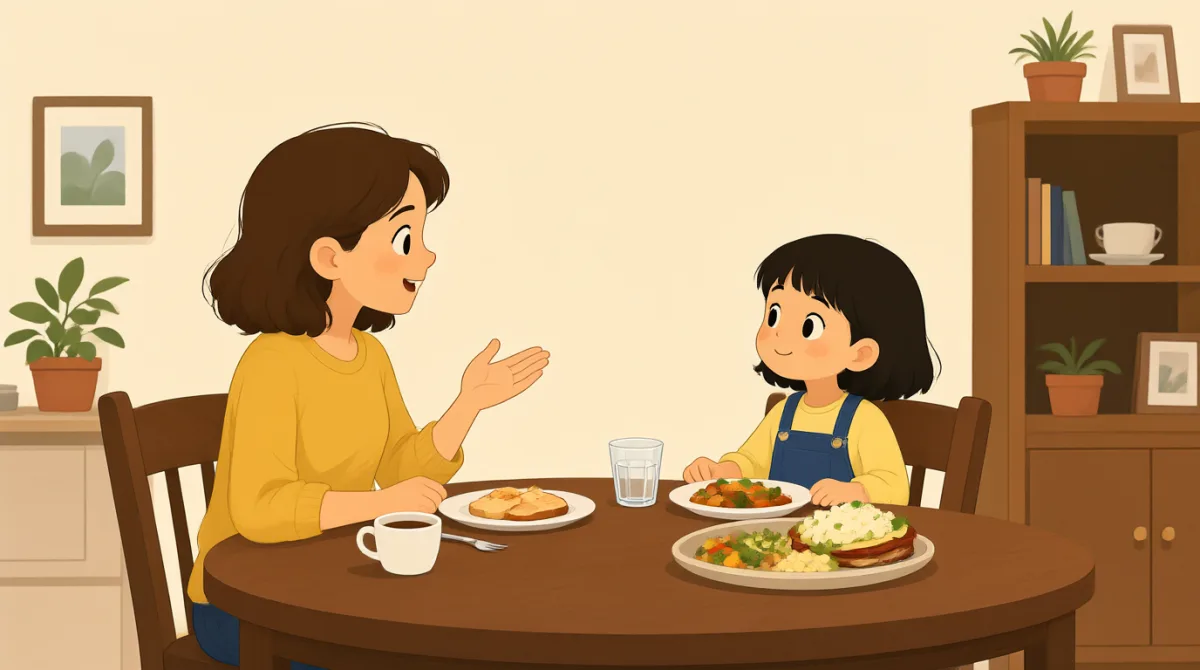

Mia, can you bring the food to the table?
มีอา ช่วยยกอาหารไปที่โต๊ะหน่อยได้ไหม

Sure. Is dinner ready?
ได้สิ มื้อเย็นพร้อมหรือยัง
Yes, the soup and bread are ready.
พร้อมแล้ว ซุปกับขนมปังพร้อมแล้ว
Great. Are the plates and forks on the table?
ดีเลย จานกับส้อมวางอยู่บนโต๊ะหรือยัง
Yes, and there is a glass by each plate.
วางแล้ว แล้วก็มีแก้ววางอยู่ข้างจานทุกใบด้วย
Good. I’ll bring the soup first.
ดีเลย ฉันจะยกซุปไปก่อนนะ
Thanks, Mia. I’ll bring the bread.
ขอบใจนะ มีอา ฉันจะยกขนมปังไปเอง
คำศัพท์7
- bring the food to the tableยกอาหารไปที่โต๊ะ
To carry the food to the place where people will eat. You can use this phrase when asking someone to serve a meal.
หมายถึงยกอาหารไปยังที่ที่ทุกคนจะกินข้าว วลีนี้ใช้ตอนขอให้ใครช่วยยกอาหารไปเสิร์ฟได้
- Is dinner ready?มื้อเย็นพร้อมหรือยัง
A way to ask if the meal is prepared. You can replace “dinner” with another meal, such as “lunch.”
เป็นวิธีถามว่าเตรียมอาหารมื้อนั้นเสร็จแล้วหรือยัง เปลี่ยน “dinner” เป็นมื้ออื่นได้ เช่น “lunch”
- soupซุป
A hot or cold liquid food, often eaten from a bowl. Here, it is part of the dinner.
อาหารที่เป็นของเหลว จะกินร้อนหรือเย็นก็ได้ และมักกินจากชาม ในบทสนทนานี้ ซุปเป็นส่วนหนึ่งของมื้อเย็น
- breadขนมปัง
A common food made from flour. It is served with the soup in this conversation.
อาหารทั่วไปที่ทำจากแป้ง ในบทสนทนานี้เสิร์ฟคู่กับซุป
- plates and forksจานกับส้อม
Plates hold the food, and forks help people eat it. These are common things to prepare before a meal.
จานใช้ใส่อาหาร ส่วนส้อมใช้ช่วยกิน ทั้งสองอย่างเป็นของที่มักเตรียมไว้ก่อนมื้ออาหาร
- by each plateข้างจานทุกใบ
This means next to every plate. Use “by” to say that something is beside another thing.
หมายถึงข้างจานทุกใบ ใช้ “by” เพื่อบอกว่าสิ่งหนึ่งอยู่ข้างอีกสิ่งหนึ่ง
- bring the soup firstยกซุปไปก่อน
This means to carry the soup before bringing anything else. “First” tells the order of actions.
หมายถึงยกซุปไปก่อนที่จะยกอย่างอื่น “first” ใช้บอกลำดับของสิ่งที่จะทำ
ประโยคสำคัญ8
- 1
Mia, can you bring the food to the table?
มีอา ช่วยยกอาหารไปที่โต๊ะหน่อยได้ไหม
This is a polite way to ask someone to carry food to the table. You can reuse “Can you bring the [item] to the [place]?” for simple requests.
นี่เป็นวิธีสุภาพในการขอให้ใครสักคนยกอาหารไปที่โต๊ะ นำ “Can you bring the [item] to the [place]?” ไปใช้ขอให้ช่วยทำอะไรอย่างง่าย ๆ ได้
- 2
Sure.
ได้สิ
This is a short, friendly way to agree to do something. You can use it when someone asks you for help.
เป็นคำตอบสั้น ๆ เป็นกันเอง เพื่อบอกว่าตกลงจะทำให้ ใช้ได้เมื่อมีคนขอให้ช่วย
- 3
Is dinner ready?
มื้อเย็นพร้อมหรือยัง
This is a simple way to ask whether a meal is prepared. Replace “dinner” with “breakfast” or “lunch” to ask about another meal.
เป็นวิธีง่าย ๆ ในการถามว่าเตรียมอาหารเสร็จแล้วหรือยัง เปลี่ยน “dinner” เป็น “breakfast” หรือ “lunch” เพื่อถามถึงมื้ออื่นได้
- 4
Yes, the soup and bread are ready.
ใช่ ซุปกับขนมปังพร้อมแล้ว
This sentence says that two foods are prepared. Use “X and Y are ready” to talk about more than one thing.
ประโยคนี้บอกว่าอาหารสองอย่างเตรียมพร้อมแล้ว ใช้ “X and Y are ready” เมื่อพูดถึงสิ่งมากกว่าหนึ่งอย่าง
- 5
Are the plates and forks on the table?
จานกับส้อมวางอยู่บนโต๊ะหรือยัง
This asks whether two items are in the right place. You can use “Are the [items] on the [surface]?” to check where things are.
ประโยคนี้ใช้ถามว่าสิ่งของสองอย่างอยู่ในที่ที่ควรอยู่หรือเปล่า ใช้ “Are the [items] on the [surface]?” เพื่อเช็กว่าสิ่งของอยู่ตรงไหน
- 6
Yes, and there is a glass by each plate.
ใช่ แล้วก็มีแก้ววางอยู่ข้างจานทุกใบ
This tells someone that every plate has a glass beside it. Use “there is a [thing] by each [item]” to describe one thing next to every item.
ประโยคนี้บอกว่ามีแก้ววางอยู่ข้างจานทุกใบ ใช้ “there is a [thing] by each [item]” เพื่อบอกว่ามีสิ่งหนึ่งอยู่ข้างของแต่ละชิ้น
- 7
I’ll bring the soup first.
ฉันจะยกซุปไปก่อนนะ
This says what the speaker plans to carry and when. Use “I’ll bring the [item] first” to say what you will carry before other things.
ประโยคนี้บอกว่าผู้พูดวางแผนจะยกอะไรไปและจะยกเมื่อไร ใช้ “I’ll bring the [item] first” เพื่อบอกว่าจะยกสิ่งใดไปก่อนอย่างอื่น
- 8
Thanks, Mia. I’ll bring the bread.
ขอบใจนะ มีอา ฉันจะยกขนมปังไปเอง
This thanks someone and says what the speaker will do. You can use “I’ll bring the [item]” to offer to carry something.
ประโยคนี้ใช้ขอบคุณอีกฝ่ายและบอกว่าผู้พูดจะทำอะไร ใช้ “I’ll bring the [item]” เพื่อเสนอตัวยกของไปให้ได้