Bringing the Food
खाना परोसना
Grace asks Mia to bring the food to the table. Mia checks that everything is ready.
ग्रेस मिया से खाना मेज़ पर लाने को कहती है। मिया देखती है कि सब कुछ तैयार है या नहीं।
संवाद7
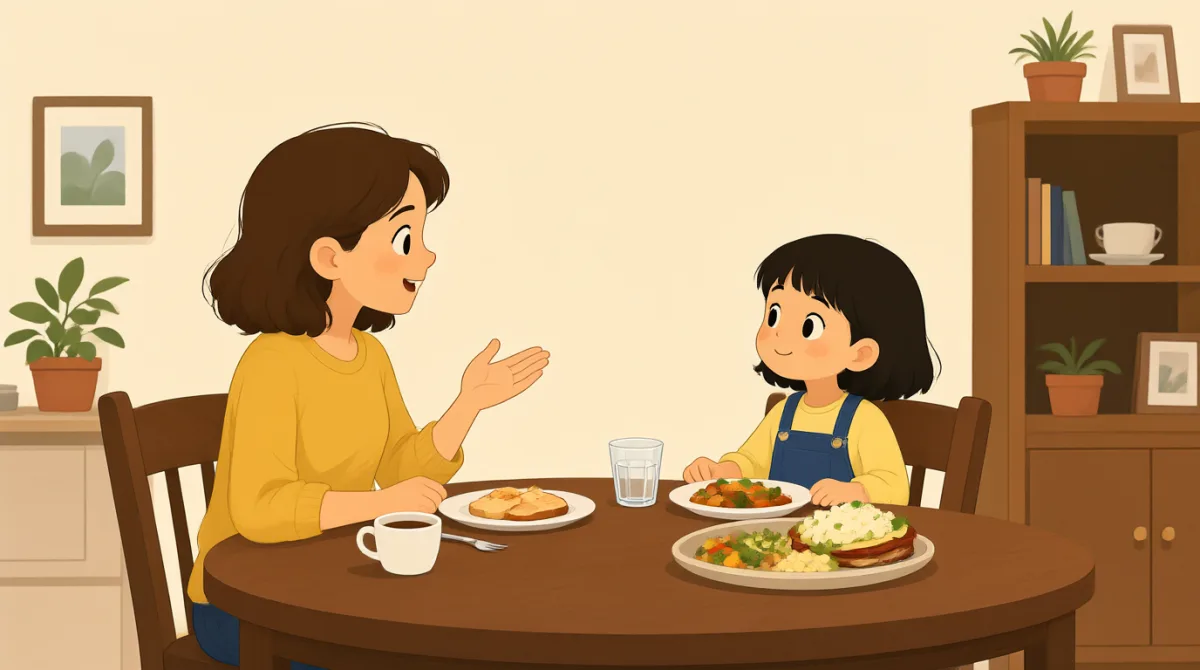

Mia, can you bring the food to the table?
मिया, क्या तुम खाना मेज़ पर ला सकती हो?

Sure. Is dinner ready?
ज़रूर। खाना तैयार है?
Yes, the soup and bread are ready.
हाँ, सूप और ब्रेड तैयार हैं।
Great. Are the plates and forks on the table?
बढ़िया। क्या प्लेटें और काँटे मेज़ पर हैं?
Yes, and there is a glass by each plate.
हाँ, और हर प्लेट के पास एक गिलास है।
Good. I’ll bring the soup first.
अच्छा। मैं पहले सूप लाती हूँ।
Thanks, Mia. I’ll bring the bread.
शुक्रिया, मिया। मैं ब्रेड लाती हूँ।
शब्दावली7
- bring the food to the tableखाना मेज़ पर लाना
To carry the food to the place where people will eat. You can use this phrase when asking someone to serve a meal.
खाने को उस जगह तक ले जाना जहाँ लोग खाना खाएँगे। किसी से खाना परोसने के लिए कहने में इस वाक्यांश का इस्तेमाल कर सकते हो।
- Is dinner ready?क्या रात का खाना तैयार है?
A way to ask if the meal is prepared. You can replace “dinner” with another meal, such as “lunch.”
खाना बनकर तैयार है या नहीं, यह पूछने का एक तरीका। “dinner” की जगह किसी दूसरे खाने का नाम रख सकते हो, जैसे “lunch”।
- soupसूप
A hot or cold liquid food, often eaten from a bowl. Here, it is part of the dinner.
एक तरल पकवान, जिसे गरम या ठंडा खाया जाता है और अक्सर कटोरे में परोसा जाता है। यहाँ यह रात के खाने का हिस्सा है।
- breadब्रेड
A common food made from flour. It is served with the soup in this conversation.
आटे से बनने वाला एक आम खाद्य पदार्थ। इस बातचीत में इसे सूप के साथ परोसा जाता है।
- plates and forksप्लेटें और काँटे
Plates hold the food, and forks help people eat it. These are common things to prepare before a meal.
प्लेटों में खाना रखा जाता है और काँटों से लोग खाना खाते हैं। खाने से पहले तैयार की जाने वाली ये आम चीज़ें हैं।
- by each plateहर प्लेट के पास
This means next to every plate. Use “by” to say that something is beside another thing.
इसका मतलब है हर प्लेट के बगल में। किसी चीज़ के दूसरी चीज़ के बगल में होने की बात कहने के लिए “by” का इस्तेमाल करो।
- bring the soup firstपहले सूप लाना
This means to carry the soup before bringing anything else. “First” tells the order of actions.
इसका मतलब है कोई और चीज़ लाने से पहले सूप ले जाना। “First” बताता है कि काम किस क्रम में होंगे।
मुख्य वाक्य8
- 1
Mia, can you bring the food to the table?
मिया, क्या तुम खाना मेज़ पर ला सकती हो?
This is a polite way to ask someone to carry food to the table. You can reuse “Can you bring the [item] to the [place]?” for simple requests.
किसी से खाना मेज़ पर लाने के लिए कहने का यह एक विनम्र तरीका है। आसान अनुरोध करने के लिए “Can you bring the [item] to the [place]?” का दोबारा इस्तेमाल कर सकते हो।
- 2
Sure.
ज़रूर।
This is a short, friendly way to agree to do something. You can use it when someone asks you for help.
किसी काम को करने के लिए हामी भरने का यह छोटा और दोस्ताना तरीका है। जब कोई तुमसे मदद माँगे, तब इसका इस्तेमाल कर सकते हो।
- 3
Is dinner ready?
क्या रात का खाना तैयार है?
This is a simple way to ask whether a meal is prepared. Replace “dinner” with “breakfast” or “lunch” to ask about another meal.
खाना तैयार है या नहीं, यह पूछने का यह एक आसान तरीका है। किसी दूसरे खाने के बारे में पूछने के लिए “dinner” की जगह “breakfast” या “lunch” रखो।
- 4
Yes, the soup and bread are ready.
हाँ, सूप और ब्रेड तैयार हैं।
This sentence says that two foods are prepared. Use “X and Y are ready” to talk about more than one thing.
इस वाक्य से पता चलता है कि खाने की दो चीज़ें तैयार हैं। एक से ज़्यादा चीज़ों के बारे में बात करने के लिए “X and Y are ready” का इस्तेमाल करो।
- 5
Are the plates and forks on the table?
क्या प्लेटें और काँटे मेज़ पर हैं?
This asks whether two items are in the right place. You can use “Are the [items] on the [surface]?” to check where things are.
इसमें पूछा जा रहा है कि क्या दो चीज़ें सही जगह पर हैं। चीज़ें कहाँ हैं, यह जाँचने के लिए “Are the [items] on the [surface]?” का इस्तेमाल कर सकते हो।
- 6
Yes, and there is a glass by each plate.
हाँ, और हर प्लेट के पास एक गिलास है।
This tells someone that every plate has a glass beside it. Use “there is a [thing] by each [item]” to describe one thing next to every item.
इससे किसी को बताया जाता है कि हर प्लेट के बगल में एक गिलास है। हर चीज़ के पास एक-एक चीज़ होने की बात बताने के लिए “there is a [thing] by each [item]” का इस्तेमाल करो।
- 7
I’ll bring the soup first.
मैं पहले सूप लाती हूँ।
This says what the speaker plans to carry and when. Use “I’ll bring the [item] first” to say what you will carry before other things.
इससे पता चलता है कि बोलने वाला क्या और कब ले जाने की योजना बना रहा है। दूसरी चीज़ों से पहले तुम क्या ले जाओगे, यह बताने के लिए “I’ll bring the [item] first” का इस्तेमाल करो।
- 8
Thanks, Mia. I’ll bring the bread.
शुक्रिया, मिया। मैं ब्रेड लाती हूँ।
This thanks someone and says what the speaker will do. You can use “I’ll bring the [item]” to offer to carry something.
इस वाक्य में किसी को धन्यवाद दिया जाता है और बताया जाता है कि बोलने वाला क्या करेगा। कुछ ले जाने की पेशकश करने के लिए “I’ll bring the [item]” का इस्तेमाल कर सकते हो।