Bringing the Food
料理を運ぶ
Grace asks Mia to bring the food to the table. Mia checks that everything is ready.
グレースがミアに料理をテーブルまで運んでくれるよう頼みます。ミアは準備ができているか確認します。
会話7
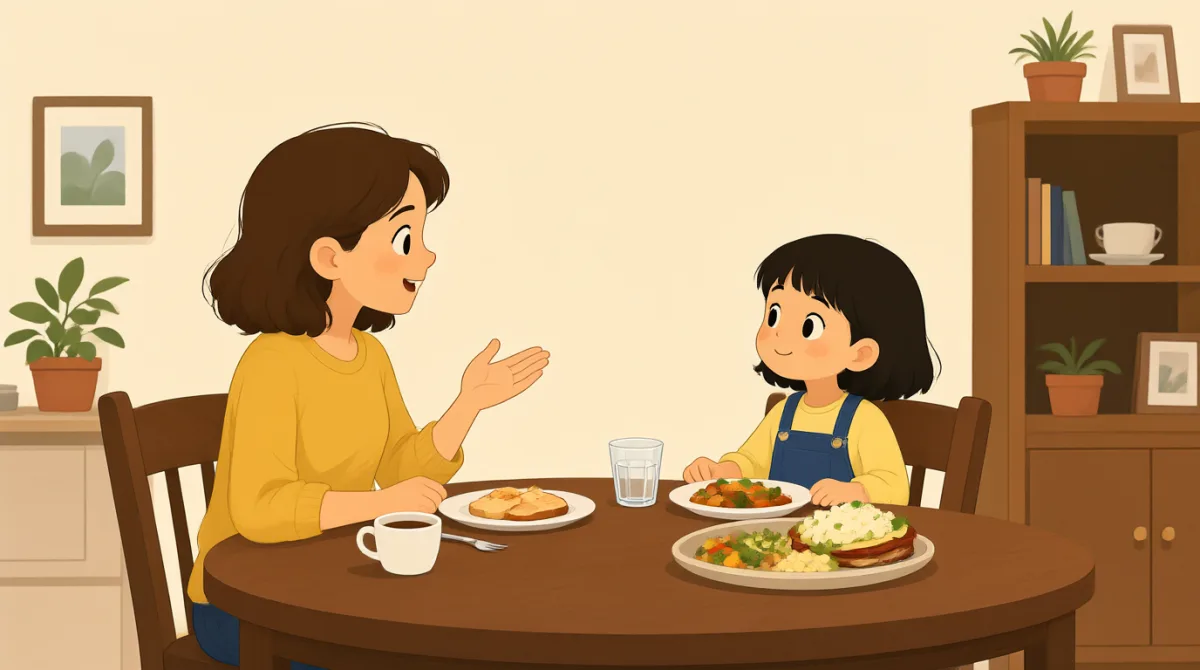

Mia, can you bring the food to the table?
ミア、料理をテーブルまで運んでくれる?

Sure. Is dinner ready?
いいよ。夕食の準備はできてる?
Yes, the soup and bread are ready.
うん、スープとパンはできてるよ。
Great. Are the plates and forks on the table?
よかった。お皿とフォークはテーブルにある?
Yes, and there is a glass by each plate.
うん、それぞれのお皿のそばにグラスもあるよ。
Good. I’ll bring the soup first.
よし。まずスープを運ぶね。
Thanks, Mia. I’ll bring the bread.
ありがとう、ミア。私はパンを運ぶね。
語彙7
- bring the food to the table料理をテーブルまで運ぶ
To carry the food to the place where people will eat. You can use this phrase when asking someone to serve a meal.
食べる場所まで料理を運ぶことです。食事を出すように誰かに頼むときに使える表現です。
- Is dinner ready?夕食の準備はできてる?
A way to ask if the meal is prepared. You can replace “dinner” with another meal, such as “lunch.”
食事の用意ができているか尋ねる言い方です。“dinner”を“lunch”(昼食)など、別の食事に置き換えられます。
- soupスープ
A hot or cold liquid food, often eaten from a bowl. Here, it is part of the dinner.
温かいものも冷たいものもある液状の食べ物で、よくボウルに入れて食べます。ここでは夕食の一品です。
- breadパン
A common food made from flour. It is served with the soup in this conversation.
小麦粉から作られる、よく食べられている食品です。この会話ではスープと一緒に出されます。
- plates and forksお皿とフォーク
Plates hold the food, and forks help people eat it. These are common things to prepare before a meal.
お皿には料理をのせ、フォークを使って食べます。どちらも食事の前に用意するものです。
- by each plateそれぞれのお皿のそばに
This means next to every plate. Use “by” to say that something is beside another thing.
すべてのお皿の横に、という意味です。“by”は、あるものが別のもののそばにあることを表します。
- bring the soup firstまずスープを運ぶ
This means to carry the soup before bringing anything else. “First” tells the order of actions.
ほかのものを運ぶ前にスープを運ぶ、という意味です。“first”は行動の順番を表します。
重要な文8
- 1
Mia, can you bring the food to the table?
ミア、料理をテーブルまで運んでくれる?
This is a polite way to ask someone to carry food to the table. You can reuse “Can you bring the [item] to the [place]?” for simple requests.
料理をテーブルまで運んでほしいときの、丁寧な頼み方です。“Can you bring the [item] to the [place]?”([場所]まで[もの]を運んでくれる?)は、簡単なお願いに繰り返し使えます。
- 2
Sure.
いいよ。
This is a short, friendly way to agree to do something. You can use it when someone asks you for help.
何かをすることに同意するときの、短くて親しみやすい言い方です。手伝いを頼まれたときにも使えます。
- 3
Is dinner ready?
夕食の準備はできてる?
This is a simple way to ask whether a meal is prepared. Replace “dinner” with “breakfast” or “lunch” to ask about another meal.
食事の用意ができているか尋ねる簡単な言い方です。“dinner”を“breakfast”(朝食)や“lunch”(昼食)に変えれば、別の食事について尋ねられます。
- 4
Yes, the soup and bread are ready.
うん、スープとパンはできてるよ。
This sentence says that two foods are prepared. Use “X and Y are ready” to talk about more than one thing.
2つの食べ物の準備ができていると伝える文です。複数のものについて話すときは、“X and Y are ready”を使います。
- 5
Are the plates and forks on the table?
お皿とフォークはテーブルにある?
This asks whether two items are in the right place. You can use “Are the [items] on the [surface]?” to check where things are.
2つのものが正しい場所にあるか尋ねています。“Are the [items] on the [surface]?”を使うと、ものがどこにあるか確認できます。
- 6
Yes, and there is a glass by each plate.
うん、それぞれのお皿のそばにグラスもあるよ。
This tells someone that every plate has a glass beside it. Use “there is a [thing] by each [item]” to describe one thing next to every item.
どのお皿の横にもグラスがあると伝えています。“there is a [thing] by each [item]”を使うと、それぞれのもののそばに何かが1つずつあることを表せます。
- 7
I’ll bring the soup first.
まずスープを運ぶね。
This says what the speaker plans to carry and when. Use “I’ll bring the [item] first” to say what you will carry before other things.
話し手が何をいつ運ぶ予定かを伝える文です。“I’ll bring the [item] first”を使うと、ほかのものより先に何を運ぶか言えます。
- 8
Thanks, Mia. I’ll bring the bread.
ありがとう、ミア。私はパンを運ぶね。
This thanks someone and says what the speaker will do. You can use “I’ll bring the [item]” to offer to carry something.
相手にお礼を言い、自分が何をするか伝える文です。“I’ll bring the [item]”を使って、何かを運ぶと申し出られます。