Bringing the Food
Mang thức ăn ra bàn
Grace asks Mia to bring the food to the table. Mia checks that everything is ready.
Grace nhờ Mia mang thức ăn ra bàn. Mia kiểm tra xem mọi thứ đã sẵn sàng chưa.
Hội thoại7
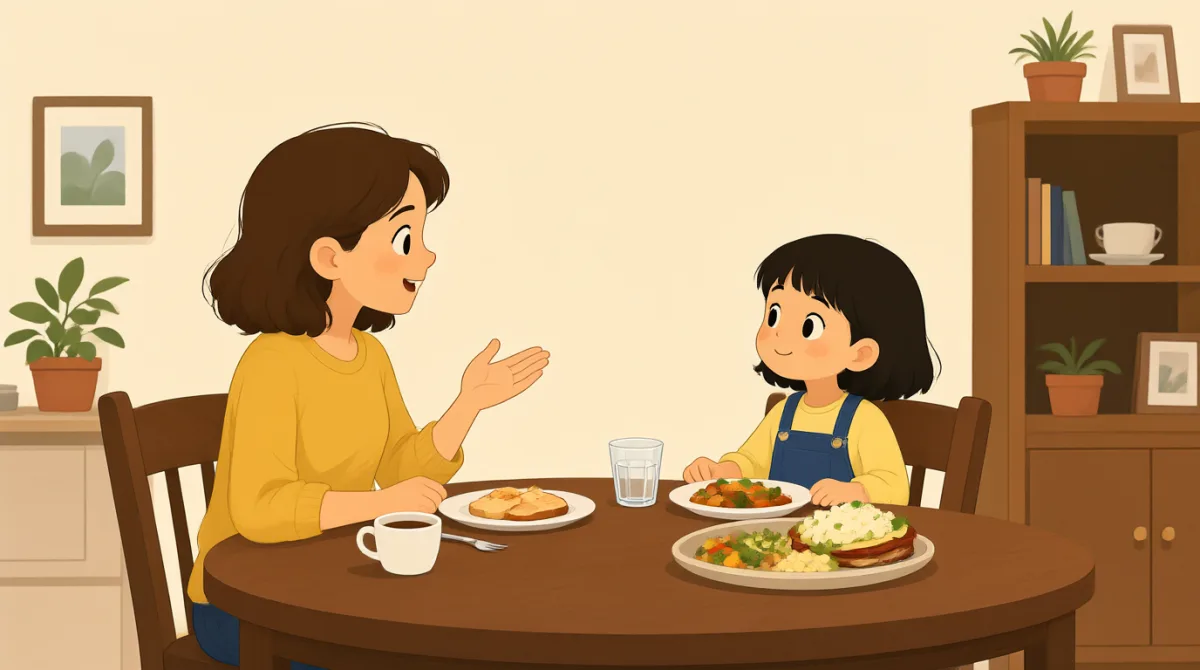

Mia, can you bring the food to the table?
Mia, cậu mang thức ăn ra bàn được không?

Sure. Is dinner ready?
Được chứ. Bữa tối sẵn sàng chưa?
Yes, the soup and bread are ready.
Rồi, súp với bánh mì sẵn sàng rồi.
Great. Are the plates and forks on the table?
Tuyệt. Đĩa với nĩa đã đặt trên bàn chưa?
Yes, and there is a glass by each plate.
Rồi, cạnh mỗi cái đĩa đều có một cái ly.
Good. I’ll bring the soup first.
Tốt. Tớ sẽ mang súp ra trước.
Thanks, Mia. I’ll bring the bread.
Cảm ơn nhé, Mia. Tớ sẽ mang bánh mì ra.
Từ vựng7
- bring the food to the tablemang thức ăn ra bàn
To carry the food to the place where people will eat. You can use this phrase when asking someone to serve a meal.
Mang thức ăn đến chỗ mọi người sẽ dùng bữa. Bạn có thể dùng cụm từ này khi nhờ ai đó dọn món ăn ra.
- Is dinner ready?Bữa tối sẵn sàng chưa?
A way to ask if the meal is prepared. You can replace “dinner” with another meal, such as “lunch.”
Cách hỏi xem bữa ăn đã được chuẩn bị xong chưa. Bạn có thể thay “dinner” bằng một bữa ăn khác, chẳng hạn như “lunch”.
- soupsúp
A hot or cold liquid food, often eaten from a bowl. Here, it is part of the dinner.
Món ăn dạng lỏng, nóng hoặc lạnh, thường được ăn bằng bát. Ở đây, súp là một món trong bữa tối.
- breadbánh mì
A common food made from flour. It is served with the soup in this conversation.
Món ăn phổ biến làm từ bột mì. Trong đoạn hội thoại này, bánh mì được dùng cùng với súp.
- plates and forksđĩa và nĩa
Plates hold the food, and forks help people eat it. These are common things to prepare before a meal.
Đĩa dùng để đựng thức ăn, còn nĩa giúp mọi người ăn. Đây là những vật dụng thường được chuẩn bị trước bữa ăn.
- by each platecạnh mỗi cái đĩa
This means next to every plate. Use “by” to say that something is beside another thing.
Có nghĩa là ở bên cạnh từng cái đĩa. Dùng “by” để nói một vật ở bên cạnh một vật khác.
- bring the soup firstmang súp ra trước
This means to carry the soup before bringing anything else. “First” tells the order of actions.
Có nghĩa là mang súp ra trước khi mang bất cứ thứ gì khác. “First” cho biết thứ tự của các hành động.
Câu trọng tâm8
- 1
Mia, can you bring the food to the table?
Mia, cậu mang thức ăn ra bàn được không?
This is a polite way to ask someone to carry food to the table. You can reuse “Can you bring the [item] to the [place]?” for simple requests.
Đây là cách lịch sự để nhờ ai đó mang thức ăn ra bàn. Bạn có thể dùng lại mẫu “Can you bring the [item] to the [place]?” (Bạn có thể mang [món đồ] đến [địa điểm] không?) khi muốn nhờ vả đơn giản.
- 2
Sure.
Được chứ.
This is a short, friendly way to agree to do something. You can use it when someone asks you for help.
Đây là cách đáp ngắn gọn, thân thiện để đồng ý làm việc gì đó. Bạn có thể nói câu này khi ai đó nhờ mình giúp.
- 3
Is dinner ready?
Bữa tối sẵn sàng chưa?
This is a simple way to ask whether a meal is prepared. Replace “dinner” with “breakfast” or “lunch” to ask about another meal.
Đây là cách đơn giản để hỏi xem bữa ăn đã được chuẩn bị xong chưa. Thay “dinner” bằng “breakfast” hoặc “lunch” để hỏi về bữa ăn khác.
- 4
Yes, the soup and bread are ready.
Rồi, súp với bánh mì sẵn sàng rồi.
This sentence says that two foods are prepared. Use “X and Y are ready” to talk about more than one thing.
Câu này nói rằng hai món ăn đã được chuẩn bị xong. Dùng “X and Y are ready” để nói về nhiều hơn một thứ.
- 5
Are the plates and forks on the table?
Đĩa với nĩa đã đặt trên bàn chưa?
This asks whether two items are in the right place. You can use “Are the [items] on the [surface]?” to check where things are.
Câu này hỏi xem hai món đồ đã ở đúng chỗ chưa. Bạn có thể dùng “Are the [items] on the [surface]?” để hỏi xem các món đồ đang ở đâu.
- 6
Yes, and there is a glass by each plate.
Rồi, cạnh mỗi cái đĩa đều có một cái ly.
This tells someone that every plate has a glass beside it. Use “there is a [thing] by each [item]” to describe one thing next to every item.
Câu này cho biết mỗi cái đĩa đều có một cái ly đặt bên cạnh. Dùng “there is a [thing] by each [item]” để miêu tả một vật ở cạnh từng món đồ.
- 7
I’ll bring the soup first.
Tớ sẽ mang súp ra trước.
This says what the speaker plans to carry and when. Use “I’ll bring the [item] first” to say what you will carry before other things.
Câu này cho biết người nói định mang món gì ra và mang lúc nào. Dùng “I’ll bring the [item] first” để nói món bạn sẽ mang ra trước những thứ khác.
- 8
Thanks, Mia. I’ll bring the bread.
Cảm ơn nhé, Mia. Tớ sẽ mang bánh mì ra.
This thanks someone and says what the speaker will do. You can use “I’ll bring the [item]” to offer to carry something.
Câu này vừa cảm ơn ai đó, vừa nói người nói sẽ làm gì. Bạn có thể dùng “I’ll bring the [item]” để đề nghị mang giúp một món đồ.