Cleaning Up
جمعوجور کردن
After breakfast, they clear the table and wash the dishes together.
بعد از صبحانه، با هم میز را جمع میکنند و ظرفها را میشویند.
گفتوگو8
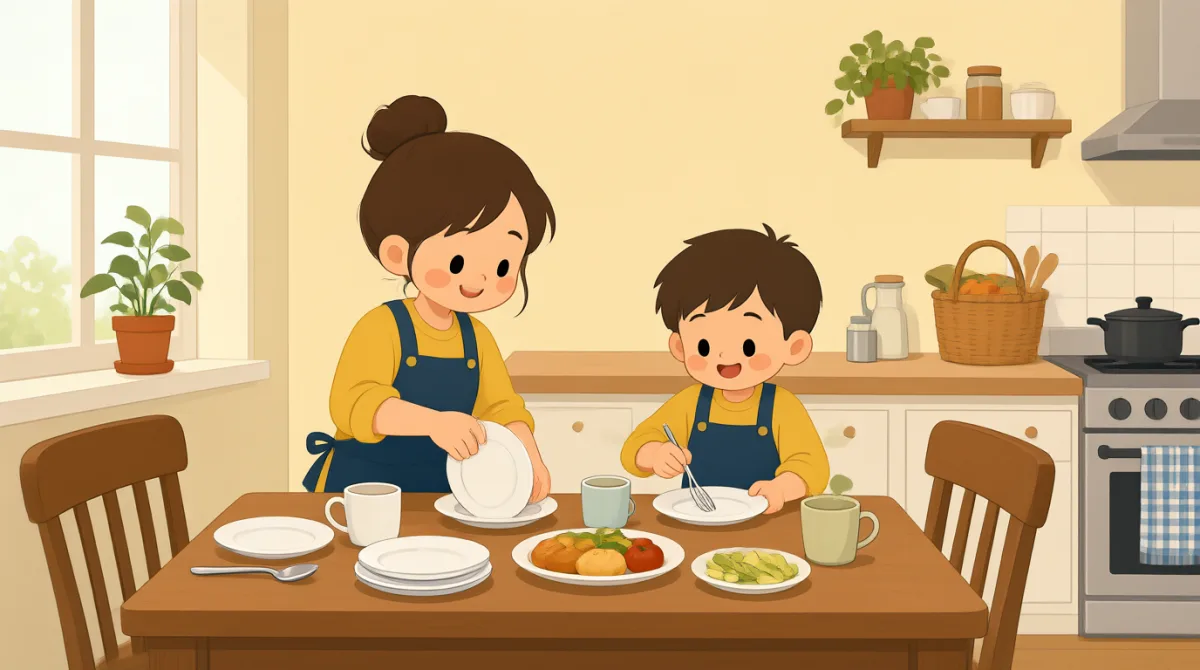

Breakfast was good. Let’s clear the table.
صبحانه خوشمزه بود. بیا میز رو جمع کنیم.

I’ll take the plates to the sink.
من بشقابها رو میبرم کنار سینک.

Thanks. Put the cups there, too.
ممنون. فنجونها رو هم بذار همونجا.
Where do the forks go?
چنگالها رو کجا بذارم؟
Put them in the sink. I’ll wash them.
بذار توی سینک. من میشورمشون.
Here’s the soap. The water is warm.
اینم مایع ظرفشویی. آب گرمه.
I’ll dry the dishes with this towel.
من ظرفها رو با این حوله خشک میکنم.
Great. The kitchen is clean now.
عالیه. حالا آشپزخونه تمیزه.
واژگان8
- clear the tableمیز را جمع کردن
To take the dishes and other things off the table after a meal. You can say, “Let’s clear the table” to suggest doing it together.
یعنی بعد از غذا، ظرفها و چیزهای دیگر را از روی میز برداشتن. برای پیشنهاد اینکه با هم این کار را انجام دهید، میتوانید بگویید “Let’s clear the table” (بیا میز را جمع کنیم).
- take the plates to the sinkبشقابها را کنار سینک بردن
To carry the plates to the place where you wash dishes. You can use this phrase to say where you are taking something.
یعنی بشقابها را به جایی بردن که ظرفها را میشویند. میتوانید از این عبارت بگویید چیزی را به کجا میبرید.
- cupsفنجانها
Small dishes that you drink from. You can ask someone to put the cups with the other dishes.
ظرفهای کوچکی که با آنها نوشیدنی میخورید. میتوانید از کسی بخواهید فنجانها را کنار بقیهٔ ظرفها بگذارد.
- forksچنگالها
Tools with points that you use to eat food. You can ask where the forks go when you are cleaning up.
وسیلههایی نوکتیز که برای خوردن غذا از آنها استفاده میکنید. وقتی دارید جمعوجور میکنید، میتوانید بپرسید چنگالها را کجا بگذارید.
- soapمایع ظرفشویی
A cleaning product used with water to wash dishes. You can offer someone soap by saying, “Here’s the soap.”
مادهٔ شویندهای که برای شستن ظرفها با آب استفاده میشود. میتوانید با گفتن “Here’s the soap” (اینم مایع ظرفشویی) آن را به کسی بدهید.
- warmگرم
A little hot, but not very hot. You can use it to describe water that feels comfortable for washing.
کمی داغ، اما نه خیلی داغ. میتوانید برای توصیف آبی که برای شستن دمای مناسبی دارد از این واژه استفاده کنید.
- dry the dishesظرفها را خشک کردن
To remove water from clean dishes, often with a towel. You can say, “I’ll dry the dishes” to offer help.
یعنی آب را از ظرفهای تمیز گرفتن، معمولاً با حوله. با گفتن “I’ll dry the dishes” (من ظرفها را خشک میکنم) میتوانید برای کمک اعلام آمادگی کنید.
- towelحوله
A piece of cloth used to dry things. In this conversation, Emma uses a towel to dry the dishes.
تکهای پارچه که برای خشک کردن چیزها استفاده میشود. در این گفتوگو، اما از حوله برای خشک کردن ظرفها استفاده میکند.
جملات کلیدی8
- 1
Let’s clear the table.
بیا میز را جمع کنیم.
This is a simple way to suggest doing a task together. Use “Let’s” plus a verb to invite someone to do something with you.
این راه سادهای برای پیشنهاد انجام دادن کاری با هم است. از “Let’s” بهعلاوهٔ یک فعل استفاده کنید تا کسی را به انجام کاری با خودتان دعوت کنید.
- 2
I’ll take the plates to the sink.
من بشقابها را میبرم کنار سینک.
Use “I’ll” to offer to do something. You can replace “the plates” with another item and “the sink” with another place.
برای اینکه انجام کاری را به عهده بگیرید، از “I’ll” استفاده کنید. میتوانید “the plates” را با وسیلهای دیگر و “the sink” را با جای دیگری عوض کنید.
- 3
Put the cups there, too.
فنجانها را هم همانجا بگذار.
This is a direct, simple instruction. Use “Put [thing] there, too” to ask someone to add another item to the same place.
این یک دستور مستقیم و ساده است. از الگوی “Put [thing] there, too” استفاده کنید تا از کسی بخواهید چیز دیگری را هم در همانجا بگذارد.
- 4
Where do the forks go?
چنگالها را کجا بگذارم؟
Use this question to ask where something belongs. Replace “the forks” with another item, such as “the cups.”
برای پرسیدن اینکه جای چیزی کجاست، از این سؤال استفاده کنید. میتوانید “the forks” را با وسیلهٔ دیگری، مثل “the cups”، عوض کنید.
- 5
I’ll wash them.
من میشورمشان.
This is a short way to offer to clean something. “Them” refers to things already mentioned, such as dishes or forks.
این راه کوتاهی برای پیشنهاد شستن چیزی است. “Them” به چیزهایی اشاره میکند که قبلاً از آنها صحبت شده، مثل ظرفها یا چنگالها.
- 6
The water is warm.
آب گرمه.
Use “The water is [adjective]” to describe its temperature. You can replace “warm” with “cold” or “hot.”
برای توصیف دمای آب از “The water is [adjective]” استفاده کنید. میتوانید “warm” را با “cold” یا “hot” عوض کنید.
- 7
I’ll dry the dishes with this towel.
من ظرفها را با این حوله خشک میکنم.
This sentence offers help and explains what you will use. Replace “the dishes” and “this towel” with other things you will dry and use.
این جمله هم برای کمک اعلام آمادگی میکند و هم میگوید از چه چیزی استفاده میکنید. “the dishes” و “this towel” را با چیزهای دیگری که میخواهید خشک کنید و وسیلهای که برای این کار به کار میبرید عوض کنید.
- 8
The kitchen is clean now.
حالا آشپزخونه تمیزه.
Use this sentence to say that a place is clean after a task. “Now” shows that it is clean at this time.
بعد از انجام کاری، از این جمله برای گفتن اینکه یک جا تمیز شده استفاده کنید. “Now” نشان میدهد که آنجا همین حالا تمیز است.