Cleaning Up
Sprzątanie po śniadaniu
After breakfast, they clear the table and wash the dishes together.
Po śniadaniu wspólnie sprzątają ze stołu i zmywają naczynia.
Dialog8
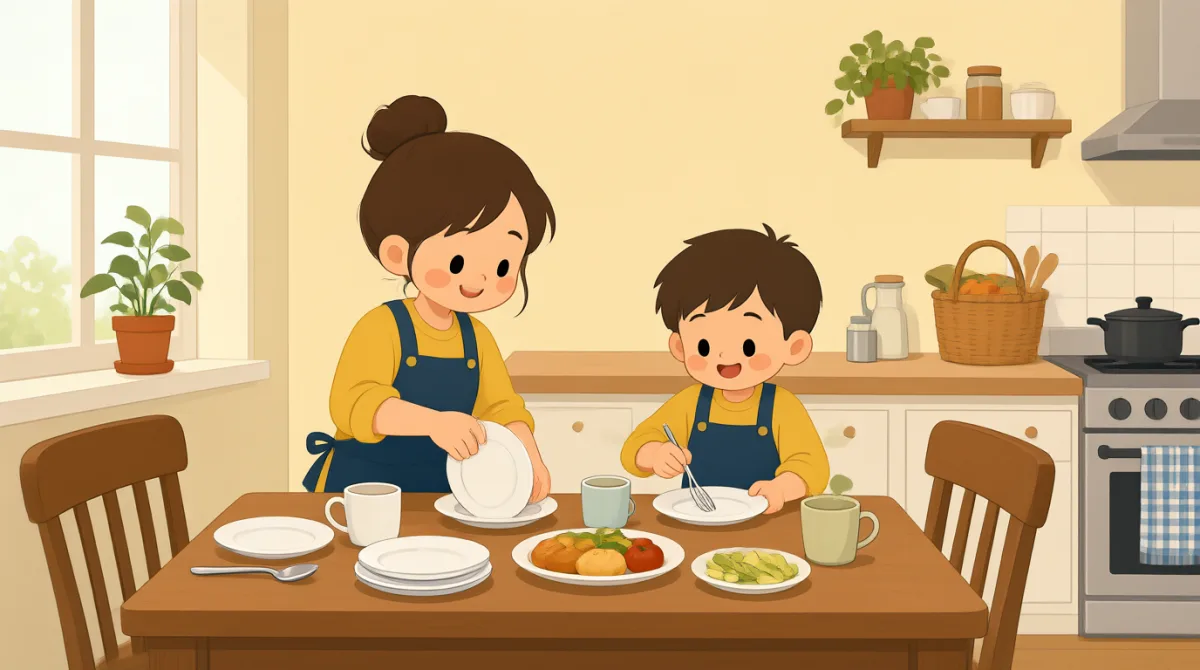

Breakfast was good. Let’s clear the table.
Śniadanie było pyszne. Posprzątajmy ze stołu.

I’ll take the plates to the sink.
Zaniosę talerze do zlewu.

Thanks. Put the cups there, too.
Dzięki. Kubki też tam połóż.
Where do the forks go?
Gdzie odłożyć widelce?
Put them in the sink. I’ll wash them.
Włóż je do zlewu. Umyję je.
Here’s the soap. The water is warm.
Proszę, tu jest płyn do naczyń. Woda jest ciepła.
I’ll dry the dishes with this towel.
Wytrę naczynia tym ręcznikiem.
Great. The kitchen is clean now.
Świetnie. W kuchni jest już czysto.
Słownictwo8
- clear the tablesprzątnąć ze stołu
To take the dishes and other things off the table after a meal. You can say, “Let’s clear the table” to suggest doing it together.
Zabrać ze stołu naczynia i inne rzeczy po posiłku. Możesz powiedzieć „Let’s clear the table” (Posprzątajmy ze stołu), żeby zaproponować wspólne sprzątanie.
- take the plates to the sinkzanieść talerze do zlewu
To carry the plates to the place where you wash dishes. You can use this phrase to say where you are taking something.
Przenieść talerze do miejsca, w którym zmywa się naczynia. Tego wyrażenia możesz użyć, żeby powiedzieć, dokąd coś zaniesiesz.
- cupskubki
Small dishes that you drink from. You can ask someone to put the cups with the other dishes.
Niewielkie naczynia, z których się pije. Możesz poprosić kogoś, żeby odłożył kubki razem z innymi naczyniami.
- forkswidelce
Tools with points that you use to eat food. You can ask where the forks go when you are cleaning up.
Sztućce z ząbkami, którymi je się potrawy. Podczas sprzątania możesz zapytać, gdzie odłożyć widelce.
- soappłyn do naczyń
A cleaning product used with water to wash dishes. You can offer someone soap by saying, “Here’s the soap.”
Środek czyszczący używany z wodą do mycia naczyń. Możesz podać komuś płyn do naczyń, mówiąc „Here’s the soap” (Proszę, tu jest płyn do naczyń).
- warmciepły
A little hot, but not very hot. You can use it to describe water that feels comfortable for washing.
Trochę gorący, ale nie bardzo. Tak możesz opisać wodę, która ma przyjemną temperaturę do mycia.
- dry the disheswytrzeć naczynia
To remove water from clean dishes, often with a towel. You can say, “I’ll dry the dishes” to offer help.
Usunąć wodę z czystych naczyń, często za pomocą ręcznika. Możesz zaoferować pomoc, mówiąc „I’ll dry the dishes” (Wytrę naczynia).
- towelręcznik
A piece of cloth used to dry things. In this conversation, Emma uses a towel to dry the dishes.
Kawałek materiału używany do wycierania różnych rzeczy. W tej rozmowie Emma używa ręcznika do wytarcia naczyń.
Kluczowe zdania8
- 1
Let’s clear the table.
Posprzątajmy ze stołu.
This is a simple way to suggest doing a task together. Use “Let’s” plus a verb to invite someone to do something with you.
To prosty sposób, by zaproponować wspólne wykonanie jakiegoś zadania. Użyj „Let’s” przed czasownikiem, aby zaprosić kogoś do zrobienia czegoś razem z tobą.
- 2
I’ll take the plates to the sink.
Zaniosę talerze do zlewu.
Use “I’ll” to offer to do something. You can replace “the plates” with another item and “the sink” with another place.
Użyj „I’ll”, żeby zaoferować, że coś zrobisz. Możesz zastąpić „the plates” inną rzeczą, a „the sink” innym miejscem.
- 3
Put the cups there, too.
Kubki też tam połóż.
This is a direct, simple instruction. Use “Put [thing] there, too” to ask someone to add another item to the same place.
To bezpośrednie, proste polecenie. Użyj „Put [thing] there, too”, żeby poprosić kogoś o dołożenie kolejnej rzeczy w to samo miejsce.
- 4
Where do the forks go?
Gdzie odłożyć widelce?
Use this question to ask where something belongs. Replace “the forks” with another item, such as “the cups.”
Użyj tego pytania, żeby dowiedzieć się, gdzie coś należy odłożyć. Zamiast „the forks” możesz wstawić nazwę innej rzeczy, na przykład „the cups”.
- 5
I’ll wash them.
Umyję je.
This is a short way to offer to clean something. “Them” refers to things already mentioned, such as dishes or forks.
To krótki sposób, by zaoferować, że coś umyjesz. „Them” odnosi się do wspomnianych wcześniej rzeczy, takich jak naczynia czy widelce.
- 6
The water is warm.
Woda jest ciepła.
Use “The water is [adjective]” to describe its temperature. You can replace “warm” with “cold” or “hot.”
Użyj „The water is [adjective]”, żeby opisać temperaturę wody. Zamiast „warm” możesz wstawić „cold” albo „hot”.
- 7
I’ll dry the dishes with this towel.
Wytrę naczynia tym ręcznikiem.
This sentence offers help and explains what you will use. Replace “the dishes” and “this towel” with other things you will dry and use.
To zdanie pozwala zaoferować pomoc i powiedzieć, czego użyjesz. Zastąp „the dishes” i „this towel” innymi rzeczami, które chcesz wytrzeć lub których użyjesz.
- 8
The kitchen is clean now.
W kuchni jest już czysto.
Use this sentence to say that a place is clean after a task. “Now” shows that it is clean at this time.
Użyj tego zdania, żeby powiedzieć, że po wykonaniu jakiegoś zadania dane miejsce jest czyste. „Now” wskazuje, że jest czyste właśnie teraz.