Cleaning Up
片付け
After breakfast, they clear the table and wash the dishes together.
朝ごはんのあと、みんなでテーブルを片付けて、食器を洗う。
会話8
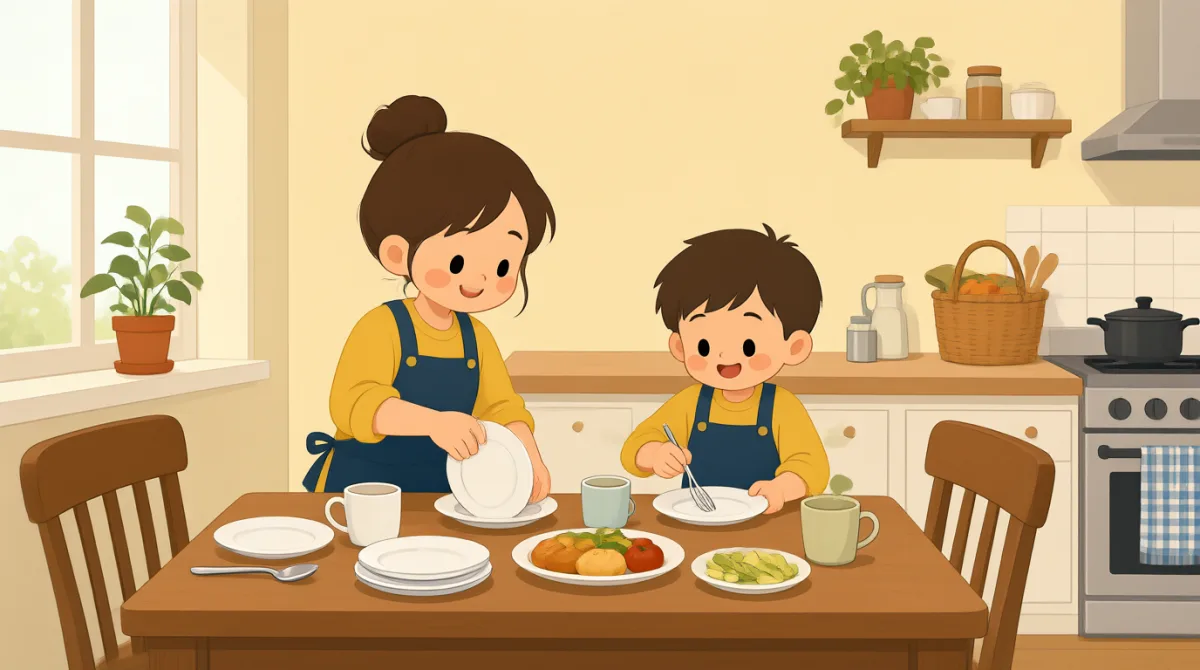

Breakfast was good. Let’s clear the table.
朝ごはんおいしかったね。テーブルを片付けよう。

I’ll take the plates to the sink.
お皿をシンクに持っていくね。

Thanks. Put the cups there, too.
ありがとう。カップもそこに置いてね。
Where do the forks go?
フォークはどこに置くの?
Put them in the sink. I’ll wash them.
シンクに入れてね。私が洗うよ。
Here’s the soap. The water is warm.
はい、洗剤。お湯はあったかいよ。
I’ll dry the dishes with this towel.
このタオルで食器を拭くね。
Great. The kitchen is clean now.
いいね。これでキッチンもきれいになったね。
語彙8
- clear the tableテーブルを片付ける
To take the dishes and other things off the table after a meal. You can say, “Let’s clear the table” to suggest doing it together.
食事のあとに、お皿などテーブルの上にあるものを片付けることです。「Let’s clear the table」と言うと、一緒に片付けようと誘えます。
- take the plates to the sinkお皿をシンクに持っていく
To carry the plates to the place where you wash dishes. You can use this phrase to say where you are taking something.
お皿を、食器を洗う場所まで運ぶことです。何かをどこへ持っていくか伝えるときに使える表現です。
- cupsカップ
Small dishes that you drink from. You can ask someone to put the cups with the other dishes.
飲み物を飲むための小さな器です。ほかの食器と一緒にカップも置いてね、と頼むときに使えます。
- forksフォーク
Tools with points that you use to eat food. You can ask where the forks go when you are cleaning up.
先がとがっていて、食べ物を食べるときに使う道具です。片付けのときに、フォークをどこに置くか尋ねることができます。
- soap洗剤
A cleaning product used with water to wash dishes. You can offer someone soap by saying, “Here’s the soap.”
水と一緒に使って食器を洗うものです。「Here’s the soap」と言って、洗剤を渡すことができます。
- warmあたたかい
A little hot, but not very hot. You can use it to describe water that feels comfortable for washing.
少し熱いけれど、それほど熱くはない状態です。洗うときにちょうどよく感じる水の温度を表せます。
- dry the dishes食器を拭く
To remove water from clean dishes, often with a towel. You can say, “I’ll dry the dishes” to offer help.
洗った食器についた水を、タオルなどで取り除くことです。「I’ll dry the dishes」と言って、手伝うよと申し出ることができます。
- towelタオル
A piece of cloth used to dry things. In this conversation, Emma uses a towel to dry the dishes.
ものを拭いたり乾かしたりする布です。この会話では、エマがタオルで食器を拭きます。
重要な文8
- 1
Let’s clear the table.
テーブルを片付けよう。
This is a simple way to suggest doing a task together. Use “Let’s” plus a verb to invite someone to do something with you.
何かを一緒にしようと誘う、簡単な言い方です。「Let’s」のあとに動詞を続けると、一緒に何かをしようと誘えます。
- 2
I’ll take the plates to the sink.
お皿をシンクに持っていくね。
Use “I’ll” to offer to do something. You can replace “the plates” with another item and “the sink” with another place.
「I’ll」は、自分が何かをすると申し出るときに使います。「the plates」を別のものに、「the sink」を別の場所に置き換えられます。
- 3
Put the cups there, too.
カップもそこに置いてね。
This is a direct, simple instruction. Use “Put [thing] there, too” to ask someone to add another item to the same place.
直接的で簡単な指示です。「Put [thing] there, too」を使うと、同じ場所に別のものも置くよう頼めます。
- 4
Where do the forks go?
フォークはどこに置くの?
Use this question to ask where something belongs. Replace “the forks” with another item, such as “the cups.”
ものをどこに置けばいいか尋ねる表現です。「the forks」を「the cups」など、別のものに置き換えられます。
- 5
I’ll wash them.
私が洗うね。
This is a short way to offer to clean something. “Them” refers to things already mentioned, such as dishes or forks.
何かを洗うよ、と申し出るときの短い表現です。「Them」は、すでに話題に出た食器やフォークなどを指します。
- 6
The water is warm.
水はあたたかいよ。
Use “The water is [adjective]” to describe its temperature. You can replace “warm” with “cold” or “hot.”
「The water is [adjective]」を使うと、水の温度を説明できます。「warm」を「cold」や「hot」に置き換えることもできます。
- 7
I’ll dry the dishes with this towel.
このタオルで食器を拭くね。
This sentence offers help and explains what you will use. Replace “the dishes” and “this towel” with other things you will dry and use.
手伝うことを申し出て、何を使うかも伝える文です。「the dishes」と「this towel」を、拭くものや使うものに置き換えられます。
- 8
The kitchen is clean now.
キッチンはもうきれいだね。
Use this sentence to say that a place is clean after a task. “Now” shows that it is clean at this time.
作業のあとに、場所がきれいになったことを伝える文です。「Now」は、今はきれいになっていることを表します。