Cleaning Up
Уборка после завтрака
After breakfast, they clear the table and wash the dishes together.
После завтрака они вместе убирают со стола и моют посуду.
Диалог8
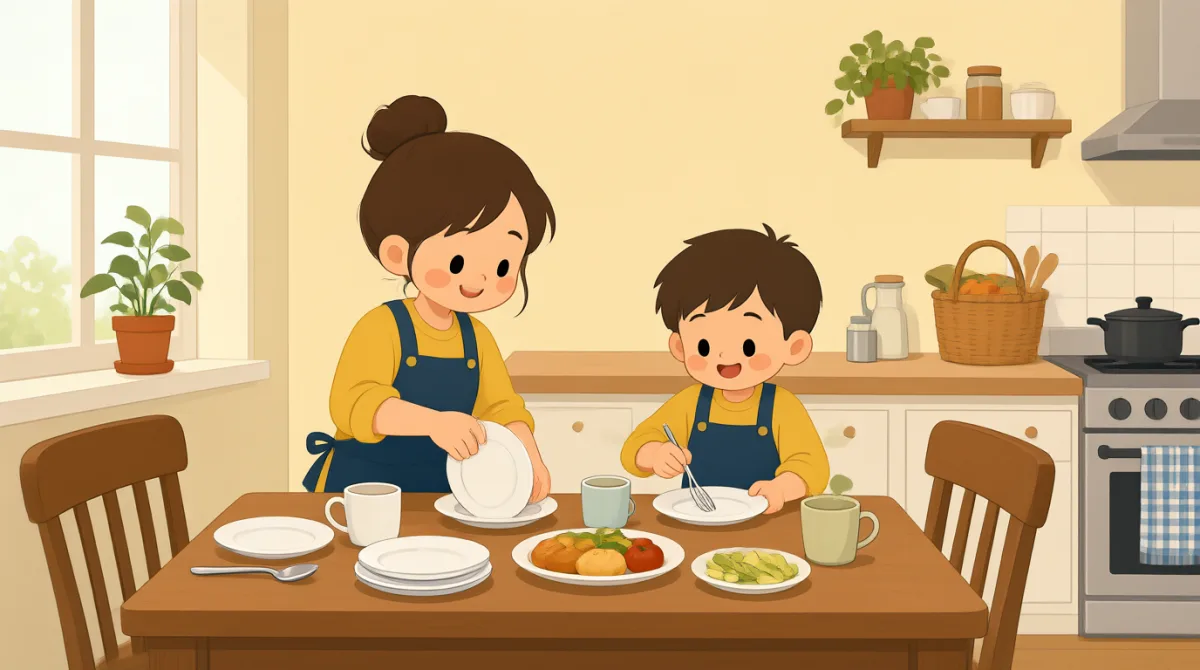

Breakfast was good. Let’s clear the table.
Завтрак был вкусный. Давай уберём со стола.

I’ll take the plates to the sink.
Я отнесу тарелки к раковине.

Thanks. Put the cups there, too.
Спасибо. Чашки тоже поставь туда.
Where do the forks go?
Куда положить вилки?
Put them in the sink. I’ll wash them.
Положи их в раковину. Я их помою.
Here’s the soap. The water is warm.
Вот мыло. Вода тёплая.
I’ll dry the dishes with this towel.
Я вытру посуду этим полотенцем.
Great. The kitchen is clean now.
Отлично. Теперь на кухне чисто.
Словарный запас8
- clear the tableубирать со стола
To take the dishes and other things off the table after a meal. You can say, “Let’s clear the table” to suggest doing it together.
Убирать со стола посуду и другие вещи после еды. Можно сказать “Let’s clear the table” («Давай уберём со стола»), предлагая сделать это вместе.
- take the plates to the sinkотнести тарелки к раковине
To carry the plates to the place where you wash dishes. You can use this phrase to say where you are taking something.
Перенести тарелки туда, где моют посуду. Эта фраза помогает сказать, куда вы что-то относите.
- cupsчашки
Small dishes that you drink from. You can ask someone to put the cups with the other dishes.
Небольшая посуда, из которой пьют. Можно попросить кого-нибудь поставить чашки вместе с остальной посудой.
- forksвилки
Tools with points that you use to eat food. You can ask where the forks go when you are cleaning up.
Столовые приборы с зубцами, которыми едят. Когда вы убираете со стола, можно спросить, куда положить вилки.
- soapмоющее средство
A cleaning product used with water to wash dishes. You can offer someone soap by saying, “Here’s the soap.”
Средство, которым моют посуду с водой. Предложить кому-нибудь средство для мытья посуды можно словами “Here’s the soap” («Вот средство для мытья посуды»).
- warmтёплый
A little hot, but not very hot. You can use it to describe water that feels comfortable for washing.
Немного горячий, но не очень. Так можно описать воду, комфортную для мытья.
- dry the dishesвытирать посуду
To remove water from clean dishes, often with a towel. You can say, “I’ll dry the dishes” to offer help.
Убирать воду с чистой посуды, часто с помощью полотенца. Фразой “I’ll dry the dishes” («Я вытру посуду») можно предложить свою помощь.
- towelполотенце
A piece of cloth used to dry things. In this conversation, Emma uses a towel to dry the dishes.
Кусок ткани, которым вытирают разные вещи. В этом разговоре Эмма вытирает полотенцем посуду.
Ключевые фразы8
- 1
Let’s clear the table.
Давай уберём со стола.
This is a simple way to suggest doing a task together. Use “Let’s” plus a verb to invite someone to do something with you.
Так можно просто предложить сделать что-то вместе. Используй “Let’s” и глагол, чтобы предложить кому-нибудь что-то сделать вместе с тобой.
- 2
I’ll take the plates to the sink.
Я отнесу тарелки к раковине.
Use “I’ll” to offer to do something. You can replace “the plates” with another item and “the sink” with another place.
Используй “I’ll”, чтобы предложить что-то сделать. Вместо “the plates” можно назвать другой предмет, а вместо “the sink” — другое место.
- 3
Put the cups there, too.
Чашки тоже поставь туда.
This is a direct, simple instruction. Use “Put [thing] there, too” to ask someone to add another item to the same place.
Это простая и прямолинейная просьба. Используй “Put [thing] there, too”, чтобы попросить добавить ещё один предмет туда же.
- 4
Where do the forks go?
Куда положить вилки?
Use this question to ask where something belongs. Replace “the forks” with another item, such as “the cups.”
Так спрашивают, где должно находиться что-то. Вместо “the forks” можно подставить другой предмет, например “the cups”.
- 5
I’ll wash them.
Я их помою.
This is a short way to offer to clean something. “Them” refers to things already mentioned, such as dishes or forks.
Так можно коротко предложить что-нибудь помыть. “Them” относится к предметам, о которых уже говорили, например к посуде или вилкам.
- 6
The water is warm.
Вода тёплая.
Use “The water is [adjective]” to describe its temperature. You can replace “warm” with “cold” or “hot.”
Используй “The water is [adjective]”, чтобы описать температуру воды. Вместо “warm” можно подставить “cold” или “hot”.
- 7
I’ll dry the dishes with this towel.
Я вытру посуду этим полотенцем.
This sentence offers help and explains what you will use. Replace “the dishes” and “this towel” with other things you will dry and use.
Этой фразой можно предложить помощь и сказать, чем ты воспользуешься. Вместо “the dishes” и “this towel” назови другие вещи, которые будешь вытирать и использовать.
- 8
The kitchen is clean now.
Теперь на кухне чисто.
Use this sentence to say that a place is clean after a task. “Now” shows that it is clean at this time.
Так говорят, что после какой-либо работы в помещении чисто. “Now” показывает, что чисто именно сейчас.