Directing and Coordinating
راهنمایی و هماهنگی
Giving instructions and coordinating movements while carrying a heavy item with someone else, ensuring safety and efficiency.
دادن دستور و هماهنگکردن حرکتها هنگام حمل وسیلهای سنگین با شخصی دیگر، با توجه به ایمنی و کارایی.
گفتوگو12
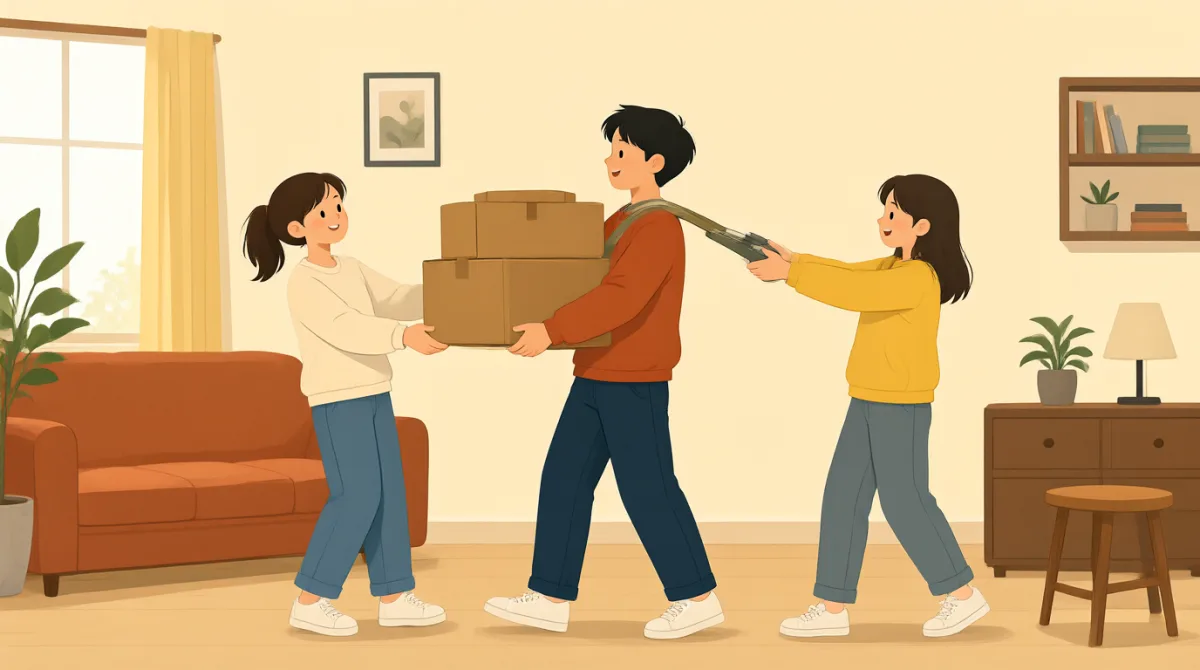

Hey Emma, could you give me a hand with this box? It's pretty heavy.
هی اما، میشه توی جابهجایی این جعبه کمکم کنی؟ خیلی سنگینه.

Sure, Jack. Where are we taking it?
حتماً، جک. کجا میبریمش؟
Just over to the storage room. Let's lift on the count of three. I'll take this end. Ready?
فقط تا اتاق انبار. با شمارش تا سه بلندش کنیم. من این سرش رو میگیرم. آمادهای؟
Ready. One, two, three, lift!
آمادهام. یک، دو، سه، بلند کن!
Okay, good. Watch the corner here, it's a bit tight. I'll go backward, you just keep coming straight.
خوبه. حواست به این گوشه باشه، یهکم تنگه. من عقبعقب میرم، تو مستقیم بیا.
Got it. Slow and steady.
باشه. آروم و پیوسته.
Exactly. Now, there's a small step up right after this door frame. I'll go first, then you follow.
دقیقاً. درست بعد از این چارچوب در، یه پلهی کوتاه هست. من اول میرم، بعد تو بیا.
Alright, I see it. Just tell me when.
باشه، میبینمش. فقط بهم بگو کی.
Okay, a little push here, and up! Now you.
خب، اینجا یهکم هل بده، و حالا بالا! حالا تو.
Got it. Perfect. Almost there.
گرفتم. عالیه. دیگه چیزی نمونده.
And... set it down right here. Thanks a lot, Emma, couldn't have done it without you.
و... همینجا بذاریمش زمین. خیلی ممنون، اما. بدون تو نمیتونستم این کار رو انجام بدم.
No problem at all, Jack. Happy to help!
اصلاً مشکلی نیست، جک. خوشحال شدم کمک کردم!
واژگان8
- give me a handکمکم کن
This is an idiom meaning to help someone with a task. Use it when politely asking for assistance in everyday situations like carrying something.
عبارت "give me a hand" اصطلاحی است بهمعنای کمککردن به کسی در انجام کاری. در موقعیتهای روزمره، مثلاً وقتی میخواهید برای جابهجایی چیزی از کسی کمک بخواهید، از آن استفاده کنید.
- pretty heavyنسبتاً سنگین
'Pretty' here means 'quite' or 'fairly', so it describes something as somewhat heavy. It's a casual way to emphasize weight without being extreme.
در اینجا "pretty" یعنی «نسبتاً» یا «تا حدی» و نشان میدهد چیزی کمی سنگین است. این عبارتی خودمانی برای تأکید بر وزن چیزی است، بیآنکه بگوییم فوقالعاده سنگین است.
- liftبلند کردن
As a verb, it means to raise something up, like picking up a box. Common in physical tasks; remember to use it with objects you carry.
فعل "lift" یعنی چیزی را بالا بردن، مثلاً جعبهای را از زمین بلند کردن. این واژه در کارهای فیزیکی رایج است و معمولاً برای چیزی به کار میرود که آن را بلند میکنید یا حمل میکنید.
- on the count of threeبا شمارش تا سه
This phrase means to start an action together when you reach the number three while counting. It's used for coordinating movements safely, like lifting together.
عبارت "on the count of three" یعنی وقتی شمارش به سه رسید، کاری را با هم شروع کنید. برای هماهنگکردن حرکتها و ایمنبودن کار، مثلاً هنگام بلندکردن چیزی با هم، از آن استفاده میشود.
- watchمواظب بودن
In this context, it means to look out for or be careful of something, like a corner. It's often used in warnings: 'Watch out for...' to prevent accidents.
در این بافت، "watch" یعنی مراقب چیزی بودن یا حواستان به آن باشد، مثلاً به یک گوشه. این واژه اغلب در هشدارهایی مثل "Watch out for..." به کار میرود تا از حادثه جلوگیری کند.
- tightتنگ
Meaning narrow or with little space. Useful when describing areas that are cramped, like a tight corner, to warn others during movement.
"tight" یعنی باریک یا کمجا. وقتی فضایی تنگ و شلوغ است، مثلاً گوشهای که عبور از آن دشوار است، از این واژه برای هشدار دادن هنگام جابهجایی استفاده کنید.
- slow and steadyآروم و پیوسته
An expression meaning to move carefully and without rushing to avoid mistakes. It's from the proverb 'slow and steady wins the race,' good for safe carrying.
عبارت "slow and steady" یعنی بااحتیاط و بدون عجله حرکتکردن تا اشتباهی پیش نیاید. این عبارت از ضربالمثل "slow and steady wins the race" آمده و برای یادآوری ایمنی هنگام حمل وسایل مناسب است.
- set it downزمین گذاشتن
To place something down gently after carrying it. Use this phrasal verb when finishing moving an object to a new spot.
عبارت فعلی "set it down" یعنی بعد از حمل چیزی، آن را بهآرامی روی زمین یا جایی قرار دهید. وقتی وسیلهای را به جای جدیدی رساندهاید، از آن استفاده کنید.
جملات کلیدی9
- 1
Hey Emma, could you give me a hand with this box? It's pretty heavy.
هی اما، میشه توی جابهجایی این جعبه کمکم کنی؟ خیلی سنگینه.
This is a polite request for help using the modal 'could' for suggestions. It's useful for starting a conversation when you need assistance with something heavy; the explanation of weight adds reason.
این جمله درخواستی مؤدبانه برای کمک است و در آن از فعل کمکی "could" برای مطرحکردن درخواست استفاده شده. وقتی برای جابهجایی چیزی سنگین به کمک نیاز دارید، برای شروع صحبت به کارتان میآید؛ اشاره به وزن هم دلیل درخواست را روشن میکند.
- 2
Sure, Jack. Where are we taking it?
حتماً، جک. کجا میبریمش؟
A positive response to a request followed by a question for clarification. 'Sure' is casual agreement; use this pattern to confirm and get details in teamwork situations.
این جمله با "Sure" موافقتی خودمانی با درخواست را نشان میدهد و بعد با پرسشی جزئیات بیشتری میخواهد. در کارهای گروهی از این الگو استفاده کنید تا هم موافقتتان را نشان دهید و هم اطلاعات لازم را بپرسید.
- 3
Let's lift on the count of three. I'll take this end. Ready?
با شمارش تا سه بلندش کنیم. من این سرش رو میگیرم. آمادهای؟
This coordinates action with 'let's' for suggestions and a counting phrase for timing. It's practical for safe lifting; 'ready?' checks preparedness before starting.
در این جمله با "let's" پیشنهادی برای انجام کار با هم مطرح میشود و عبارت شمارش زمان حرکت را هماهنگ میکند. برای بلندکردن ایمن وسیلهای کاربردی است؛ پرسش "ready?" هم پیش از شروع از آمادهبودن طرف مقابل مطمئن میشود.
- 4
One, two, three, lift!
یک، دو، سه، بلند کن!
A simple counting command to synchronize movement. The imperative 'lift!' gives a direct instruction. Use this in group tasks to ensure everyone acts together.
این دستور ساده با شمارش، حرکت افراد را هماهنگ میکند. فعل امری "lift!" دستور مستقیمی میدهد. در کارهای گروهی از آن استفاده کنید تا همه با هم حرکت کنند.
- 5
Watch the corner here, it's a bit tight. I'll go backward, you just keep coming straight.
حواست به این گوشه باشه، یهکم تنگه. من عقبعقب میرم، تو مستقیم بیا.
This gives directions with warnings ('watch') and instructions ('I'll go backward'). 'A bit' softens 'tight'; useful for guiding during navigation to avoid bumps.
این جمله با "watch" هشدار میدهد و با "I'll go backward" مسیر حرکت را مشخص میکند. عبارت "a bit" شدت صفت "tight" را کمتر میکند. هنگام راهنمایی دیگران برای جلوگیری از برخورد به کارتان میآید.
- 6
Slow and steady.
آروم و پیوسته.
A short idiom advising careful pace. It's elliptical for 'Go slow and steady'; repeat it to remind others to prioritize safety over speed in physical tasks.
این عبارت کوتاه توصیه میکند بااحتیاط حرکت کنید. شکل کوتاهشدهی "Go slow and steady" است؛ هنگام انجام کارهای فیزیکی آن را تکرار کنید تا به دیگران یادآوری کنید ایمنی از سرعت مهمتر است.
- 7
There's a small step up right after this door frame. I'll go first, then you follow.
درست بعد از این چارچوب در، یه پلهی کوتاه هست. من اول میرم، بعد تو بیا.
This describes an obstacle and plans sequence with 'I'll go first, then you follow.' Use future simple for instructions; helps in coordinating through challenges.
این جمله مانعی را توصیف میکند و با "I'll go first, then you follow" ترتیب حرکت را مشخص میکند. برای راهنمایی از آیندهی ساده استفاده شده است؛ این روش به هماهنگی هنگام عبور از موانع کمک میکند.
- 8
Set it down right here. Thanks a lot, Emma, couldn't have done it without you.
همینجا بذاریمش زمین. خیلی ممنون، اما، بدون تو نمیتونستم این کار رو انجام بدم.
Command to place the item ('set it down') plus gratitude. 'Couldn't have done it without you' expresses appreciation emphatically; end conversations like this after help.
در ابتدا با "set it down" دستور میدهید وسیله را زمین بگذارند و بعد تشکر میکنید. عبارت "Couldn't have done it without you" قدردانی زیادی را میرساند؛ بعد از کمکگرفتن میتوانید مکالمه را اینطور به پایان برسانید.
- 9
No problem at all, Jack. Happy to help!
اصلاً مشکلی نیست، جک. خوشحال شدم کمک کردم!
A casual way to say 'you're welcome' with 'no problem at all' downplaying effort. 'Happy to help' shows willingness; use after offering or giving assistance.
این جمله راهی خودمانی برای گفتن «خواهش میکنم» است. عبارت "no problem at all" زحمت کار را ناچیز جلوه میدهد و "Happy to help" نشان میدهد که با میل کمک کردهاید. پس از کمککردن یا اعلام آمادگی برای کمک از آن استفاده کنید.