Directing and Coordinating
การบอกทางและประสานงาน
Giving instructions and coordinating movements while carrying a heavy item with someone else, ensuring safety and efficiency.
การบอกวิธีและประสานการเคลื่อนไหวขณะช่วยกันยกของหนัก โดยคำนึงถึงความปลอดภัยและความคล่องตัว
บทสนทนา12
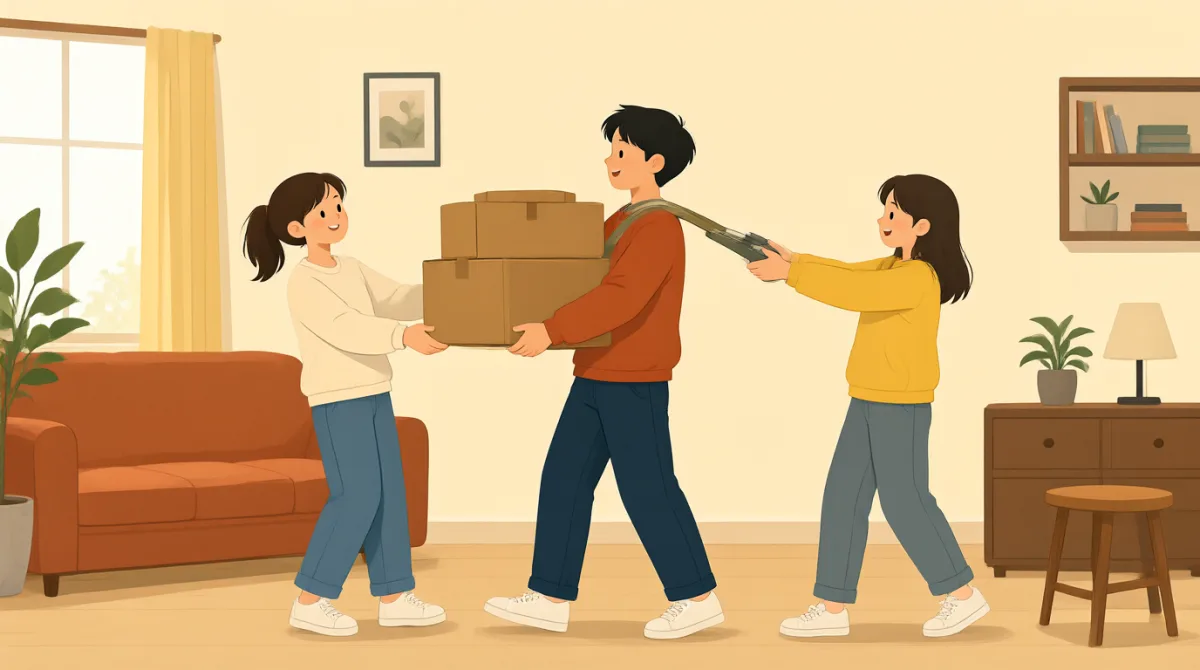

Hey Emma, could you give me a hand with this box? It's pretty heavy.
เฮ้ เอ็มม่า ช่วยเรายกกล่องนี่หน่อยได้ไหม หนักเอาเรื่องเลย

Sure, Jack. Where are we taking it?
ได้สิ แจ็ก จะเอาไปไว้ที่ไหนเหรอ
Just over to the storage room. Let's lift on the count of three. I'll take this end. Ready?
เอาไปห้องเก็บของน่ะ เรามายกพร้อมกันตอนนับถึงสามนะ เราจับด้านนี้เอง พร้อมไหม
Ready. One, two, three, lift!
พร้อม หนึ่ง สอง สาม ยก!
Okay, good. Watch the corner here, it's a bit tight. I'll go backward, you just keep coming straight.
โอเค ดี ระวังมุมตรงนี้นะ ค่อนข้างแคบ เราจะเดินถอยหลัง เธอเดินตรงมาเรื่อย ๆ เลย
Got it. Slow and steady.
เข้าใจแล้ว ค่อย ๆ ไป ไม่ต้องรีบ
Exactly. Now, there's a small step up right after this door frame. I'll go first, then you follow.
ใช่เลย ตรงหลังวงกบประตูนี้มีขั้นเล็ก ๆ อยู่ เราจะไปก่อน แล้วเธอค่อยตามมานะ
Alright, I see it. Just tell me when.
โอเค เห็นแล้ว บอกเราด้วยนะว่าต้องทำตอนไหน
Okay, a little push here, and up! Now you.
โอเค ดันนิดนึงตรงนี้ แล้วก็ยกขึ้น! ทีนี้เธอเลย
Got it. Perfect. Almost there.
ได้แล้ว เยี่ยมเลย ใกล้ถึงแล้ว
And... set it down right here. Thanks a lot, Emma, couldn't have done it without you.
แล้วก็... วางลงตรงนี้เลย ขอบใจมากนะเอ็มม่า เราคงทำคนเดียวไม่ไหวแน่ ๆ
No problem at all, Jack. Happy to help!
ไม่เป็นไรเลยแจ็ก ยินดีช่วยอยู่แล้ว!
คำศัพท์8
- give me a handช่วยหน่อย
This is an idiom meaning to help someone with a task. Use it when politely asking for assistance in everyday situations like carrying something.
สำนวน "give me a hand" หมายถึงช่วยใครสักคนทำงาน ใช้เมื่อต้องการขอความช่วยเหลืออย่างสุภาพในสถานการณ์ทั่วไป เช่น ตอนช่วยกันยกของ
- pretty heavyค่อนข้างหนัก
'Pretty' here means 'quite' or 'fairly', so it describes something as somewhat heavy. It's a casual way to emphasize weight without being extreme.
ในที่นี้ "pretty" หมายถึง "quite" หรือ "fairly" (ค่อนข้าง) จึงใช้บอกว่าสิ่งนั้นหนักพอสมควร เป็นวิธีพูดแบบกันเองเพื่อเน้นน้ำหนักโดยไม่ได้หมายความว่าหนักสุด ๆ
- liftยก
As a verb, it means to raise something up, like picking up a box. Common in physical tasks; remember to use it with objects you carry.
เมื่อใช้เป็นคำกริยา "lift" หมายถึงยกบางสิ่งขึ้น เช่น ยกกล่อง คำนี้ใช้บ่อยกับงานที่ต้องออกแรง และมักใช้กับสิ่งของที่เรายกหรือถือ
- on the count of threeเมื่อนับถึงสาม
This phrase means to start an action together when you reach the number three while counting. It's used for coordinating movements safely, like lifting together.
วลี "on the count of three" หมายถึงเริ่มทำสิ่งหนึ่งพร้อมกันเมื่อนับถึงเลขสาม ใช้ประสานการเคลื่อนไหวให้ปลอดภัย เช่น ยกของพร้อมกัน
- watchระวัง
In this context, it means to look out for or be careful of something, like a corner. It's often used in warnings: 'Watch out for...' to prevent accidents.
ในบริบทนี้ "watch" หมายถึงคอยดูหรือระวังบางสิ่ง เช่น มุมห้อง มักใช้ในคำเตือน เช่น "Watch out for..." เพื่อช่วยป้องกันอุบัติเหตุ
- tightแคบ
Meaning narrow or with little space. Useful when describing areas that are cramped, like a tight corner, to warn others during movement.
"tight" หมายถึงแคบหรือมีพื้นที่น้อย ใช้บรรยายบริเวณที่คับแคบ เช่น มุมแคบ เพื่อเตือนคนอื่นขณะกำลังเคลื่อนย้ายของ
- slow and steadyค่อย ๆ ไป ไม่ต้องรีบ
An expression meaning to move carefully and without rushing to avoid mistakes. It's from the proverb 'slow and steady wins the race,' good for safe carrying.
สำนวน "slow and steady" หมายถึงทำอย่างระมัดระวังและไม่เร่งรีบเพื่อหลีกเลี่ยงความผิดพลาด มาจากสุภาษิต "slow and steady wins the race" และเหมาะกับการเตือนให้ช่วยกันขนของอย่างปลอดภัย
- set it downวางลง
To place something down gently after carrying it. Use this phrasal verb when finishing moving an object to a new spot.
"set it down" หมายถึงวางบางสิ่งลงอย่างเบามือหลังจากถือหรือยกมา ใช้กริยาวลีนี้เมื่อขนของไปถึงตำแหน่งใหม่แล้ว
ประโยคสำคัญ9
- 1
Hey Emma, could you give me a hand with this box? It's pretty heavy.
เฮ้ เอ็มม่า ช่วยเรายกกล่องนี่หน่อยได้ไหม หนักเอาเรื่องเลย
This is a polite request for help using the modal 'could' for suggestions. It's useful for starting a conversation when you need assistance with something heavy; the explanation of weight adds reason.
ประโยคนี้เป็นการขอความช่วยเหลืออย่างสุภาพ โดยใช้คำช่วย "could" เพื่อขอร้อง เหมาะสำหรับเริ่มบทสนทนาเมื่อต้องการให้ช่วยยกของหนัก ส่วนการบอกว่าน้ำหนักมากก็ช่วยอธิบายเหตุผลที่ขอให้ช่วย
- 2
Sure, Jack. Where are we taking it?
ได้สิ แจ็ก จะเอาไปไว้ที่ไหนเหรอ
A positive response to a request followed by a question for clarification. 'Sure' is casual agreement; use this pattern to confirm and get details in teamwork situations.
เป็นการตอบรับคำขอแล้วตามด้วยคำถามเพื่อขอรายละเอียด "Sure" เป็นคำตอบรับแบบกันเอง ใช้รูปแบบนี้เพื่อยืนยันว่าจะช่วยและถามรายละเอียดเพิ่มเติมเวลาทำงานเป็นทีม
- 3
Let's lift on the count of three. I'll take this end. Ready?
เรามายกพร้อมกันตอนนับถึงสามนะ เราจับด้านนี้เอง พร้อมไหม
This coordinates action with 'let's' for suggestions and a counting phrase for timing. It's practical for safe lifting; 'ready?' checks preparedness before starting.
ประโยคนี้ใช้ "let's" เพื่อชวนให้ทำอะไรด้วยกัน และใช้วลีบอกจังหวะเวลาเพื่อประสานการเคลื่อนไหว เหมาะสำหรับยกของอย่างปลอดภัย ส่วน "ready?" ใช้ถามว่าพร้อมหรือยังก่อนเริ่ม
- 4
One, two, three, lift!
หนึ่ง สอง สาม ยก!
A simple counting command to synchronize movement. The imperative 'lift!' gives a direct instruction. Use this in group tasks to ensure everyone acts together.
เป็นการนับสั้น ๆ เพื่อให้ทุกคนขยับพร้อมกัน คำสั่ง "lift!" บอกให้ยกโดยตรง ใช้ได้ในงานกลุ่มเพื่อให้ทุกคนลงมือพร้อมกัน
- 5
Watch the corner here, it's a bit tight. I'll go backward, you just keep coming straight.
ระวังมุมตรงนี้นะ ค่อนข้างแคบ เราจะเดินถอยหลัง เธอเดินตรงมาเรื่อย ๆ เลย
This gives directions with warnings ('watch') and instructions ('I'll go backward'). 'A bit' softens 'tight'; useful for guiding during navigation to avoid bumps.
ประโยคนี้ใช้คำเตือน "watch" และบอกวิธีเคลื่อนที่ เช่น "I'll go backward" คำว่า "a bit" ช่วยทำให้คำว่า "tight" ฟังดูไม่หนักเกินไป ใช้บอกทางขณะเคลื่อนย้ายเพื่อหลีกเลี่ยงการชนได้
- 6
Slow and steady.
ค่อย ๆ ไป ไม่ต้องรีบ
A short idiom advising careful pace. It's elliptical for 'Go slow and steady'; repeat it to remind others to prioritize safety over speed in physical tasks.
สำนวนสั้น ๆ นี้แนะนำให้เคลื่อนไหวอย่างระมัดระวัง อันที่จริงย่อมาจาก "Go slow and steady" ใช้พูดเตือนให้คนอื่นให้ความสำคัญกับความปลอดภัยมากกว่าความเร็วขณะทำงานที่ต้องออกแรง
- 7
There's a small step up right after this door frame. I'll go first, then you follow.
ตรงหลังวงกบประตูนี้มีขั้นเล็ก ๆ อยู่ เราจะไปก่อน แล้วเธอค่อยตามมานะ
This describes an obstacle and plans sequence with 'I'll go first, then you follow.' Use future simple for instructions; helps in coordinating through challenges.
ประโยคนี้บอกถึงสิ่งกีดขวางและวางลำดับการเคลื่อนที่ด้วย "I'll go first, then you follow." ใช้ future simple เพื่อบอกว่าจะทำอะไรตามลำดับ ช่วยประสานงานเมื่อต้องผ่านจุดที่เป็นอุปสรรค
- 8
Set it down right here. Thanks a lot, Emma, couldn't have done it without you.
วางลงตรงนี้เลย ขอบใจมากนะเอ็มม่า เราคงทำคนเดียวไม่ไหวแน่ ๆ
Command to place the item ('set it down') plus gratitude. 'Couldn't have done it without you' expresses appreciation emphatically; end conversations like this after help.
เป็นคำสั่งให้วางของลง ("set it down") ตามด้วยคำขอบคุณ ส่วน "Couldn't have done it without you" ใช้แสดงความซาบซึ้งอย่างจริงใจ เหมาะสำหรับปิดท้ายบทสนทนาหลังมีคนช่วย
- 9
No problem at all, Jack. Happy to help!
ไม่เป็นไรเลยแจ็ก ยินดีช่วยอยู่แล้ว!
A casual way to say 'you're welcome' with 'no problem at all' downplaying effort. 'Happy to help' shows willingness; use after offering or giving assistance.
เป็นวิธีพูดแบบกันเองเพื่อบอกว่าไม่เป็นไร โดย "no problem at all" ช่วยสื่อว่าไม่ได้ลำบากอะไร ส่วน "Happy to help" แสดงความเต็มใจ ใช้พูดหลังจากช่วยหรือเสนอความช่วยเหลือ