Directing and Coordinating
निर्देश देना और तालमेल बिठाना
Giving instructions and coordinating movements while carrying a heavy item with someone else, ensuring safety and efficiency.
किसी के साथ भारी सामान उठाते समय निर्देश देना और अपनी गतिविधियों में तालमेल बिठाना, ताकि काम सुरक्षित और कुशलता से हो।
संवाद12
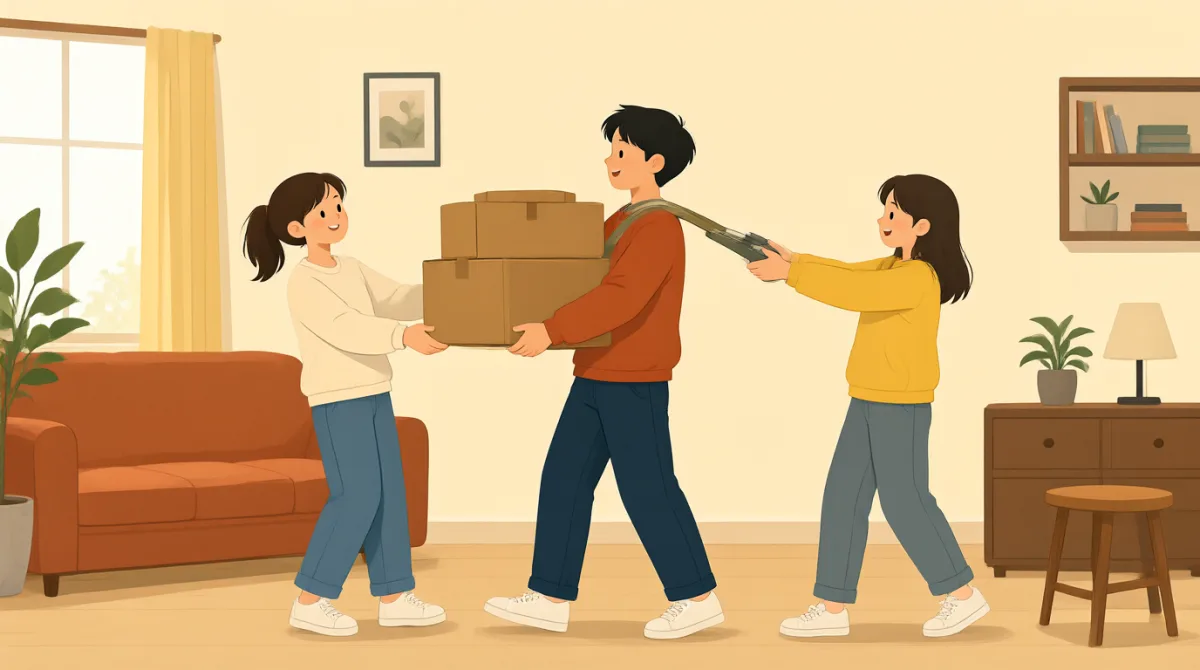

Hey Emma, could you give me a hand with this box? It's pretty heavy.
अरे एमा, क्या तुम इस डिब्बे को उठाने में मेरी मदद करोगी? यह काफ़ी भारी है।

Sure, Jack. Where are we taking it?
ज़रूर, जैक। इसे कहाँ ले जाना है?
Just over to the storage room. Let's lift on the count of three. I'll take this end. Ready?
बस उस स्टोररूम तक। चलो तीन गिनने पर उठाते हैं। मैं यह वाला सिरा पकड़ूँगा। तैयार?
Ready. One, two, three, lift!
तैयार। एक, दो, तीन, उठाओ!
Okay, good. Watch the corner here, it's a bit tight. I'll go backward, you just keep coming straight.
ठीक है, बढ़िया। यहाँ कोने से सावधान रहना, जगह थोड़ी तंग है। मैं पीछे की ओर चलूँगा, तुम बस सीधे आगे बढ़ती रहना।
Got it. Slow and steady.
समझ गई। धीरे-धीरे और संभलकर।
Exactly. Now, there's a small step up right after this door frame. I'll go first, then you follow.
बिल्कुल। इस दरवाज़े की चौखट के ठीक आगे एक छोटी-सी सीढ़ी है। मैं पहले जाऊँगा, फिर तुम मेरे पीछे आना।
Alright, I see it. Just tell me when.
ठीक है, मुझे दिख रही है। बस बता देना कब।
Okay, a little push here, and up! Now you.
ठीक है, यहाँ थोड़ा धक्का दो, और ऊपर! अब तुम्हारी बारी।
Got it. Perfect. Almost there.
समझ गई। बढ़िया। बस पहुँच ही गए।
And... set it down right here. Thanks a lot, Emma, couldn't have done it without you.
और... इसे यहीं नीचे रख दो। बहुत-बहुत शुक्रिया, एमा। तुम्हारे बिना मैं यह नहीं कर पाता।
No problem at all, Jack. Happy to help!
कोई बात नहीं, जैक। मदद करके खुशी हुई!
शब्दावली8
- give me a handमदद करना
This is an idiom meaning to help someone with a task. Use it when politely asking for assistance in everyday situations like carrying something.
यह मुहावरा किसी काम में किसी की मदद करने के लिए इस्तेमाल होता है। रोज़मर्रा की स्थितियों में, जैसे कोई भारी चीज़ उठाने में मदद माँगते समय, इसका इस्तेमाल कर सकते हैं।
- pretty heavyकाफ़ी भारी
'Pretty' here means 'quite' or 'fairly', so it describes something as somewhat heavy. It's a casual way to emphasize weight without being extreme.
यहाँ 'Pretty' का मतलब 'काफ़ी' या 'कुछ ज़्यादा' है। इससे पता चलता है कि कोई चीज़ भारी है, लेकिन बहुत ज़्यादा नहीं। वज़न पर ज़ोर देने का यह अनौपचारिक तरीका है।
- liftउठाना
As a verb, it means to raise something up, like picking up a box. Common in physical tasks; remember to use it with objects you carry.
क्रिया के रूप में इसका मतलब किसी चीज़ को ऊपर उठाना है, जैसे कोई डिब्बा उठाना। शारीरिक मेहनत वाले कामों में यह आम है; इसका इस्तेमाल उन चीज़ों के लिए करें जिन्हें आप उठाते हैं।
- on the count of threeतीन गिनने पर
This phrase means to start an action together when you reach the number three while counting. It's used for coordinating movements safely, like lifting together.
इस वाक्यांश का मतलब है, गिनती में तीन तक पहुँचने पर एक साथ कोई काम शुरू करना। सुरक्षित ढंग से गतिविधियों में तालमेल बिठाने के लिए, जैसे मिलकर कोई चीज़ उठाते समय, इसका इस्तेमाल होता है।
- watchसावधान रहना
In this context, it means to look out for or be careful of something, like a corner. It's often used in warnings: 'Watch out for...' to prevent accidents.
इस संदर्भ में इसका मतलब किसी चीज़ पर ध्यान देना या उससे सावधान रहना है, जैसे किसी कोने से। दुर्घटनाएँ रोकने के लिए चेतावनी देते समय अक्सर 'Watch out for...' कहा जाता है।
- tightतंग
Meaning narrow or with little space. Useful when describing areas that are cramped, like a tight corner, to warn others during movement.
इसका मतलब है संकरा या जहाँ जगह कम हो। किसी तंग कोने जैसी कम जगह वाली जगह का वर्णन करते समय यह शब्द उपयोगी है, ताकि चलते समय दूसरों को सावधान किया जा सके।
- slow and steadyधीरे-धीरे और संभलकर
An expression meaning to move carefully and without rushing to avoid mistakes. It's from the proverb 'slow and steady wins the race,' good for safe carrying.
इस अभिव्यक्ति का मतलब है बिना जल्दबाज़ी किए सावधानी से आगे बढ़ना, ताकि गलतियाँ न हों। यह कहावत 'धीमी और स्थिर चाल से ही मंज़िल मिलती है' से आया है और सामान सुरक्षित रूप से उठाने में काम आता है।
- set it downनीचे रख देना
To place something down gently after carrying it. Use this phrasal verb when finishing moving an object to a new spot.
किसी चीज़ को उठाकर ले जाने के बाद उसे धीरे से नीचे रखना। किसी वस्तु को दूसरी जगह पहुँचाने का काम पूरा होने पर इस फ्रेज़ल वर्ब का इस्तेमाल करें।
मुख्य वाक्य9
- 1
Hey Emma, could you give me a hand with this box? It's pretty heavy.
अरे एमा, क्या तुम इस डिब्बे को उठाने में मेरी मदद करोगी? यह काफ़ी भारी है।
This is a polite request for help using the modal 'could' for suggestions. It's useful for starting a conversation when you need assistance with something heavy; the explanation of weight adds reason.
यह 'could' का इस्तेमाल करके मदद माँगने का एक विनम्र तरीका है। किसी भारी चीज़ में मदद की ज़रूरत हो, तो बातचीत शुरू करने के लिए यह उपयोगी है; चीज़ के वज़न का ज़िक्र करने से मदद माँगने की वजह भी पता चलती है।
- 2
Sure, Jack. Where are we taking it?
ज़रूर, जैक। इसे कहाँ ले जाना है?
A positive response to a request followed by a question for clarification. 'Sure' is casual agreement; use this pattern to confirm and get details in teamwork situations.
यह किसी अनुरोध के लिए हामी भरने के बाद बात स्पष्ट करने वाला सवाल पूछने का तरीका है। 'Sure' अनौपचारिक सहमति जताता है। साथ मिलकर काम करते समय हामी भरने और ज़रूरी जानकारी पूछने के लिए इस ढाँचे का इस्तेमाल करें।
- 3
Let's lift on the count of three. I'll take this end. Ready?
चलो तीन गिनने पर उठाते हैं। मैं यह वाला सिरा पकड़ूँगा। तैयार?
This coordinates action with 'let's' for suggestions and a counting phrase for timing. It's practical for safe lifting; 'ready?' checks preparedness before starting.
इसमें सुझाव देने के लिए 'let's' और काम का सही समय तय करने के लिए गिनती वाले वाक्यांश का इस्तेमाल है। सुरक्षित ढंग से सामान उठाने के लिए यह बहुत काम का है; शुरू करने से पहले 'ready?' पूछकर पता करें कि दूसरा व्यक्ति तैयार है या नहीं।
- 4
One, two, three, lift!
एक, दो, तीन, उठाओ!
A simple counting command to synchronize movement. The imperative 'lift!' gives a direct instruction. Use this in group tasks to ensure everyone acts together.
यह एक साथ हरकत करने के लिए गिनती के साथ दिया गया छोटा-सा निर्देश है। आदेश देने वाला 'lift!' सीधे बताता है कि क्या करना है। समूह में काम करते समय इसका इस्तेमाल करें, ताकि सभी एक साथ काम शुरू करें।
- 5
Watch the corner here, it's a bit tight. I'll go backward, you just keep coming straight.
यहाँ कोने से सावधान रहना, जगह थोड़ी तंग है। मैं पीछे की ओर चलूँगा, तुम बस सीधे आगे बढ़ती रहना।
This gives directions with warnings ('watch') and instructions ('I'll go backward'). 'A bit' softens 'tight'; useful for guiding during navigation to avoid bumps.
इसमें 'watch' के ज़रिए चेतावनी और 'I'll go backward' के ज़रिए निर्देश दिया गया है। 'A bit' शब्द 'tight' की बात को थोड़ा नरम करता है। टकराने से बचने के लिए रास्ता बताते समय यह उपयोगी है।
- 6
Slow and steady.
धीरे-धीरे और संभलकर।
A short idiom advising careful pace. It's elliptical for 'Go slow and steady'; repeat it to remind others to prioritize safety over speed in physical tasks.
यह सावधानी से चलने की सलाह देने वाला छोटा मुहावरा है। यह 'Go slow and steady' का संक्षिप्त रूप है। शारीरिक काम करते समय दूसरों को याद दिलाने के लिए इसे दोहराएँ कि तेज़ी से ज़्यादा सुरक्षा अहम है।
- 7
There's a small step up right after this door frame. I'll go first, then you follow.
इस दरवाज़े की चौखट के ठीक आगे एक छोटी-सी सीढ़ी है। मैं पहले जाऊँगा, फिर तुम मेरे पीछे आना।
This describes an obstacle and plans sequence with 'I'll go first, then you follow.' Use future simple for instructions; helps in coordinating through challenges.
इसमें रास्ते की रुकावट बताई गई है और 'I'll go first, then you follow.' के ज़रिए यह तय किया गया है कि कौन पहले जाएगा। निर्देश देने के लिए भविष्य काल का इस्तेमाल करें; इससे मुश्किल जगहों से गुज़रते समय तालमेल बनाए रखने में मदद मिलती है।
- 8
Set it down right here. Thanks a lot, Emma, couldn't have done it without you.
इसे यहीं नीचे रख दो। बहुत-बहुत शुक्रिया, एमा। तुम्हारे बिना मैं यह नहीं कर पाता।
Command to place the item ('set it down') plus gratitude. 'Couldn't have done it without you' expresses appreciation emphatically; end conversations like this after help.
इसमें चीज़ नीचे रखने का निर्देश ('set it down') देने के साथ-साथ आभार भी जताया गया है। 'Couldn't have done it without you' कहकर ज़ोरदार ढंग से शुक्रिया अदा किया जाता है। किसी की मदद लेने के बाद बातचीत समाप्त करते समय इसका इस्तेमाल करें।
- 9
No problem at all, Jack. Happy to help!
कोई बात नहीं, जैक। मदद करके खुशी हुई!
A casual way to say 'you're welcome' with 'no problem at all' downplaying effort. 'Happy to help' shows willingness; use after offering or giving assistance.
'No problem at all' कहकर अनौपचारिक रूप से 'आपका स्वागत है' कहा जाता है और मदद को कोई बड़ी बात नहीं बताया जाता। 'Happy to help' से मदद करने की खुशी जताई जाती है। मदद देने के बाद या किसी की मदद कर चुकने पर इसका इस्तेमाल करें।