Planning the Investigation With an Editor
Planificar la investigación con una editora
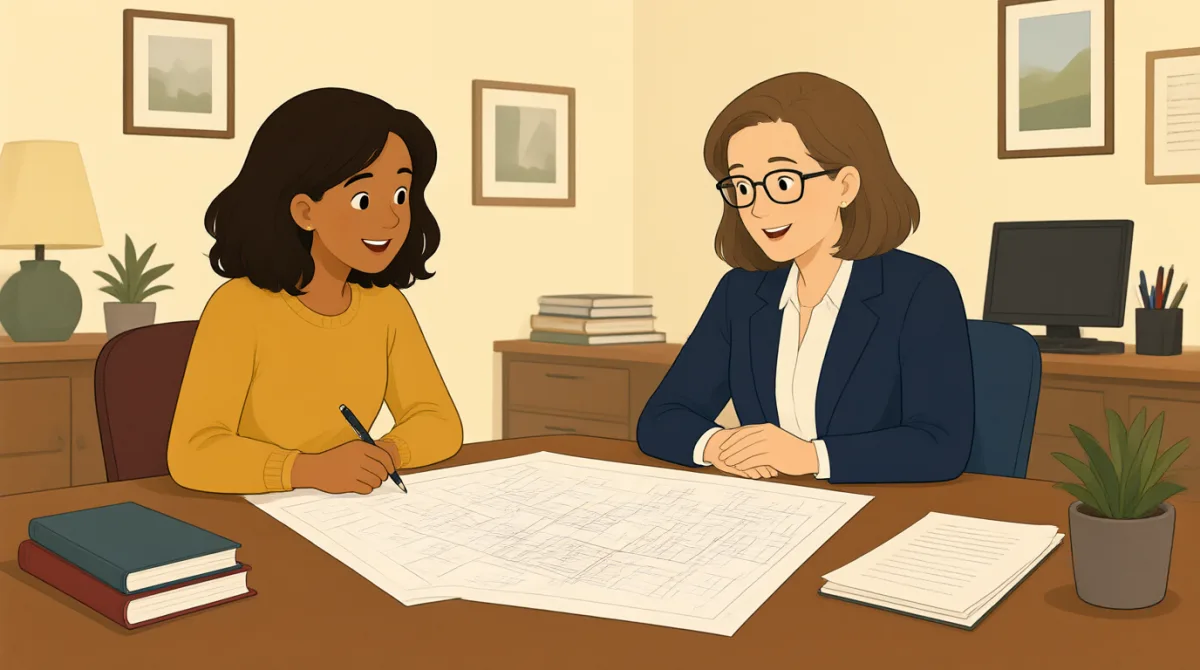
Reporter Emma Carter briefs editor Grace Wilson on allegations of improper safety inspections at a local plant. They map out what is known, what remains unverified, and how to approach a source who may be reluctant to speak.
La reportera Emma Carter informa a la editora Grace Wilson sobre las acusaciones de que se realizaron inspecciones de seguridad indebidas en una planta local. Delimitan qué se sabe, qué aún no se ha verificado y cómo acercarse a una fuente que quizá se resista a hablar.
Diálogo10

I’ve received two accounts alleging that safety inspections at the plant were signed off without being completed. I want to separate what we can document from what we’ve only been told.
He recibido dos testimonios que afirman que se dieron por concluidas inspecciones de seguridad en la planta sin haberlas realizado. Quiero separar lo que podemos documentar de lo que solo nos han contado.

Good. At this stage, treat those accounts as leads, not findings. What do the records actually show, and do the two sources have firsthand knowledge?
Bien. En esta etapa, trata esos testimonios como pistas, no como conclusiones. ¿Qué muestran realmente los registros? ¿Y las dos fuentes tienen conocimiento de primera mano?
One worked on the inspection team; the other says they saw completed forms entered after the fact. I haven’t seen the original forms, and neither has provided documentation yet.
Una persona trabajó en el equipo de inspección; la otra dice que vio cómo se llenaban formularios ya completados después de los hechos. No he visto los formularios originales y ninguna de las dos ha aportado documentación todavía.
Then don’t collapse those into one claim. Ask each person what they observed directly, when they observed it, and what they’re inferring from someone else’s account.
Entonces no mezcles esos testimonios en una sola afirmación. Pregúntale a cada persona qué observó directamente, cuándo lo observó y qué está deduciendo a partir del relato de otra persona.
I’m trying to reach a former employee who may know how the records were handled. They’re wary of being identified and haven’t agreed to speak yet.
Estoy intentando contactar a una exempleada que quizá sepa cómo se manejaban los registros. Le preocupa que la identifiquen y todavía no ha aceptado hablar.
Be clear about the purpose of the conversation and the ground rules before asking anything sensitive. Don’t promise anonymity unless we can realistically protect it.
Antes de preguntar nada delicado, explica con claridad el propósito de la conversación y las reglas acordadas. No prometas anonimato a menos que realmente podamos protegerlo.
I can explain that we’ll discuss attribution first and that they can decline questions. But I can’t guarantee their identity could never be inferred from the details.
Puedo explicarle que primero hablaremos de cómo se la identificará y que puede negarse a responder cualquier pregunta. Pero no puedo garantizar que nadie llegue a deducir su identidad a partir de los detalles.
Exactly. Also, don’t imply that a source’s account proves misconduct. We need the inspection logs, the underlying forms, and a response from the plant before drawing conclusions.
Exactamente. Además, no des a entender que el relato de una fuente demuestra que hubo una falta. Necesitamos los registros de inspección, los formularios originales y una respuesta de la planta antes de sacar conclusiones.
I’ll request the public logs and look for dates, signatures, and any gaps that can be independently checked. If something conflicts, I’ll ask whether there’s a routine explanation.
Solicitaré los registros públicos y buscaré fechas, firmas y cualquier discrepancia que se pueda verificar de forma independiente. Si algo no coincide, preguntaré si hay una explicación habitual.
And keep a careful record of what we asked and what each person said. If the source agrees to speak, we can revisit attribution after we understand the evidence and the risks.
Y lleva un registro detallado de lo que preguntamos y de lo que dijo cada persona. Si la fuente acepta hablar, podemos volver a hablar de cómo se la identificará cuando entendamos las pruebas y los riesgos.
Vocabulario7
- leadspistas
Leads are pieces of information that may help an investigation but have not been confirmed. Here, the accounts point to issues that still need to be checked.
Las pistas son datos que pueden ayudar en una investigación, pero que todavía no se han confirmado. En este caso, los testimonios apuntan a cuestiones que aún hay que comprobar.
- firsthand knowledgeconocimiento de primera mano
This means knowing something from your own direct experience, rather than hearing it from someone else. Journalists ask about it to assess how reliable a source’s information may be.
Significa saber algo por experiencia directa, en lugar de haberse enterado por otra persona. Los periodistas preguntan por esto para evaluar qué tan fiable puede ser la información de una fuente.
- after the factdespués de los hechos
This means something was done after the event it was supposed to record. Here, the phrase suggests forms may have been entered after the inspections took place.
Significa que algo se hizo después del suceso que debía dejar registrado. Aquí, la expresión sugiere que quizá se llenaron los formularios después de las inspecciones.
- ground rulesreglas acordadas
Ground rules are the conditions or expectations agreed on before a conversation. In an interview, they can cover attribution, confidentiality, and the source’s right not to answer.
Son las condiciones o expectativas acordadas antes de una conversación. En una entrevista, pueden incluir cómo se identificará a la fuente, la confidencialidad y su derecho a no responder.
- attributionidentificación de la fuente
Attribution is how a journalist identifies or describes the source of information. It matters because a source may agree to speak only under certain conditions.
Es la manera en que un periodista identifica o describe la fuente de información. Es importante porque una fuente quizá solo acepte hablar bajo ciertas condiciones.
- independently checkedverificado de forma independiente
This describes information that can be verified using evidence separate from the original account. Dates, signatures, and records can help confirm whether a claim is accurate.
Describe información que se puede comprobar mediante pruebas distintas del relato original. Las fechas, las firmas y los registros pueden ayudar a confirmar si una afirmación es correcta.
- routine explanationexplicación habitual
A routine explanation is an ordinary, non-misconduct reason for something that appears unusual. Asking about one helps a journalist test competing interpretations fairly.
Una explicación habitual es un motivo corriente, sin que haya habido una falta, para algo que parece inusual. Preguntar si existe una ayuda al periodista a evaluar con imparcialidad distintas interpretaciones.
Frases clave8
- 1
At this stage, treat those accounts as leads, not findings.
En esta etapa, trata esos testimonios como pistas, no como conclusiones.
This sentence clearly distinguishes unverified information from established facts. Reuse the structure “Treat X as Y, not Z” when you need to emphasize caution.
Esta frase distingue claramente la información no verificada de los hechos establecidos. Puedes reutilizar la estructura “Treat X as Y, not Z” (Trata X como Y, no como Z) cuando quieras recalcar la importancia de actuar con cautela.
- 2
What do the records actually show, and do the two sources have firsthand knowledge?
¿Qué muestran realmente los registros? ¿Y las dos fuentes tienen conocimiento de primera mano?
This is a useful way to focus an investigation on evidence and the source’s direct experience. You can adapt it to ask what documents show and whether a person witnessed an event themselves.
Esta es una forma útil de centrar una investigación en las pruebas y en la experiencia directa de la fuente. Puedes adaptarla para preguntar qué muestran los documentos y si alguien presenció un suceso.
- 3
Then don’t collapse those into one claim.
Entonces no mezcles esos testimonios en una sola afirmación.
This concise sentence warns against merging separate accounts or allegations into a single assertion. Use “don’t collapse X into Y” when different details need to remain distinct.
Esta frase concisa advierte que no se deben juntar relatos o acusaciones distintos en una sola afirmación. Usa “don’t collapse X into Y” (no mezcles X en Y) cuando debas mantener separados distintos detalles.
- 4
Be clear about the purpose of the conversation and the ground rules before asking anything sensitive.
Antes de preguntar nada delicado, explica con claridad el propósito de la conversación y las reglas acordadas.
This gives practical guidance for beginning a delicate interview transparently. The structure “Be clear about X before doing Y” is useful for setting expectations in professional conversations.
Esta frase ofrece una orientación práctica para iniciar una entrevista delicada con transparencia. La estructura “Be clear about X before doing Y” (Explica claramente X antes de hacer Y) sirve para establecer expectativas en conversaciones profesionales.
- 5
Don’t promise anonymity unless we can realistically protect it.
No prometas anonimato a menos que realmente podamos protegerlo.
This sentence expresses an important ethical limit: do not guarantee protection you may be unable to provide. Reuse “Don’t promise X unless…” to set a careful boundary.
Esta frase expresa un límite ético importante: no garantices una protección que quizá no puedas ofrecer. Reutiliza “Don’t promise X unless…” (No prometas X a menos que…) para establecer un límite con prudencia.
- 6
We need the inspection logs, the underlying forms, and a response from the plant before drawing conclusions.
Necesitamos los registros de inspección, los formularios originales y una respuesta de la planta antes de sacar conclusiones.
This sentence lists the evidence needed before reaching a judgment. It is useful to adapt the pattern “We need X, Y, and Z before…” when explaining what must happen next.
Esta frase enumera las pruebas necesarias antes de llegar a una conclusión. Puedes adaptar el patrón “We need X, Y, and Z before…” (Necesitamos X, Y y Z antes de…) para explicar qué hay que hacer a continuación.
- 7
If something conflicts, I’ll ask whether there’s a routine explanation.
Si algo no coincide, preguntaré si hay una explicación habitual.
This shows how to investigate discrepancies without assuming wrongdoing. Use “If something conflicts, I’ll ask whether…” to describe a fair, evidence-minded next step.
Esta frase muestra cómo investigar discrepancias sin dar por hecho que hubo una falta. Usa “If something conflicts, I’ll ask whether…” (Si algo no coincide, preguntaré si…) para describir el siguiente paso de una investigación imparcial y basada en pruebas.
- 8
If the source agrees to speak, we can revisit attribution after we understand the evidence and the risks.
Si la fuente acepta hablar, podemos volver a hablar de cómo se la identificará cuando entendamos las pruebas y los riesgos.
This sentence explains that attribution can be discussed again once the situation is clearer. The pattern “If X, we can revisit Y after…” is useful for describing a conditional plan.
Esta frase explica que se puede volver a hablar de cómo se identificará a la fuente cuando la situación esté más clara. El patrón “If X, we can revisit Y after…” (Si X, podemos volver a hablar de Y después de…) sirve para describir un plan condicionado.