Cross-Checking the Evidence
Contrastar las pruebas
Emma consults David Chen, a veteran records specialist, to authenticate documents and compare their dates with public inspection logs. David cautions her that inconsistencies may point to clerical errors rather than deliberate tampering.
Emma consulta a David Chen, un especialista en archivos con amplia experiencia, para autenticar documentos y comparar sus fechas con los registros públicos de inspección. David le advierte que las discrepancias podrían deberse a errores administrativos y no a una manipulación deliberada.
Diálogo12
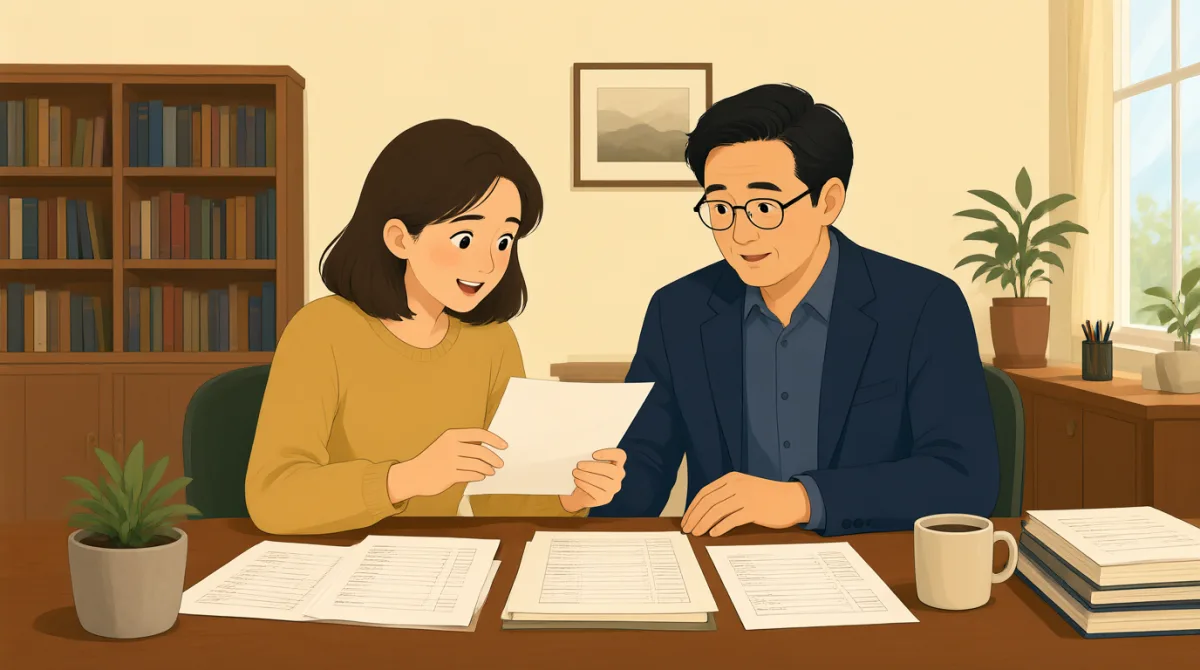

I’ve brought the inspection forms and the public logs. The dates don’t line up, but I don’t want to call that evidence of tampering before we know how these records were created.
He traído los formularios de inspección y los registros públicos. Las fechas no coinciden, pero no quiero decir que eso sea una prueba de manipulación antes de saber cómo se crearon estos documentos.

Good instinct. A discrepancy is a question, not a conclusion. First, let’s establish whether these are original records, copies, or entries exported from a database that may have been updated later.
Es una buena forma de verlo. Una discrepancia plantea una pregunta; no es una conclusión. Primero, averigüemos si estos son documentos originales, copias o datos exportados de una base de datos que quizá se actualizó después.
The forms came from a former employee. They have handwritten dates and initials, but there’s no cover sheet, and I can’t tell whether the pages are complete or in their original order.
Los formularios me los dio un exempleado. Tienen fechas e iniciales escritas a mano, pero no hay una hoja de portada y no puedo saber si están todas las páginas ni si conservan el orden original.
Then we should treat provenance as unresolved. Do you have the files as they were received, including the email or message that transmitted them? Metadata and transmission history may help establish what changed—and when.
Entonces debemos considerar que su procedencia aún no está esclarecida. ¿Tienes los archivos tal como los recibiste, incluido el correo o mensaje con el que te los enviaron? Los metadatos y el historial de envío podrían ayudar a determinar qué cambió y cuándo.
I saved the original attachment and made a working copy. The attachment’s timestamp is two years later than the handwritten inspection date, though, so it could simply be a scan made after the fact.
Guardé el archivo adjunto original e hice una copia de trabajo. Pero la fecha y hora del archivo adjunto es dos años posterior a la fecha de inspección escrita a mano, así que podría ser simplemente un escaneo hecho tiempo después.
Exactly. A file timestamp usually tells you when that digital file was created or modified, not when the underlying inspection occurred. We’ll need to separate what the metadata proves from what it merely suggests.
Exacto. La fecha y hora de un archivo suele indicar cuándo se creó o modificó ese archivo digital, no cuándo se realizó la inspección. Tendremos que distinguir lo que demuestran los metadatos de lo que solo sugieren.
The public log lists an inspection on that date, but it describes a different section of the plant. Could that indicate the form was misdated, or are we comparing records that use different location codes?
El registro público incluye una inspección en esa fecha, pero describe otra sección de la planta. ¿Podría significar que la fecha del formulario es incorrecta, o estamos comparando registros que usan códigos de ubicación distintos?
Either is possible. Let’s compare the codes against the agency’s documentation, then check whether its log records the inspection date, the filing date, or the date an entry was entered into the system.
Cualquiera de las dos cosas es posible. Comparemos los códigos con la documentación de la agencia y luego comprobemos si su registro indica la fecha de inspección, la fecha de presentación o la fecha en que se introdujo el dato en el sistema.
If the log was entered later, a mismatch might be routine. But if the initials on the form match the inspector’s signature elsewhere, would that strengthen the document’s authenticity?
Si el registro se introdujo más tarde, la discrepancia podría ser normal. Pero si las iniciales del formulario coinciden con la firma del inspector en otro documento, ¿eso ayudaría a confirmar su autenticidad?
It would be one useful point of comparison, not proof by itself. We should verify the signature against an independent record and ask the agency how its forms were handled at the time.
Sería un punto de comparación útil, pero no una prueba por sí solo. Deberíamos verificar la firma con un registro independiente y preguntar a la agencia cómo se gestionaban sus formularios en aquella época.
Understood. I’ll preserve the originals, document how I received them, and request the agency’s filing procedures and the relevant log history. I won’t describe the discrepancy as deliberate alteration unless the evidence supports that.
Entendido. Voy a conservar los originales, dejar constancia de cómo los recibí y solicitar los procedimientos de archivo de la agencia y el historial del registro pertinente. No describiré la discrepancia como una alteración deliberada a menos que las pruebas lo respalden.
That’s the right standard. And keep a clear distinction in your notes between what the documents show, what someone told you, and what you’re still trying to establish. Readers deserve that precision.
Ese es el criterio adecuado. Y en tus notas, distingue claramente entre lo que muestran los documentos, lo que te ha dicho alguien y lo que aún intentas averiguar. Los lectores merecen esa precisión.
Vocabulario7
- discrepancydiscrepancia
A difference between two pieces of information that are expected to match. Here, it describes the dates or details that do not line up across records.
Diferencia entre dos datos que se espera que coincidan. Aquí se refiere a las fechas o los detalles que no concuerdan entre distintos registros.
- provenanceprocedencia
The history of where a document came from and how it has been handled. Journalists use provenance to assess a record’s reliability.
El historial de origen de un documento y de cómo se ha gestionado. Los periodistas analizan la procedencia para evaluar la fiabilidad de un registro.
- metadatametadatos
Information about a digital file, such as when it was created or modified. It may help establish a file’s history, but not necessarily the date of the event described in it.
Información sobre un archivo digital, como cuándo se creó o modificó. Puede ayudar a establecer el historial del archivo, pero no necesariamente la fecha del suceso que describe.
- underlying inspectioninspección original
The actual inspection that a document refers to, as distinct from the later creation of a digital copy. The phrase helps separate an event’s date from a file’s timestamp.
La inspección real a la que se refiere un documento, a diferencia de la creación posterior de una copia digital. La expresión permite distinguir la fecha de un suceso de la fecha y hora de un archivo.
- independent recordregistro independiente
A separate source that can be used to check a claim. Comparing a signature with an independent record can support authentication, though it does not prove it on its own.
Una fuente distinta que sirve para verificar una afirmación. Comparar una firma con un registro independiente puede ayudar a autenticarla, aunque no basta para demostrarlo por sí solo.
- filing proceduresprocedimientos de archivo
The rules or routine steps an organization follows to submit and store records. Asking about them can help explain why dates or entries differ.
Las normas o los pasos habituales que sigue una organización para presentar y almacenar documentos. Preguntar por ellos puede ayudar a explicar por qué difieren algunas fechas o anotaciones.
- deliberate alterationalteración deliberada
An intentional change made to a document or record. The phrase should be used only when evidence supports the conclusion that the change was intentional.
Un cambio intencional hecho en un documento o registro. Esta expresión solo debe usarse cuando las pruebas respalden la conclusión de que el cambio fue intencional.
Frases clave7
- 1
A discrepancy is a question, not a conclusion.
Una discrepancia plantea una pregunta; no es una conclusión.
This concise sentence cautions against treating an inconsistency as proof. Use it to emphasize that a finding needs further investigation before it supports a conclusion.
Esta frase concisa advierte que no hay que tratar una inconsistencia como si fuera una prueba. Úsala para subrayar que un hallazgo requiere más investigación antes de poder respaldar una conclusión.
- 2
Then we should treat provenance as unresolved.
Entonces debemos considerar que la procedencia aún no está esclarecida.
This is a careful way to say that a document’s origins and handling have not yet been established. Reuse the pattern “treat [issue] as unresolved” when evidence is incomplete.
Esta es una forma prudente de decir que todavía no se han establecido el origen de un documento ni cómo se ha gestionado. Puedes reutilizar la estructura “treat [issue] as unresolved” («considerar que [el asunto] aún no está esclarecido») cuando las pruebas sean incompletas.
- 3
We’ll need to separate what the metadata proves from what it merely suggests.
Tendremos que distinguir lo que demuestran los metadatos de lo que solo sugieren.
This sentence distinguishes confirmed facts from possible interpretations. It is useful when explaining why digital information should be interpreted cautiously.
Esta frase distingue los hechos confirmados de las posibles interpretaciones. Es útil para explicar por qué conviene interpretar con cautela la información digital.
- 4
Either is possible.
Cualquiera de las dos cosas es posible.
This brief response acknowledges multiple plausible explanations without choosing between them prematurely. Use it when the available evidence does not yet settle a question.
Esta breve respuesta reconoce que hay varias explicaciones plausibles sin decidirse por ninguna antes de tiempo. Úsala cuando las pruebas disponibles aún no permitan resolver una cuestión.
- 5
It would be one useful point of comparison, not proof by itself.
Sería un punto de comparación útil, pero no una prueba por sí solo.
This sentence explains that a piece of supporting evidence has limits. Reuse the structure “one useful point of comparison, not proof by itself” to describe evidence that needs corroboration.
Esta frase explica que las pruebas de apoyo tienen sus límites. Puedes reutilizar la estructura “one useful point of comparison, not proof by itself” («un punto de comparación útil, pero no una prueba por sí solo») para describir pruebas que necesitan corroboración.
- 6
I’ll preserve the originals, document how I received them, and request the agency’s filing procedures and the relevant log history.
Voy a conservar los originales, dejar constancia de cómo los recibí y solicitar los procedimientos de archivo de la agencia y el historial del registro pertinente.
This sentence lays out practical steps for maintaining a clear record of evidence and seeking context. Its parallel verbs make it useful when describing a careful investigation plan.
Esta frase plantea pasos prácticos para mantener un registro claro de las pruebas y obtener contexto. La estructura paralela de los verbos la hace útil para describir un plan de investigación cuidadoso.
- 7
Readers deserve that precision.
Los lectores merecen esa precisión.
This short statement connects accurate reporting with responsibility to the audience. Use it to underscore why a journalist should distinguish facts, claims, and unanswered questions.
Esta breve afirmación relaciona la precisión periodística con la responsabilidad ante el público. Úsala para recalcar por qué un periodista debe distinguir entre hechos, afirmaciones y preguntas aún sin respuesta.