Giving Advice
Dar consejos
Mia suggests a few simple ways to sleep better, such as putting away his phone and going to bed earlier. Leo decides to try them.
Mia sugiere algunas formas sencillas de dormir mejor, como guardar el teléfono e irse a la cama más temprano. Leo decide probarlas.
Diálogo8
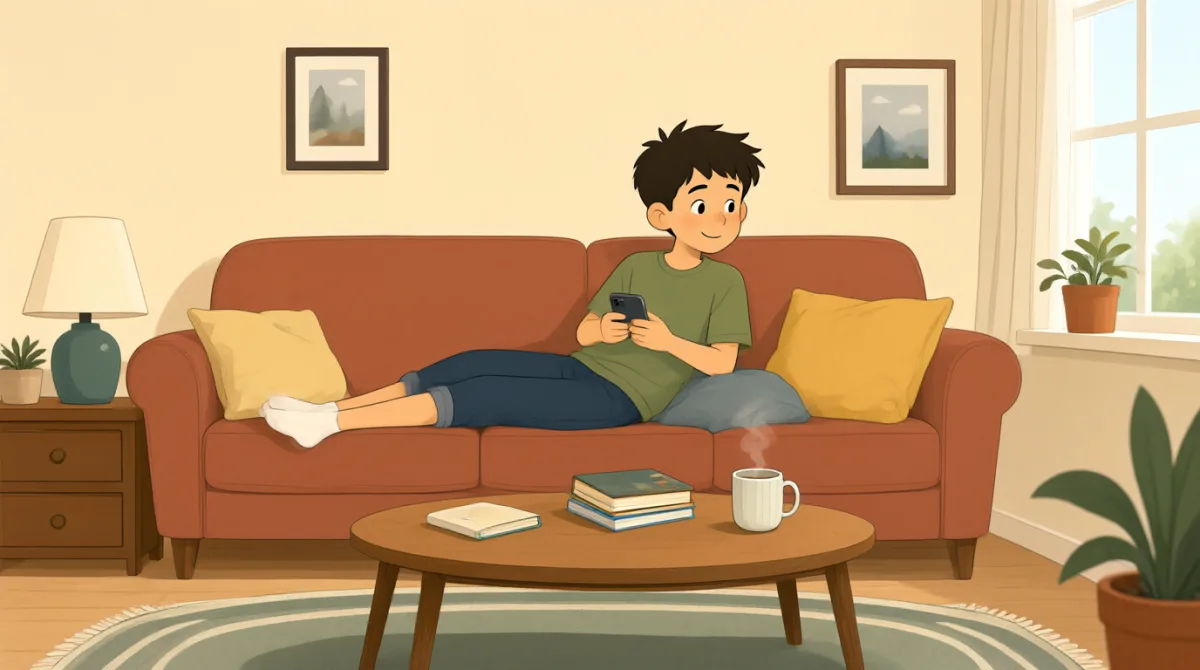

You should put your phone away before bed. The screen can keep you awake.
Deberías guardar el teléfono antes de acostarte. La pantalla puede mantenerte despierto.

I check it right before I go to sleep. I can stop doing that.
Lo miro justo antes de dormir. Puedo dejar de hacerlo.
Good idea. You could also go to bed thirty minutes earlier.
Buena idea. También podrías acostarte treinta minutos antes.
That might help. I usually stay up too late watching videos.
Eso podría ayudar. Normalmente me quedo despierto hasta muy tarde viendo videos.
Try turning off your videos and reading a book instead.
Prueba a apagar los videos y leer un libro en su lugar.
Okay, I’ll try that tonight. Should I avoid coffee in the evening too?
Vale, lo probaré esta noche. ¿También debería evitar el café por la noche?
Yes, that’s a good idea. Try some water or warm milk instead.
Sí, es buena idea. Prueba con agua o leche caliente en su lugar.
Thanks, Mia. I’ll put my phone away and go to bed earlier tonight.
Gracias, Mia. Esta noche guardaré el teléfono y me acostaré más temprano.
Vocabulario8
- put your phone awayguardar el teléfono
To put your phone away is to stop using it and place it somewhere. Here, Mia suggests doing this before bed.
“Put your phone away” significa dejar de usar el teléfono y ponerlo en algún sitio. Aquí, Mia sugiere hacerlo antes de acostarse.
- keep you awakemantenerte despierto
If something keeps you awake, it makes it hard to sleep. You can use this phrase to talk about things that affect your sleep.
Si algo “keeps you awake”, hace que te cueste dormir. Puedes usar esta expresión para hablar de cosas que afectan el sueño.
- right beforejusto antes
Right before means just before something happens. For example, you can say, “I brush my teeth right before bed.”
“Right before” significa justo antes de que pase algo. Por ejemplo, puedes decir: “I brush my teeth right before bed.” (Me cepillo los dientes justo antes de acostarme).
- go to bedacostarse
To go to bed means to get into bed to sleep. You can use it to talk about when you plan to sleep.
“Go to bed” significa meterse en la cama para dormir. Puedes usar esta expresión para hablar de a qué hora piensas dormir.
- stay up too latequedarse despierto hasta muy tarde
To stay up too late means to go to bed later than you should. You can use this phrase to describe a sleep habit.
“Stay up too late” significa acostarse más tarde de lo que deberías. Puedes usar esta expresión para describir un hábito de sueño.
- turning offapagar
Turning off means stopping a device or activity. Here, Leo can turn off his videos before bed.
“Turning off” significa apagar un dispositivo o interrumpir una actividad. Aquí, Leo puede apagar los videos antes de acostarse.
- insteaden su lugar
Instead means in place of something else. You can use it to suggest a different choice, such as reading instead of watching videos.
“Instead” significa en lugar de otra cosa. Puedes usarlo para sugerir una opción diferente, como leer en lugar de ver videos.
- in the eveningpor la tarde / por la noche
In the evening means during the later part of the day, before night. You can use it when talking about habits, such as drinking coffee.
“In the evening” significa durante la parte final del día, antes de la noche. Puedes usarlo para hablar de hábitos, como tomar café.
Frases clave8
- 1
You should put your phone away before bed.
Deberías guardar el teléfono antes de acostarte.
Use “You should” to give someone simple advice. You can change the action to suggest another helpful habit.
Usa “You should” para darle a alguien un consejo sencillo. Puedes cambiar la acción para sugerir otro hábito útil.
- 2
The screen can keep you awake.
La pantalla puede mantenerte despierto.
This sentence explains how something may cause a problem. Use “can keep you awake” to talk about things that make sleeping difficult.
Esta oración explica cómo algo puede causar un problema. Usa “can keep you awake” para hablar de cosas que dificultan dormir.
- 3
I can stop doing that.
Puedo dejar de hacer eso.
Use this sentence to say you can stop a habit. Replace “that” with an action you want to change.
Usa esta oración para decir que puedes dejar un hábito. Sustituye “that” por la acción que quieres cambiar.
- 4
You could also go to bed thirty minutes earlier.
También podrías acostarte treinta minutos antes.
Use “You could” to make a gentle suggestion. You can change the action or the amount of time to fit your advice.
Usa “You could” para hacer una sugerencia amable. Puedes cambiar la acción o el tiempo para adaptar el consejo.
- 5
I usually stay up too late watching videos.
Normalmente me quedo despierto hasta muy tarde viendo videos.
Use “I usually” to describe a regular habit. This sentence is useful for explaining a sleep problem or another routine.
Usa “I usually” para describir un hábito habitual. Esta oración sirve para explicar un problema de sueño u otra rutina.
- 6
Try turning off your videos and reading a book instead.
Prueba a apagar los videos y leer un libro en su lugar.
Use “Try” plus an action to suggest something that may help. “Instead” shows that one activity can replace another.
Usa “Try” seguido de una acción para sugerir algo que podría ayudar. “Instead” indica que una actividad puede sustituir a otra.
- 7
Should I avoid coffee in the evening too?
¿También debería evitar el café por la noche?
Use “Should I…?” to ask for advice. You can change the action and time to ask about other habits.
Usa “Should I…?” para pedir consejo. Puedes cambiar la acción y el momento para preguntar sobre otros hábitos.
- 8
I’ll put my phone away and go to bed earlier tonight.
Esta noche guardaré el teléfono y me acostaré más temprano.
Use “I’ll” to say what you have decided to do. You can use this pattern to share a plan for later.
Usa “I’ll” para decir lo que has decidido hacer. Puedes usar esta estructura para compartir un plan para más tarde.