Asking for Change or Breaking a Bill
طلب الفكة أو تصريف ورقة نقدية كبيرة
A person at a small shop or cafe asks the cashier if they can break a large denomination bill or provide specific change.
يسأل شخص في متجر صغير أو مقهى أمين الصندوق إن كان بإمكانه تصريف ورقة نقدية كبيرة أو إعطاؤه فئات معينة من النقود.
حوار8
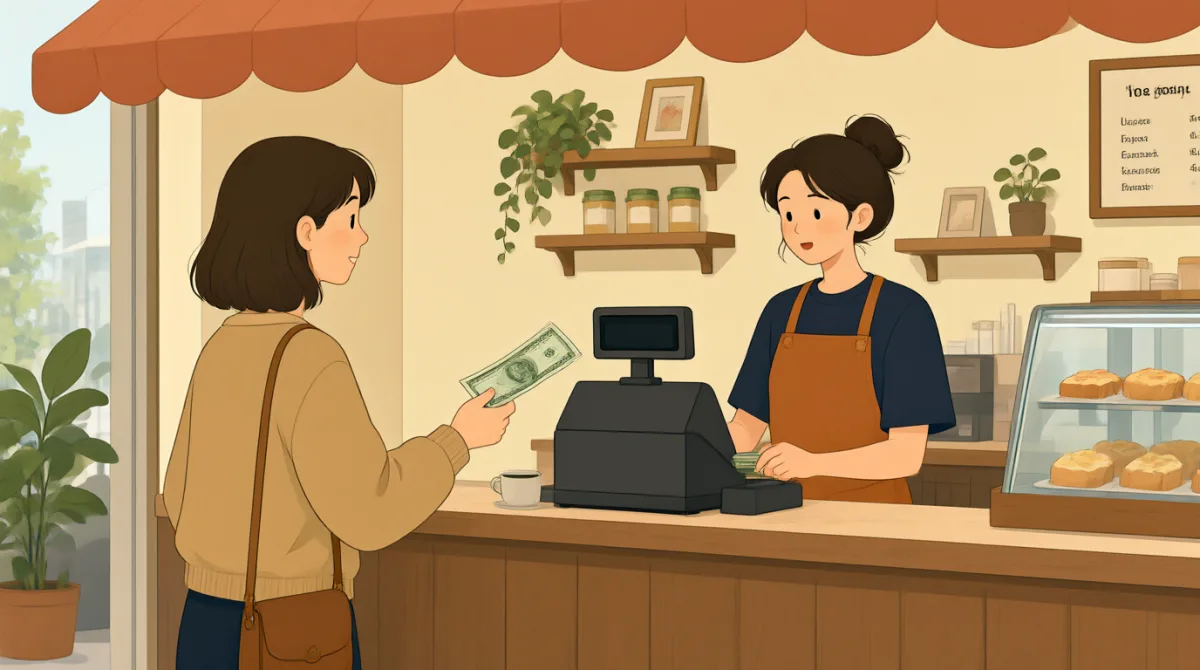

Excuse me, I just bought a coffee. Would it be possible to get some change for a larger bill?
عذرًا، لقد اشتريت قهوة للتو. هل يمكن أن تعطيني فكة لورقة نقدية أكبر؟

Sure, no problem. What denomination is it? And how much change are you looking for?
بالتأكيد، لا مشكلة. ما فئة الورقة؟ وكم تريد من الفكة؟
It's a fifty-dollar bill. I was hoping to get some smaller bills, maybe tens or twenties, if possible.
إنها ورقة من فئة خمسين دولارًا. كنت آمل أن أحصل على أوراق نقدية أصغر، ربما من فئتي العشرة أو العشرين دولارًا، إن أمكن.
Let me see... Yes, I can definitely do that for you. How about two twenties and a ten?
دعني أتحقق... نعم، يمكنني بالتأكيد فعل ذلك من أجلك. ما رأيك بورقتين من فئة العشرين وواحدة من فئة العشرة؟
That would be perfect, thank you so much!
سيكون ذلك مثاليًا، شكرًا جزيلًا!
Here you go. Anything else I can help you with today?
تفضل. هل يمكنني مساعدتك في شيء آخر اليوم؟
No, that's all. Thanks again!
لا، هذا كل شيء. شكرًا مرة أخرى!
You're welcome. Have a great day!
على الرحب والسعة. أتمنى لك يومًا سعيدًا!
المفردات6
- changeفكة
Money given back when you pay with more than the cost, or smaller coins and bills exchanged for a larger one. In this dialogue, it means breaking a large bill into smaller amounts.
نقود تُعاد إليك عندما تدفع أكثر من ثمن المشتريات، أو نقود من فئات أصغر تُستبدل بورقة نقدية كبيرة. في هذا الحوار، تعني تصريف ورقة كبيرة إلى فئات أصغر.
- billورقة نقدية
A banknote or paper money, like a $50 bill. It's used to refer to currency notes in everyday transactions.
نقود ورقية، مثل ورقة من فئة 50 دولارًا. تُستخدم هذه الكلمة للإشارة إلى الأوراق النقدية في المعاملات اليومية.
- denominationفئة نقدية
The value printed on a bill or coin, such as $10 or $20. It's a formal word often used in banking to ask about the amount of money.
القيمة المطبوعة على ورقة نقدية أو عملة معدنية، مثل 10 أو 20 دولارًا. وهي كلمة رسمية تُستخدم كثيرًا في المصارف للسؤال عن قيمة النقود.
- smaller billsأوراق نقدية أصغر
Banknotes with lower values, like $10 or $20 instead of $50. Useful when you need easier-to-use money for small purchases.
أوراق نقدية ذات قيمة أقل، مثل أوراق العشرة أو العشرين دولارًا بدلًا من ورقة الخمسين. وهي مفيدة عندما تحتاج إلى نقود يسهل استخدامها في المشتريات الصغيرة.
- twentiestwenties (أوراق من فئة العشرين)
Informal way to say $20 bills. People often shorten denominations like 'tens' for $10 bills or 'fifties' for $50 bills in casual talk.
طريقة غير رسمية لقول أوراق نقدية من فئة 20 دولارًا. كثيرًا ما يختصر الناس أسماء الفئات في الحديث العادي، فيقولون 'tens' لأوراق العشرة دولارات أو 'fifties' لأوراق الخمسين دولارًا.
- perfectمثالي
Means exactly right or ideal. In responses, it's a polite way to show satisfaction, like 'That would be perfect' to agree happily.
تعني أن الأمر مناسب تمامًا أو أنه الخيار الأفضل. وتُستخدم في الردود للتعبير بلطف عن الرضا، مثل 'That would be perfect' للموافقة بسرور.
الجمل الأساسية7
- 1
Excuse me, I just bought a coffee. Would it be possible to get some change for a larger bill?
عذرًا، لقد اشتريت قهوة للتو. هل يمكن أن تعطيني فكة لورقة نقدية أكبر؟
This is a polite way to start a request. 'Would it be possible' is a soft, indirect question to ask for help without being demanding. Useful in shops when you need to exchange money after a purchase. Grammar: Conditional 'would' makes it courteous.
هذه طريقة مهذبة لبدء طلب. تُستخدم 'Would it be possible' لطرح سؤال غير مباشر ولطيف وطلب المساعدة من دون إلحاح. وهي مفيدة في المتاجر عندما تحتاج إلى تصريف النقود بعد الشراء. من ناحية القواعد، يجعل استخدام 'would' الشرطية الطلب أكثر تهذيبًا.
- 2
Sure, no problem. What denomination is it? And how much change are you looking for?
بالتأكيد، لا مشكلة. ما فئة الورقة؟ وكم تريد من الفكة؟
A helpful response from service staff. 'Sure, no problem' shows willingness. 'What denomination is it?' asks for the bill's value. Useful for cashiers to clarify. The 'and' connects two questions naturally.
هذا رد مساعد من أحد العاملين في خدمة العملاء. تُظهر 'Sure, no problem' الاستعداد للمساعدة، ويسأل 'What denomination is it?' عن قيمة الورقة النقدية. هذا مفيد لأمناء الصندوق للتأكد من المبلغ. وتربط 'and' بين سؤالين بطريقة طبيعية.
- 3
It's a fifty-dollar bill. I was hoping to get some smaller bills, maybe tens or twenties, if possible.
إنها ورقة من فئة خمسين دولارًا. كنت آمل أن أحصل على أوراق نقدية أصغر، ربما من فئتي العشرة أو العشرين دولارًا، إن أمكن.
Explains the bill and specifies the desired change. 'I was hoping' softens the request politely. 'If possible' adds courtesy. Great for specifying preferences in money exchanges. Informal abbreviations like 'tens' and 'twenties' are common in spoken English.
يشرح المتحدث فئة الورقة ويحدد الفكة التي يريدها. تجعل 'I was hoping' الطلب أكثر لطفًا، وتضيف 'if possible' مزيدًا من التهذيب. هذا التعبير مفيد عند تحديد ما تفضله في صرف النقود. والاختصاران غير الرسميين 'tens' و'twenties' شائعان في الحديث.
- 4
Let me see... Yes, I can definitely do that for you. How about two twenties and a ten?
دعني أتحقق... نعم، يمكنني بالتأكيد فعل ذلك من أجلك. ما رأيك بورقتين من فئة العشرين وواحدة من فئة العشرة؟
Shows checking availability then offering a solution. 'Let me see' means thinking or checking. 'How about' suggests an option politely. Useful when proposing alternatives in service situations. 'Definitely' emphasizes certainty.
يوضح المتحدث أنه يتحقق من المتاح ثم يقترح حلًا. تعني 'Let me see' أنه يفكر أو يتحقق من الأمر. وتقترح 'How about' خيارًا بطريقة مهذبة. وهي مفيدة عند اقتراح بدائل في مواقف تقديم الخدمات. أما 'Definitely' فتؤكد اليقين.
- 5
That would be perfect, thank you so much!
سيكون ذلك مثاليًا، شكرًا جزيلًا!
Expresses strong agreement and gratitude. 'That would be' is conditional for hypothetical politeness. 'Thank you so much' intensifies thanks. Ideal for ending a positive interaction, showing appreciation in daily services.
يعبّر المتحدث عن موافقة كبيرة وامتنان. ويجعل 'That would be' العبارة أكثر لطفًا لأنها تصوغ الأمر على نحو افتراضي. أما 'Thank you so much' فتؤكد الشكر. إنها عبارة مناسبة لإنهاء تفاعل إيجابي وإظهار التقدير في مواقف الخدمة اليومية.
- 6
Here you go. Anything else I can help you with today?
تفضل. هل يمكنني مساعدتك في شيء آخر اليوم؟
Hands over the change and offers more help. 'Here you go' is a casual way to give something. The question invites further needs. Common in customer service to ensure satisfaction and build rapport.
يسلّم المتحدث الفكة ويعرض تقديم مزيد من المساعدة. تُستخدم 'Here you go' بطريقة ودية عند إعطاء شيء لشخص ما. ويفتح السؤال المجال لذكر أي احتياجات أخرى. وهي عبارة شائعة في خدمة العملاء للتأكد من رضا الزبون وبناء علاقة طيبة معه.
- 7
You're welcome. Have a great day!
على الرحب والسعة. أتمنى لك يومًا سعيدًا!
Standard polite response to thanks. 'You're welcome' acknowledges gratitude. 'Have a great day' is a friendly goodbye. Use this to end conversations positively in shops or cafes.
هذا رد مهذب شائع على الشكر. تعبر 'You're welcome' عن تقبل الامتنان، أما 'Have a great day' فهي عبارة ودية للوداع. استخدمهما لإنهاء المحادثات في المتاجر أو المقاهي بطريقة إيجابية.