Asking for Change or Breaking a Bill
ขอแลกธนบัตรย่อยหรือแลกแบงก์ใหญ่
A person at a small shop or cafe asks the cashier if they can break a large denomination bill or provide specific change.
ลูกค้าที่ร้านค้าหรือคาเฟ่เล็ก ๆ ถามพนักงานแคชเชียร์ว่าสามารถแลกธนบัตรใบใหญ่หรือขอเงินย่อยตามจำนวนที่ต้องการได้ไหม
บทสนทนา8
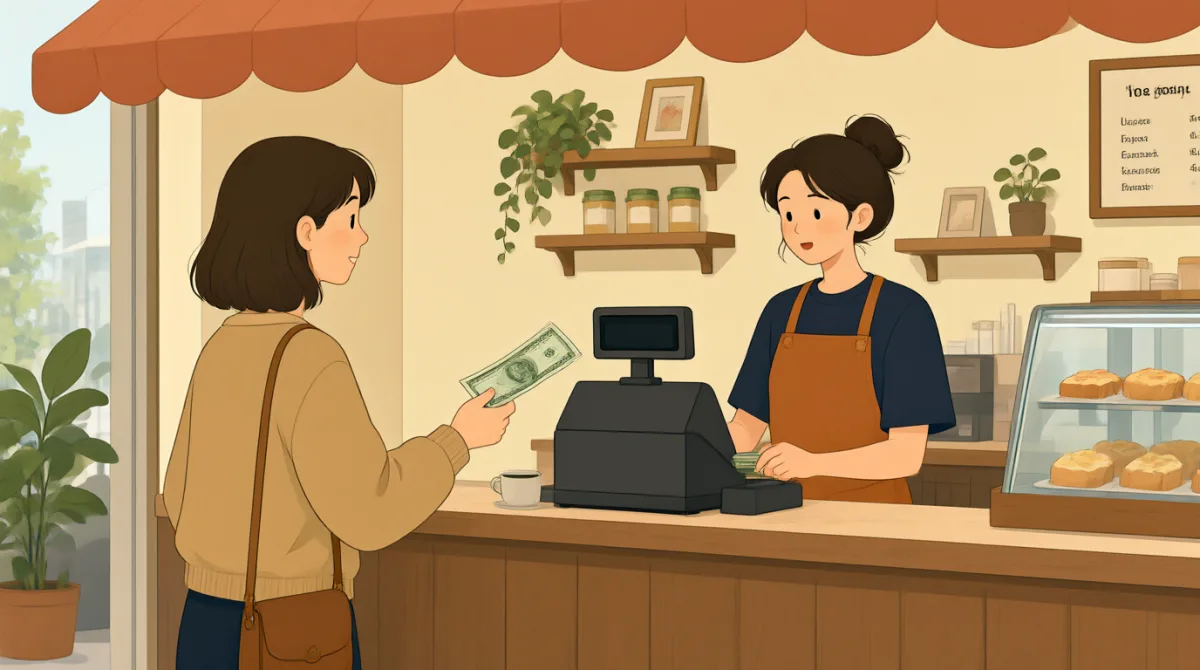

Excuse me, I just bought a coffee. Would it be possible to get some change for a larger bill?
ขอโทษนะครับ ผมเพิ่งซื้อกาแฟไป ขอแลกแบงก์ใบใหญ่เป็นเงินย่อยได้ไหมครับ

Sure, no problem. What denomination is it? And how much change are you looking for?
ได้เลยค่ะ ไม่มีปัญหา เป็นธนบัตรราคาเท่าไหร่คะ แล้วอยากแลกเป็นเงินย่อยเท่าไหร่คะ
It's a fifty-dollar bill. I was hoping to get some smaller bills, maybe tens or twenties, if possible.
เป็นแบงก์ห้าสิบดอลลาร์ครับ อยากแลกเป็นแบงก์ย่อยกว่านี้ ถ้าได้ก็ขอเป็นแบงก์สิบหรือยี่สิบดอลลาร์ครับ
Let me see... Yes, I can definitely do that for you. How about two twenties and a ten?
ขอดูก่อนนะคะ... ได้ค่ะ แลกให้ได้แน่นอน เอาเป็นแบงก์ยี่สิบสองใบกับแบงก์สิบหนึ่งใบไหมคะ
That would be perfect, thank you so much!
แบบนั้นดีเลยครับ ขอบคุณมากครับ!
Here you go. Anything else I can help you with today?
นี่ค่ะ วันนี้มีอะไรให้ช่วยอีกไหมคะ
No, that's all. Thanks again!
ไม่แล้วครับ แค่นี้ครับ ขอบคุณอีกครั้งนะครับ!
You're welcome. Have a great day!
ยินดีค่ะ ขอให้วันนี้เป็นวันที่ดีนะคะ!
คำศัพท์6
- changeเงินทอน; เงินย่อย
Money given back when you pay with more than the cost, or smaller coins and bills exchanged for a larger one. In this dialogue, it means breaking a large bill into smaller amounts.
เงินที่ได้รับคืนเมื่อจ่ายเงินเกินราคาสินค้า หรือเหรียญและธนบัตรใบย่อยที่นำมาแลกกับธนบัตรใบใหญ่ ในบทสนทนานี้หมายถึงการแลกธนบัตรใบใหญ่เป็นเงินย่อย
- billธนบัตร
A banknote or paper money, like a $50 bill. It's used to refer to currency notes in everyday transactions.
เงินกระดาษ เช่น ธนบัตร 50 ดอลลาร์ ใช้เรียกเงินที่เป็นธนบัตรในการซื้อขายทั่วไป
- denominationชนิดราคา
The value printed on a bill or coin, such as $10 or $20. It's a formal word often used in banking to ask about the amount of money.
มูลค่าที่พิมพ์ไว้บนธนบัตรหรือเหรียญ เช่น 10 หรือ 20 ดอลลาร์ เป็นคำค่อนข้างเป็นทางการที่มักใช้ในธนาคารเพื่อถามว่าธนบัตรหรือเหรียญมีมูลค่าเท่าไร
- smaller billsธนบัตรใบย่อย
Banknotes with lower values, like $10 or $20 instead of $50. Useful when you need easier-to-use money for small purchases.
ธนบัตรที่มีมูลค่าต่ำกว่า เช่น แบงก์ 10 หรือ 20 ดอลลาร์แทนแบงก์ 50 ดอลลาร์ มีประโยชน์เมื่อต้องการเงินที่ใช้จ่ายสะดวกขึ้นในการซื้อของเล็ก ๆ น้อย ๆ
- twentiesแบงก์ยี่สิบดอลลาร์
Informal way to say $20 bills. People often shorten denominations like 'tens' for $10 bills or 'fifties' for $50 bills in casual talk.
คำไม่เป็นทางการที่ใช้เรียกธนบัตร 20 ดอลลาร์ ในภาษาพูดมักย่อคำเรียกชนิดราคา เช่น 'tens' หมายถึงแบงก์ 10 ดอลลาร์ และ 'fifties' หมายถึงแบงก์ 50 ดอลลาร์
- perfectพอดีเลย; ดีที่สุด
Means exactly right or ideal. In responses, it's a polite way to show satisfaction, like 'That would be perfect' to agree happily.
หมายถึงถูกต้องหรือเหมาะที่สุด ในการตอบกลับ คำนี้เป็นวิธีสุภาพในการบอกว่าพอใจ เช่น 'That would be perfect' (แบบนั้นดีเลย) ใช้ตอบตกลงอย่างยินดี
ประโยคสำคัญ7
- 1
Excuse me, I just bought a coffee. Would it be possible to get some change for a larger bill?
ขอโทษนะครับ ผมเพิ่งซื้อกาแฟไป ขอแลกแบงก์ใบใหญ่เป็นเงินย่อยได้ไหมครับ
This is a polite way to start a request. 'Would it be possible' is a soft, indirect question to ask for help without being demanding. Useful in shops when you need to exchange money after a purchase. Grammar: Conditional 'would' makes it courteous.
ประโยคนี้เป็นวิธีสุภาพในการเริ่มต้นขอความช่วยเหลือ 'Would it be possible' (จะพอเป็นไปได้ไหม) เป็นคำถามอ้อม ๆ ที่ฟังนุ่มนวล ไม่เป็นการเรียกร้อง เหมาะใช้ในร้านค้าเมื่อต้องการแลกเงินหลังซื้อของ โครงสร้าง 'would' แบบเงื่อนไขช่วยให้ประโยคฟังสุภาพขึ้น
- 2
Sure, no problem. What denomination is it? And how much change are you looking for?
ได้เลยค่ะ ไม่มีปัญหา เป็นธนบัตรราคาเท่าไหร่คะ แล้วอยากแลกเป็นเงินย่อยเท่าไหร่คะ
A helpful response from service staff. 'Sure, no problem' shows willingness. 'What denomination is it?' asks for the bill's value. Useful for cashiers to clarify. The 'and' connects two questions naturally.
เป็นคำตอบที่แสดงความเต็มใจช่วยเหลือจากพนักงานบริการ 'Sure, no problem' (ได้เลย ไม่มีปัญหา) แสดงว่าพร้อมช่วย 'What denomination is it?' (เป็นธนบัตรราคาเท่าไหร่) ใช้ถามมูลค่าของธนบัตร เหมาะที่แคชเชียร์จะใช้เพื่อสอบถามให้ชัดเจน ส่วน 'and' ใช้เชื่อมคำถามสองข้ออย่างเป็นธรรมชาติ
- 3
It's a fifty-dollar bill. I was hoping to get some smaller bills, maybe tens or twenties, if possible.
เป็นแบงก์ห้าสิบดอลลาร์ครับ อยากแลกเป็นแบงก์ย่อยกว่านี้ ถ้าได้ก็ขอเป็นแบงก์สิบหรือยี่สิบดอลลาร์ครับ
Explains the bill and specifies the desired change. 'I was hoping' softens the request politely. 'If possible' adds courtesy. Great for specifying preferences in money exchanges. Informal abbreviations like 'tens' and 'twenties' are common in spoken English.
ประโยคนี้บอกชนิดของธนบัตรและระบุเงินย่อยที่ต้องการ 'I was hoping' (ผมหวังว่าจะ...) ช่วยทำให้คำขอฟังสุภาพนุ่มนวลขึ้น ส่วน 'if possible' (ถ้าเป็นไปได้) ก็ช่วยเพิ่มความสุภาพ เหมาะสำหรับบอกความต้องการเวลาแลกเงิน คำย่อไม่เป็นทางการอย่าง 'tens' และ 'twenties' มักใช้ในภาษาพูดภาษาอังกฤษ
- 4
Let me see... Yes, I can definitely do that for you. How about two twenties and a ten?
ขอดูก่อนนะคะ... ได้ค่ะ แลกให้ได้แน่นอน เอาเป็นแบงก์ยี่สิบสองใบกับแบงก์สิบหนึ่งใบไหมคะ
Shows checking availability then offering a solution. 'Let me see' means thinking or checking. 'How about' suggests an option politely. Useful when proposing alternatives in service situations. 'Definitely' emphasizes certainty.
ประโยคนี้แสดงว่ากำลังตรวจสอบเงินที่มี แล้วเสนอทางเลือกให้ 'Let me see' (ขอดูก่อน) หมายถึงกำลังคิดหรือตรวจสอบ 'How about' (เอาเป็น...ไหม) ใช้เสนอทางเลือกอย่างสุภาพ เหมาะเมื่อต้องการเสนอทางเลือกอื่นในสถานการณ์บริการ ส่วน 'definitely' (แน่นอน) ใช้เน้นความมั่นใจ
- 5
That would be perfect, thank you so much!
แบบนั้นดีเลยครับ ขอบคุณมากครับ!
Expresses strong agreement and gratitude. 'That would be' is conditional for hypothetical politeness. 'Thank you so much' intensifies thanks. Ideal for ending a positive interaction, showing appreciation in daily services.
ใช้แสดงการเห็นด้วยอย่างมากและกล่าวขอบคุณ 'That would be' (แบบนั้นคงจะ...) ใช้รูปเงื่อนไขเพื่อให้ฟังสุภาพเมื่อพูดถึงสิ่งที่สมมติขึ้น ส่วน 'Thank you so much' (ขอบคุณมาก) ช่วยเน้นความขอบคุณ เหมาะสำหรับจบบทสนทนาในทางที่ดีและแสดงความซาบซึ้งในการรับบริการ
- 6
Here you go. Anything else I can help you with today?
นี่ค่ะ วันนี้มีอะไรให้ช่วยอีกไหมคะ
Hands over the change and offers more help. 'Here you go' is a casual way to give something. The question invites further needs. Common in customer service to ensure satisfaction and build rapport.
ใช้ตอนส่งเงินย่อยให้ลูกค้าและเสนอความช่วยเหลือเพิ่มเติม 'Here you go' (นี่ค่ะ/นี่ครับ) เป็นวิธีพูดสบาย ๆ เวลายื่นของให้ คำถามต่อมาเปิดโอกาสให้ลูกค้าบอกความต้องการอื่น ๆ เป็นสำนวนที่พบบ่อยในการบริการลูกค้า เพื่อให้แน่ใจว่าลูกค้าพอใจและสร้างความรู้สึกเป็นกันเอง
- 7
You're welcome. Have a great day!
ยินดีค่ะ ขอให้วันนี้เป็นวันที่ดีนะคะ!
Standard polite response to thanks. 'You're welcome' acknowledges gratitude. 'Have a great day' is a friendly goodbye. Use this to end conversations positively in shops or cafes.
เป็นคำตอบสุภาพมาตรฐานเมื่อมีคนกล่าวขอบคุณ 'You're welcome' (ยินดีค่ะ/ครับ) เป็นการรับคำขอบคุณ ส่วน 'Have a great day' (ขอให้วันนี้เป็นวันที่ดี) เป็นคำอำลาที่เป็นมิตร ใช้จบบทสนทนาในร้านค้าหรือคาเฟ่อย่างน่าประทับใจ