Borrowing a Less Common/Specific Item
借用不常見或特定物品
A colleague needs a less common or more specific office tool (e.g., a hole punch, a label maker, a specific type of marker) and approaches a colleague they know might have it.
一位同事需要一個不太常見或更專業的辦公工具(例如打孔器、標籤機、特定型別的記號筆),並向他知道可能有的同事求助。
對話8
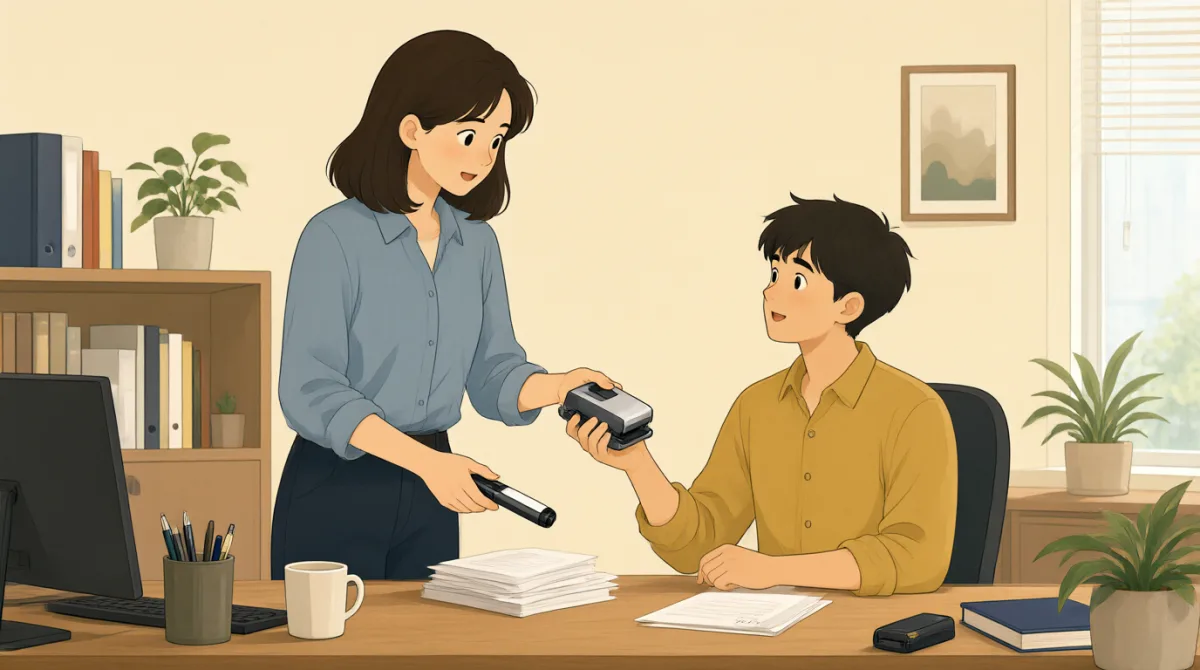

Hey Jack, I hope you don't mind me asking, but do you happen to have a label maker that I could borrow for a bit?
嗨,傑克,希望你別介意我問,你身邊有沒有標籤機,我可以借用一下嗎?

A label maker? Hmm, I think I do. I keep one in my bottom drawer for organizing files. What do you need it for?
標籤機?嗯,我想我有一個。我把它放在我最下面的抽屜裡,用來整理檔案。你需要它做什麼?
I'm trying to label all these new samples for the project, and my handwriting is, well, not the best for clear identification. It would be a lifesaver!
我正想給這些新樣品都貼上標籤,我的字跡,嗯,不太適合清晰識別。那可真是雪中送炭!
No problem! Let me grab it for you. Just make sure to return it when you're done, and if the tape runs low, just let me know.
沒問題!我幫你拿。用完記得還給我,如果標籤帶快用完了,告訴我一聲就行。
Absolutely! I'll be really careful with it. How long do you think you'll need it for? I anticipate about an hour, maybe two.
沒問題!我一定會小心使用。你覺得大概需要用多久?我預計大概一兩個小時吧。
That's fine. Take your time. Just bring it back to my desk when you're finished. No rush.
沒關係。慢慢來。用完了直接放回我桌上就行。不著急。
Thanks a million, Jack! I really appreciate it. I'll make sure it's returned in perfect condition.
太感謝你了,傑克!我真的很感激。我會確保它完好無損地歸還。
You got it, Emma. Happy labeling!
不客氣,艾瑪。標籤愉快!
詞彙7
- label maker標籤機
A small machine used to print labels for organizing items, like files or boxes. It's useful in office settings for clear labeling.
一種用於列印標籤的小型機器,可以用來整理檔案、盒子等物品。在辦公室裡,它有助於清晰地標註物品。
- borrow借用
To take something from someone temporarily with permission, promising to return it. Common in polite requests like 'Can I borrow your pen?'
在得到對方允許的情況下暫時拿走某樣東西,並答應歸還。這個詞常用於禮貌請求,例如 'Can I borrow your pen?'。
- lifesaver救星
An informal way to say something is extremely helpful in a difficult situation, like 'This tool is a lifesaver!' It shows strong gratitude.
一種非正式說法,用來表示某樣東西在困難情況下非常有幫助,例如 'This tool is a lifesaver!'。它表達了強烈的感激之情。
- grab拿來
To quickly take or get something, often used casually like 'Let me grab my keys.' In offices, it means fetching an item promptly.
快速拿到或取來某樣東西,常用於口語,例如 'Let me grab my keys.'。在辦公室裡,它表示馬上把某件物品取來。
- return歸還
To give something back to its owner after using it. Important in borrowing contexts to show responsibility, e.g., 'Please return it soon.'
使用某樣東西后把它還給物主。在借用物品的語境中,這個詞很重要,可以體現責任感,例如 'Please return it soon.'。
- appreciate感激
To feel grateful for something or someone's help. Used in thanks, like 'I appreciate your assistance,' to express politeness.
因某件事或某人的幫助而感到感謝。這個詞常用於表達謝意,例如 'I appreciate your assistance,',語氣禮貌。
- take your time慢慢來
A polite phrase meaning there's no hurry; use it when lending something to reassure the borrower they can use it as long as needed.
一種禮貌說法,意思是不著急。把東西借給別人時,可以用這句話讓對方放心,表示對方可以根據需要使用,不必趕時間。
關鍵句8
- 1
Hey Jack, I hope you don't mind me asking, but do you happen to have a label maker that I could borrow for a bit?
嗨,傑克,希望你別介意我問,不過你身邊有沒有標籤機,我可以借用一下嗎?
This is a polite way to ask for something specific. 'I hope you don't mind me asking' softens the request, and 'do you happen to have' is a gentle way to inquire. Useful for borrowing without seeming demanding; use it with colleagues.
這是一種禮貌地詢問特定物品的方式。'I hope you don't mind me asking' 可以讓請求聽起來更委婉,'do you happen to have' 則是一種溫和的詢問方式。和同事借東西時使用這些表達,可以避免讓請求聽起來像是在強人所難。
- 2
What do you need it for?
你需要它做什麼?
A natural follow-up question to understand the purpose of borrowing. It shows interest and helps decide if lending is okay. Good for building rapport in office conversations.
這是一個自然的後續問題,用來了解借用物品的目的。它表示關心,也有助於判斷是否方便把東西借給對方。在辦公室交談中,這句話有助於增進彼此的關係。
- 3
It would be a lifesaver!
那可真是救星!
An idiomatic expression of strong relief and thanks. 'Lifesaver' means it saves you from a problem. Use it to emphasize how helpful the item is, making your appreciation clear.
這是一個表示如釋重負和感謝的習語。'Lifesaver' 的意思是某樣東西幫你解決了一個問題,就像救了你一樣。用這句話可以強調這件物品有多麼有用,讓對方清楚地感受到你的感謝。
- 4
No problem! Let me grab it for you.
沒問題!我幫你拿來。
A friendly agreement to help, with 'grab' meaning to fetch quickly. 'No problem' is casual reassurance. Use this when offering something to sound helpful and relaxed.
這是一種友好地答應幫忙的說法,其中 'grab' 表示快速取來。'No problem' 是一種輕鬆隨和的安慰性表達。主動提供物品時使用這句話,會讓你聽起來既熱心又自然。
- 5
Just make sure to return it when you're done, and if the tape runs low, just let me know.
用完記得還給我,如果標籤帶快用完了,告訴我一聲就行。
This sets polite conditions for borrowing, using 'make sure' for emphasis and 'runs low' for supplies running out. Useful for lenders to ensure items are returned properly; teaches responsibility.
這句話禮貌地說明了借用條件,其中 'make sure' 用來強調務必做到,'runs low' 表示用品快用完了。出借物品時可以使用這些表達,確保物品得到妥善歸還,也體現出責任感。
- 6
I anticipate about an hour, maybe two.
我預計大概需要一小時,也可能是兩個小時。
Here, 'anticipate' means to expect or estimate time needed. It's formal yet practical for specifying duration in requests. Use it to show thoughtfulness about how long you'll borrow something.
這裡的 'anticipate' 表示預計或估計所需的時間。這個詞語氣比較正式,但在說明需要多長時間時很實用。使用它可以表示你認真考慮過借用物品所需的時間。
- 7
Thanks a million, Jack! I really appreciate it.
太感謝你了,傑克!我真的很感激。
A strong expression of thanks; 'thanks a million' is idiomatic for very grateful, like 'thanks a lot.' 'Appreciate it' reinforces politeness. Ideal for ending borrowing conversations positively.
這是一種強烈的感謝表達。'thanks a million' 是一個習語,表示非常感謝,類似於 'thanks a lot'。'Appreciate it' 進一步加強了禮貌和謝意。借用物品的談話結束時,可以用這些表達積極地表示感謝。
- 8
Take your time. Just bring it back to my desk when you're finished. No rush.
慢慢來。用完了直接放回我桌上就行。不著急。
Encouraging phrases meaning no hurry; 'take your time' and 'no rush' are reassuring. Use when lending to make the borrower feel comfortable, promoting good workplace relations.
這些短語都表示不著急。'take your time' 和 'no rush' 可以讓對方放心。把東西借給同事時使用這些表達,能讓對方感到輕鬆,也有助於維持良好的工作關係。