Addressing an Order Mistake
處理訂單錯誤
A customer receives an incorrect order or notices a mistake and politely informs the barista to have it corrected.
顧客收到錯誤的訂單或發現有誤,禮貌地告知咖啡師進行糾正。
對話8
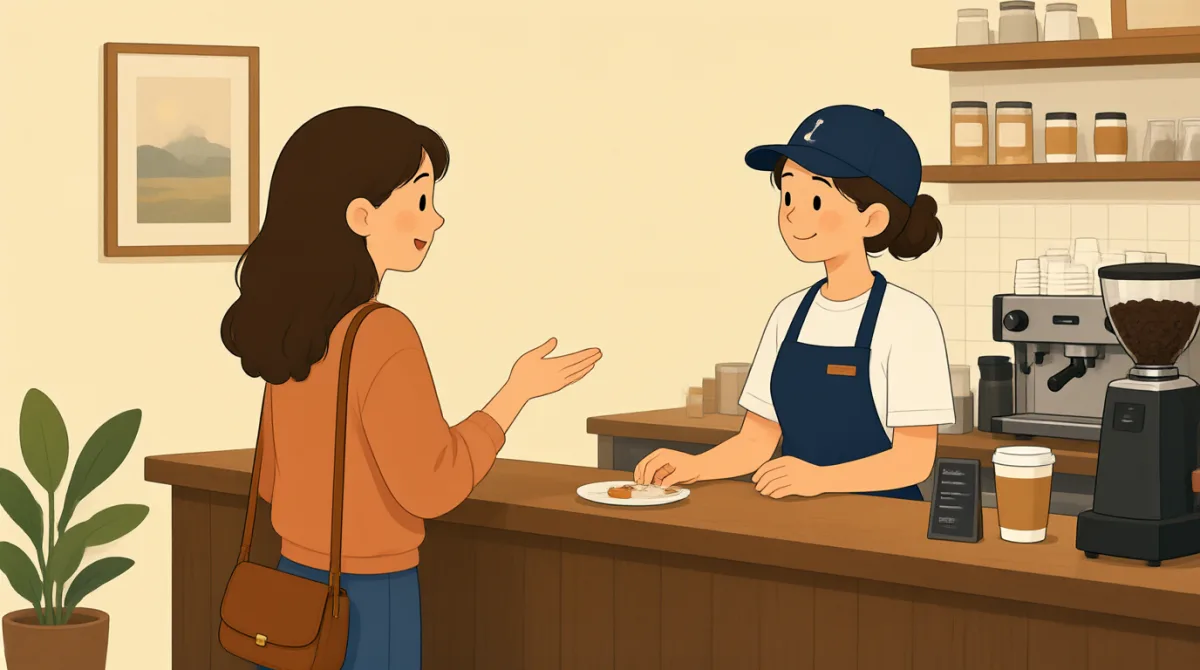

Excuse me, I think there might be a mistake with my order.
不好意思,我的訂單好像有點問題。

Oh, I'm sorry to hear that. What's the issue?
哦,很抱歉。請問是什麼問題?
I ordered a large iced latte with oat milk, but this seems to be a regular latte with dairy milk.
我點的是大杯燕麥奶冰拿鐵,但這杯好像是普通牛奶拿鐵。
I see. My apologies for that. Let me check your receipt. What was your order number?
我明白了,對此我深表歉意。我查一下你的小票。請問你的訂單號是多少?
It's 145. I paid with a credit card.
訂單號是145。我用信用卡支付的。
Okay, 145. Yes, I see it here. Large iced oat milk latte. We'll get a new one made for you right away. So sorry for the wait.
好的,145。是的,我看到了。大杯燕麥奶冰拿鐵。我們馬上給你重新做一杯。很抱歉讓你久等了。
No problem, thank you.
沒關係,謝謝你。
It should be ready in about two minutes. You can wait over there, and I'll call your name.
大概兩分鐘就好。你可以在那邊等,我會叫你的名字。
詞彙6
- mistake錯誤
A mistake is an error or something done wrong, like getting the wrong drink in an order. Use it to politely point out problems.
“mistake”指錯誤或做錯的事,比如訂單裡的飲料弄錯了。你可以用這個詞禮貌地指出問題。
- issue問題
An issue means a problem or concern. It's a polite way to ask about what's wrong without sounding too direct.
“issue”指問題或令人擔心的事。用這個詞詢問哪裡不對,聽起來比較禮貌,不會顯得太直接。
- receipt收據
A receipt is a piece of paper or digital record showing what you bought and paid for. It's useful for checking orders or returns.
“receipt”是紙質或電子憑證,上面記錄了你買了什麼、付了多少錢。核對訂單或辦理退貨時都用得上。
- order number訂單號
An order number is a unique code given to your purchase to track it. It's common in stores and cafes to identify your items quickly.
“order number”是分配給訂單的唯一編號,方便查詢訂單。在商店和咖啡店裡,工作人員常用它快速確認你點了什麼。
- apologies歉意;道歉
Apologies means 'I'm sorry' in a formal way. Use it to express regret for a mistake, especially in customer service.
“apologies”是一種較正式的“對不起”。在服務場合,尤其是為出錯表示歉意時,可以用這個詞。
- right away馬上;立刻
Right away means immediately or without delay. It's used to promise quick action, like fixing an order fast.
“right away”表示立刻、毫不耽擱。比如,你可以用它承諾馬上處理好訂單。
關鍵句6
- 1
Excuse me, I think there might be a mistake with my order.
不好意思,我的訂單好像有點問題。
This is a polite way to start a conversation and point out a problem. 'Might be' softens the statement to sound less accusatory. Use it when noticing an error in service.
這句話適合禮貌地開啟對話並指出問題。“Might be”讓語氣聽起來不那麼肯定,也就不容易顯得像是在指責別人。發現服務出錯時可以這樣說。
- 2
Oh, I'm sorry to hear that. What's the issue?
哦,聽到這個我很抱歉。請問是什麼問題?
This shows empathy and asks for details. 'I'm sorry to hear that' expresses regret for the customer's inconvenience. It's useful for service workers to respond calmly.
這句話表達了關切,也詢問具體情況。“I'm sorry to hear that”表示對顧客遇到的不便感到抱歉。服務人員可以用這句話冷靜地回應顧客。
- 3
I ordered a large iced latte with oat milk, but this seems to be a regular latte with dairy milk.
我點的是大杯燕麥奶冰拿鐵,但這杯好像是普通牛奶拿鐵。
This contrasts what was ordered with what was received using 'but'. It's helpful for clearly describing the mistake in orders, including specifics like size and ingredients.
這句話用“but”對比了點的飲品和實際收到的飲品。說明訂單出錯時,可以清楚說出具體資訊,比如杯型和配料。
- 4
My apologies for that. Let me check your receipt. What was your order number?
對此我深表歉意。我來查一下你的小票。請問你的訂單號是多少?
This apologizes and offers to verify. 'My apologies' is formal politeness. Use it in customer service to take responsibility and gather info to fix the issue.
這句話先表示歉意,再提出核對資訊。“My apologies”是比較正式、禮貌的說法。在服務場合,可以用它承擔責任並收集資訊,以便解決問題。
- 5
We'll get a new one made for you right away. So sorry for the wait.
我們馬上給你重新做一杯。很抱歉讓你久等了。
This promises quick correction and another apology. 'Right away' means immediately. It's practical for reassuring customers during delays or errors.
這句話承諾儘快糾正問題,並再次表示歉意。“Right away”就是“立刻”。遇到延誤或出錯時,這樣說可以讓顧客放心。
- 6
No problem, thank you.
沒關係,謝謝你。
This is a polite, forgiving response. 'No problem' means it's okay, and 'thank you' shows appreciation. Use it to end interactions positively after a fix.
這是一種禮貌、寬容的回應。“No problem”表示沒關係,“thank you”則表達感謝。問題解決後,可以用這句話友好地結束對話。