Asking a Pedestrian Outdoors
在戶外詢問行人
A person is walking outdoors in an unfamiliar area and needs to find a public restroom. They ask a local pedestrian for help.
某人身處不熟悉的戶外區域,需要找到公共洗手間。他們向當地行人尋求幫助。
對話6
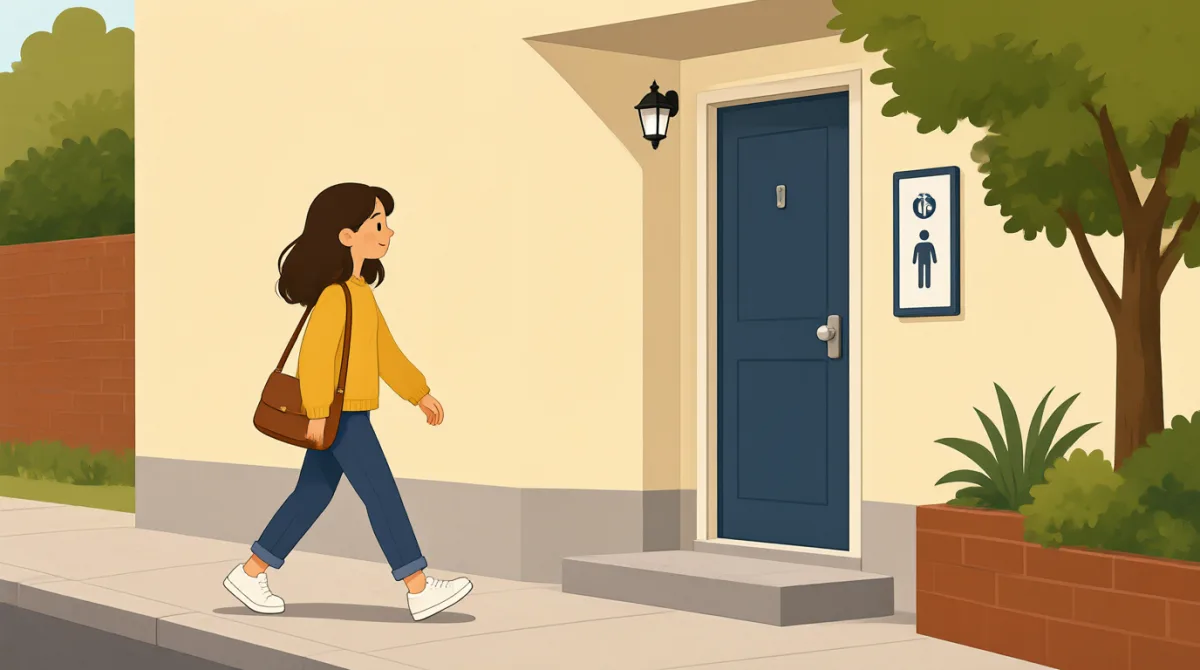

Excuse me, I'm a bit lost and really need to find a restroom. Do you know if there's one nearby?
打擾一下,我有點迷路了,急需找洗手間。請問附近有嗎?

Sure, no problem. The closest public restroom is in the park, just a couple of blocks down that way.
當然,沒問題。最近的公共洗手間在公園裡,就在那邊走過幾個街區。
In the park? Okay. Is it easy to spot, or is it tucked away somewhere?
在公園裡?好的。容易找到嗎,還是藏在什麼地方?
It's pretty easy. Once you get to the park entrance, you'll see a small building to your left. That's it.
挺容易的。你到了公園入口後,會看到左邊有個小建築。就是那裡了。
Got it. So, just straight down this street, and then look for the park entrance. Perfect. Thank you so much!
明白了。就是沿著這條街一直走,然後找公園入口。太好了。非常感謝!
You're welcome! Hope you find it quickly.
不客氣!希望你很快找到。
詞彙7
- Excuse me打擾一下
A polite way to get someone's attention when you need to ask a question, like starting a conversation with a stranger.
需要提問時,用來禮貌地引起別人注意的說法,比如用它和陌生人搭話。
- lost迷路的
Means you don't know where you are or how to get to a place; useful when asking for directions in new areas.
意思是你不知道自己身處何處,或不知道怎麼去某個地方;在陌生地方問路時很有用。
- restroom洗手間
Another word for bathroom or toilet, especially in American English; polite term used in public places.
bathroom 或 toilet 的另一種說法,尤其常見於美式英語;在公共場所使用時比較禮貌。
- nearby附近
Means close by or not far away; helps when asking about locations that are convenient.
意思是離這裡很近或不遠;詢問附近有什麼地方時很有用。
- public restroom公共洗手間
A bathroom available for anyone to use, like in parks or malls; important for travelers in public spaces.
任何人都可以使用的洗手間,比如公園或商場裡的洗手間;對在公共場所活動的旅行者來說很重要。
- tucked away隱蔽的
Means hidden or not easily seen; describes something in a quiet or less obvious spot.
意思是藏起來的,或不容易被看到;用來描述安靜或不太顯眼的地方。
- entrance入口
The door or gate where you enter a place, like a park; key for giving or following directions.
進入某個地方的門或大門,比如公園入口;問路或指路時很重要。
關鍵句6
- 1
Excuse me, I'm a bit lost and really need to find a restroom. Do you know if there's one nearby?
打擾一下,我有點迷路了,急需找洗手間。請問附近有嗎?
This is a polite way to ask for directions. 'Excuse me' gets attention, 'a bit lost' softens the request, and the question uses 'Do you know if...' for indirect politeness. Useful for starting conversations when needing help urgently.
這是禮貌問路的說法。'Excuse me' 用來引起對方注意,'a bit lost' 讓請求聽起來更委婉,而 'Do you know if...' 則用間接的方式禮貌地提問。急需幫助時,可以用它來開啟對話。
- 2
Sure, no problem. The closest public restroom is in the park, just a couple of blocks down that way.
當然,沒問題。最近的公共洗手間在公園裡,就在那邊走過幾個街區。
A helpful response to a direction request. 'Sure, no problem' shows willingness, and 'just a couple of blocks down that way' gives simple directions using distance and direction. Great for everyday navigation talks.
這是對問路請求的熱心回應。'Sure, no problem' 表示願意幫忙,'just a couple of blocks down that way' 則用距離和方向簡單地指路。日常問路時很實用。
- 3
In the park? Okay. Is it easy to spot, or is it tucked away somewhere?
在公園裡?好的。容易找到嗎,還是藏在什麼地方?
This confirms information and asks for more details. 'Okay' acknowledges, and the question contrasts 'easy to spot' vs. 'tucked away' using 'or' for alternatives. Useful to clarify locations and avoid confusion.
這句話先確認聽到的資訊,再詢問更多細節。'Okay' 表示明白了;問題用 'or' 對比 'easy to spot' 和 'tucked away' 兩種情況。詢問地點細節時可以這樣說,以免走錯。
- 4
It's pretty easy. Once you get to the park entrance, you'll see a small building to your left. That's it.
挺容易的。你到了公園入口後,會看到左邊有個小建築。就是那裡了。
Provides clear instructions. 'Once you get to...' uses a time clause for sequence, and 'to your left' specifies position. 'That's it' means that's the place. Ideal for giving step-by-step directions.
這句話提供了清楚的指路說明。'Once you get to...' 用時間從句說明先後順序,'to your left' 指明方位。'That's it' 的意思是“就是那裡”。逐步說明路線時很實用。
- 5
Got it. So, just straight down this street, and then look for the park entrance. Perfect. Thank you so much!
明白了。就是沿著這條街一直走,然後找公園入口。太好了。非常感謝!
Shows understanding and repeats for confirmation. 'Got it' means I understand, 'just straight down' simplifies directions with 'and then' for steps. Ends with thanks. Helpful for confirming and expressing gratitude.
這句話表示聽懂了,並重復路線來確認。'Got it' 的意思是“我明白了”;'just straight down' 簡化了路線說明,'and then' 則用來連線接下來的步驟。最後還表達了感謝。確認路線並表達謝意時可以這樣說。
- 6
You're welcome! Hope you find it quickly.
不客氣!希望你很快找到。
A standard polite reply to thanks. 'You're welcome' responds to gratitude, and 'Hope you...' expresses a wish. Use this to end helpful conversations positively.
這是回應感謝時常見的禮貌說法。'You're welcome' 用來回應對方的謝意,'Hope you...' 則表達祝願。用它結束一段熱心的對話,會顯得友好又得體。