Creating a Chore Chart/Schedule
कामों का चार्ट/समय-सारणी बनाना
Roommates work together to create a tangible chore chart or schedule, assigning specific tasks to individuals on a weekly or bi-weekly basis.
रूममेट मिलकर घर के कामों का एक लिखित चार्ट या समय-सारणी बनाते हैं और हर हफ्ते या हर दो हफ्ते में लोगों को खास काम सौंपते हैं।
संवाद10
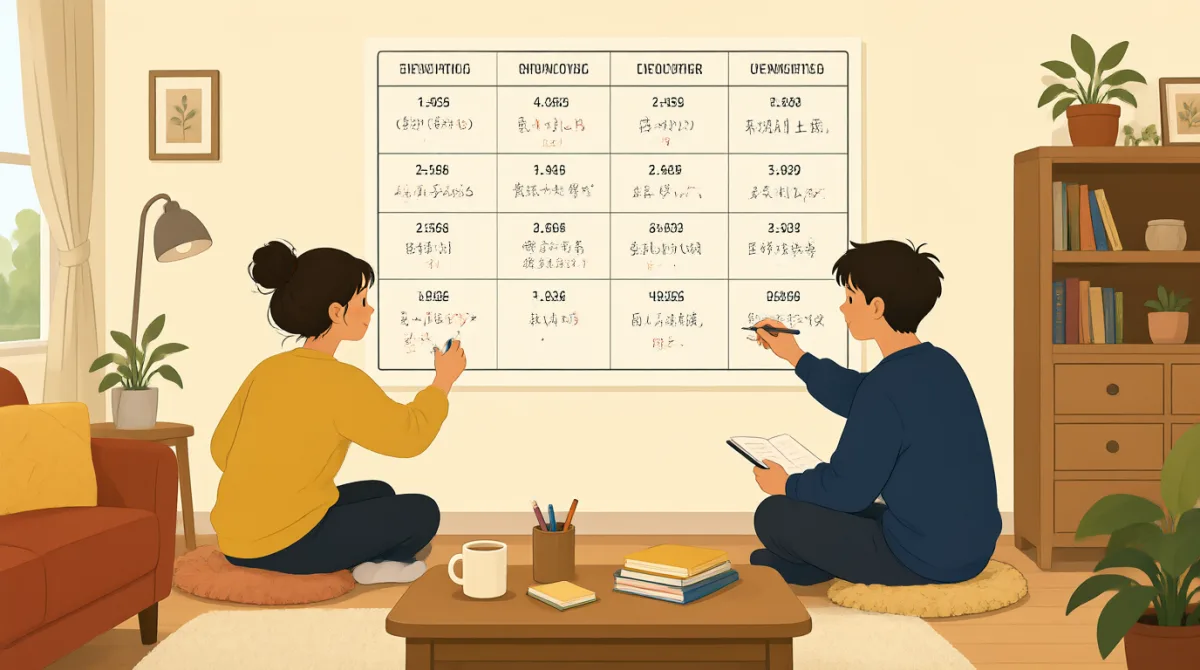

Hey everyone, so about keeping the apartment tidy, I was thinking we should finally set up that chore chart we talked about. What do you guys think?
अरे सब लोग, तो घर को साफ़-सुथरा रखने के बारे में सोच रही थी कि अब हमें आखिरकार कामों का वो चार्ट बना ही लेना चाहिए, जिसकी हमने बात की थी। तुम लोगों का क्या ख़याल है?

Sounds good to me. It definitely feels like some things are getting missed. A clear schedule would be helpful.
मुझे तो अच्छा लग रहा है। सच में, लगता है कुछ काम छूट रहे हैं। एक साफ़-साफ़ समय-सारणी से मदद मिलेगी।

Yeah, I'm on board. Sometimes I'm not sure whose turn it is to do what. We should probably list out all the main tasks first.
हाँ, मैं भी तैयार हूँ। कभी-कभी मुझे समझ नहीं आता कि कौन-सा काम किसकी बारी है। शायद पहले हमें सारे ज़रूरी कामों की सूची बना लेनी चाहिए।

Good idea, Mia. So, things like cleaning the bathroom, vacuuming the living room, taking out the trash... What else is there?
अच्छा सुझाव है, Mia। जैसे बाथरूम साफ़ करना, बैठक में वैक्यूम करना, कचरा बाहर डालना... और क्या-क्या है?
Don't forget kitchen duties: wiping down counters, doing dishes, and probably a weekly fridge clean-out. And maybe wiping down the dining table too.
रसोई के काम मत भूलना: काउंटर पोंछना, बर्तन धोना और शायद हफ़्ते में एक बार फ्रिज साफ़ करना। और खाने की मेज़ भी पोंछ सकते हैं।
Okay, that's a good list to start with. Should we assign tasks weekly or bi-weekly? Or split some daily and some weekly?
ठीक है, शुरू करने के लिए ये अच्छी सूची है। काम हर हफ़्ते बाँटें या हर दो हफ़्ते में? या कुछ रोज़ के और कुछ हफ़्ते के काम रखें?
I think daily for dishes is crucial, and then maybe bi-weekly for bathroom and vacuuming to spread out the bigger chores. What about a rotating schedule for those?
मेरे ख़याल से बर्तन रोज़ धोना बहुत ज़रूरी है। फिर बड़े कामों को बाँटने के लिए बाथरूम और वैक्यूम हर दो हफ़्ते में कर सकते हैं। उनके लिए बारी-बारी से काम करने का समय तय करें?
A rotating schedule sounds fair. We can set it up on a whiteboard in the kitchen. Make it clear and visible.
बारी-बारी से काम करने का समय ठीक रहेगा। हम रसोई में व्हाइटबोर्ड पर लिख सकते हैं। इसे साफ़ और सबको दिखने वाली जगह पर रखते हैं।
Perfect! I'll grab a whiteboard and markers tomorrow. Let's meet briefly after dinner to finalize the rotation and put it up.
बढ़िया! मैं कल व्हाइटबोर्ड और मार्कर ले आऊँगी। रात के खाने के बाद थोड़ी देर मिलते हैं, बारी तय करके इसे लगा देंगे।
Sounds like a plan. This should definitely help us keep things much cleaner.
ठीक है, ऐसा ही करते हैं। इससे घर को ज़्यादा साफ़ रखने में पक्का मदद मिलेगी।
शब्दावली8
- choreघर का काम
A chore is a regular task, like cleaning or washing, that needs to be done around the house. It's useful for talking about household responsibilities.
घर का काम वह नियमित काम होता है, जैसे सफ़ाई करना या कपड़े धोना, जो घर में करना पड़ता है। घर की ज़िम्मेदारियों के बारे में बात करते समय यह शब्द काम आता है।
- chartचार्ट
A chart is a visual list or diagram that shows information, like a schedule of tasks. In this context, it's a chore chart to organize duties.
चार्ट एक ऐसी सूची या चित्र होता है जिसमें जानकारी दिखाई जाती है, जैसे कामों की समय-सारणी। यहाँ इसका मतलब घर के काम व्यवस्थित करने वाला चार्ट है।
- tidyसाफ़-सुथरा
Tidy means clean and organized. Use it when describing a neat living space, like 'Keep the apartment tidy.'
Tidy का मतलब है साफ़ और व्यवस्थित। रहने की जगह को करीने से रखने की बात करते समय इसका इस्तेमाल करें, जैसे 'Keep the apartment tidy.' (अपार्टमेंट को साफ़-सुथरा रखो।)
- assignसौंपना
To assign means to give a task or responsibility to someone. It's common in group settings, like 'assign tasks to roommates.'
Assign का मतलब है कोई काम या ज़िम्मेदारी किसी को देना। समूह में काम बाँटते समय यह आम तौर पर इस्तेमाल होता है, जैसे 'assign tasks to roommates.' (रूममेट्स को काम सौंपना।)
- rotatingबारी-बारी से होने वाला
Rotating means taking turns in a cycle. A rotating schedule ensures fairness by changing who does what over time.
Rotating का मतलब है एक क्रम में बारी-बारी से काम करना। बारी-बारी से काम करने की समय-सारणी में समय के साथ यह बदलता रहता है कि कौन क्या करेगा, जिससे काम का बँटवारा सबके लिए न्यायसंगत रहता है।
- vacuumingवैक्यूम करना
Vacuuming is the act of using a vacuum cleaner to clean floors and remove dust. It's a common household chore.
Vacuuming का मतलब है वैक्यूम क्लीनर से फ़र्श साफ़ करना और धूल हटाना। यह घर का एक आम काम है।
- bi-weeklyहर दो हफ़्ते में
Bi-weekly means every two weeks. Use it for schedules, like 'bi-weekly cleaning' to space out tasks.
Bi-weekly का मतलब है हर दो हफ़्ते में। कामों के बीच थोड़ा समय रखने वाली समय-सारणी के लिए इसका इस्तेमाल करें, जैसे 'bi-weekly cleaning' (हर दो हफ़्ते में सफ़ाई)।
- crucialबहुत ज़रूरी
Crucial means very important or essential. Say 'It's crucial to do dishes daily' to emphasize necessity.
Crucial का मतलब है बहुत ज़रूरी या अनिवार्य। किसी काम की अहमियत पर ज़ोर देने के लिए कहें, 'It's crucial to do dishes daily' (रोज़ बर्तन धोना बहुत ज़रूरी है)।
मुख्य वाक्य8
- 1
Hey everyone, so about keeping the apartment tidy, I was thinking we should finally set up that chore chart we talked about. What do you guys think?
अरे सब लोग, तो घर को साफ़-सुथरा रखने के बारे में सोच रही थी कि अब हमें आखिरकार कामों का वो चार्ट बना ही लेना चाहिए, जिसकी हमने बात की थी। तुम लोगों का क्या ख़याल है?
This sentence introduces a topic and suggests an idea while asking for opinions. It's useful for starting group discussions. Notice 'What do you guys think?' is a casual way to seek agreement.
इस वाक्य में बातचीत का विषय शुरू करते हुए एक सुझाव दिया गया है और सबकी राय पूछी गई है। समूह में चर्चा शुरू करने के लिए यह उपयोगी है। 'What do you guys think?' राय पूछने का एक अनौपचारिक तरीका है।
- 2
Sounds good to me. It definitely feels like some things are getting missed.
मुझे तो अच्छा लग रहा है। सच में, लगता है कुछ काम छूट रहे हैं।
This shows agreement and explains a problem. 'Sounds good to me' is a common phrase for approval. 'Definitely' adds emphasis, useful in conversations about improvements.
इसमें सहमति जताई गई है और एक समस्या बताई गई है। 'Sounds good to me' मंज़ूरी जताने का आम मुहावरा है। 'Definitely' बात पर ज़ोर देता है और सुधारों के बारे में बातचीत में काम आता है।
- 3
Yeah, I'm on board. Sometimes I'm not sure whose turn it is to do what.
हाँ, मैं भी तैयार हूँ। कभी-कभी मुझे समझ नहीं आता कि कौन-सा काम किसकी बारी है।
'I'm on board' means I agree and support the idea. The second part expresses confusion about responsibilities, helpful for clarifying roles in shared situations.
'I'm on board' का मतलब है कि मैं सहमत हूँ और इस विचार का समर्थन करता हूँ। दूसरा हिस्सा ज़िम्मेदारियों को लेकर उलझन बताता है, जो साथ मिलकर काम करते समय भूमिकाएँ साफ़ करने में मददगार है।
- 4
We should probably list out all the main tasks first.
शायद पहले हमें सारे ज़रूरी कामों की सूची बना लेनी चाहिए।
This suggests a logical next step using 'should' for advice. 'List out' means to write down in detail, practical for planning meetings.
इसमें 'should' का इस्तेमाल करके अगला तार्किक कदम सुझाया गया है। 'List out' का मतलब है विस्तार से लिख लेना। योजना बनाने वाली बैठकों में यह बहुत काम आता है।
- 5
Don't forget kitchen duties: wiping down counters, doing dishes, and probably a weekly fridge clean-out.
रसोई के काम मत भूलना: काउंटर पोंछना, बर्तन धोना और शायद हफ़्ते में एक बार फ्रिज साफ़ करना।
This reminds others of tasks and lists them with examples. Colons introduce lists, and 'don't forget' is a polite way to ensure nothing is overlooked.
इसमें दूसरों को काम याद दिलाते हुए कुछ उदाहरण दिए गए हैं। सूची शुरू करने के लिए कोलन लगाया गया है और 'don't forget' विनम्रता से याद दिलाने का तरीका है, ताकि कोई काम छूट न जाए।
- 6
Should we assign tasks weekly or bi-weekly? Or split some daily and some weekly?
काम हर हफ़्ते बाँटें या हर दो हफ़्ते में? या कुछ रोज़ के और कुछ हफ़्ते के काम रखें?
This asks for preferences on scheduling using questions. 'Or' offers options, and words like 'weekly' and 'bi-weekly' help discuss time frames.
इन सवालों के ज़रिए कामों की समय-सारणी के बारे में पसंद पूछी गई है। 'Or' विकल्प देता है, और 'weekly' तथा 'bi-weekly' जैसे शब्द समयावधि पर चर्चा करने में मदद करते हैं।
- 7
I think daily for dishes is crucial, and then maybe bi-weekly for bathroom and vacuuming to spread out the bigger chores.
मेरे ख़याल से बर्तन रोज़ धोना बहुत ज़रूरी है। फिर बड़े कामों को बाँटने के लिए बाथरूम और वैक्यूम हर दो हफ़्ते में कर सकते हैं।
This proposes a plan with reasons. 'Crucial' shows importance, and 'to spread out' explains the benefit, useful for negotiating fair divisions.
इसमें वजह के साथ एक योजना सुझाई गई है। 'Crucial' किसी काम की अहमियत बताता है और 'to spread out' बताता है कि कामों को अलग-अलग समय पर करने से क्या फ़ायदा है। काम का न्यायसंगत बँटवारा तय करते समय ये उपयोगी हैं।
- 8
Sounds like a plan. This should definitely help us keep things much cleaner.
ठीक है, ऐसा ही करते हैं। इससे घर को ज़्यादा साफ़ रखने में पक्का मदद मिलेगी।
This confirms agreement and predicts a positive outcome. 'Sounds like a plan' is idiomatic for finalizing ideas, common in casual planning.
इसमें सहमति जताई गई है और अच्छे नतीजे की उम्मीद की गई है। 'Sounds like a plan' विचारों को तय करने के लिए इस्तेमाल होने वाला मुहावरा है और अनौपचारिक योजना बनाते समय आम है।