Creating a Chore Chart/Schedule
制定家務清單/時間表
Roommates work together to create a tangible chore chart or schedule, assigning specific tasks to individuals on a weekly or bi-weekly basis.
室友們共同制定一個具體的家務清單或時間表,每週或每兩週將特定任務分配給個人。
對話10
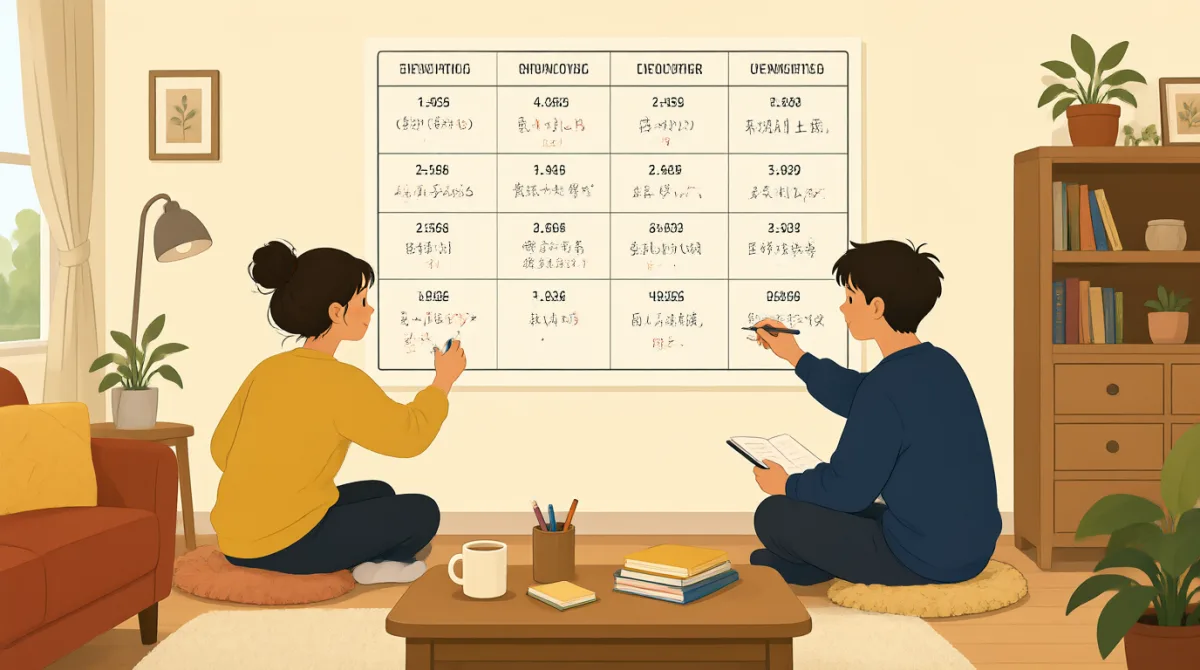

Hey everyone, so about keeping the apartment tidy, I was thinking we should finally set up that chore chart we talked about. What do you guys think?
嘿,各位,關於保持公寓整潔這件事,我一直在想我們是不是該 M 們之前討論過的家務分工表了?你們覺得呢?

Sounds good to me. It definitely feels like some things are getting missed. A clear schedule would be helpful.
我同意。確實感覺有些事情被忽略了。一個清晰的日程表會很有幫助。

Yeah, I'm on board. Sometimes I'm not sure whose turn it is to do what. We should probably list out all the main tasks first.
是的,我贊成。有時我不確定輪到誰做什麼。我們應該先列出所有主要的任務。

Good idea, Mia. So, things like cleaning the bathroom, vacuuming the living room, taking out the trash... What else is there?
好主意,米婭。所以,像清潔浴室、吸塵客廳、倒垃圾這些……還有什麼?
Don't forget kitchen duties: wiping down counters, doing dishes, and probably a weekly fridge clean-out. And maybe wiping down the dining table too.
別忘了廚房職責:擦拭檯面、洗碗,可能還有每週的冰箱清理。還有擦拭餐桌。
Okay, that's a good list to start with. Should we assign tasks weekly or bi-weekly? Or split some daily and some weekly?
好的,這個清單可以作為開始。我們應該每週分配任務還是每兩週?或者有些是每天的,有些是每週的?
I think daily for dishes is crucial, and then maybe bi-weekly for bathroom and vacuuming to spread out the bigger chores. What about a rotating schedule for those?
我認為洗碗每天都得做,然後浴室和吸塵可以每兩週一次,這樣可以分散較大的家務。我們輪流做這些怎麼樣?
A rotating schedule sounds fair. We can set it up on a whiteboard in the kitchen. Make it clear and visible.
輪流制聽起來很公平。我們可以在廚房的白板上設定它。讓它清晰可見。
Perfect! I'll grab a whiteboard and markers tomorrow. Let's meet briefly after dinner to finalize the rotation and put it up.
太好了!我明天去買白板和馬克筆。我們晚飯後簡短開個會,敲定輪換表並把它掛起來。
Sounds like a plan. This should definitely help us keep things much cleaner.
聽起來是個計劃。這肯定能幫助我們保持地方整潔得多。
詞彙8
- chore家務活
A chore is a regular task, like cleaning or washing, that needs to be done around the house. It's useful for talking about household responsibilities.
家務活指的是需要定期做的家務,比如打掃或洗東西。談論家庭責任時,這個詞很實用。
- chart圖表
A chart is a visual list or diagram that shows information, like a schedule of tasks. In this context, it's a chore chart to organize duties.
圖表是用來展示資訊的視覺清單或示意圖,比如任務安排表。在這裡,它指的是用來安排家務的清單。
- tidy整潔的
Tidy means clean and organized. Use it when describing a neat living space, like 'Keep the apartment tidy.'
Tidy 的意思是乾淨、整齊。描述整潔的居住空間時可以用它,比如 'Keep the apartment tidy.'(讓公寓保持整潔。)
- assign分配
To assign means to give a task or responsibility to someone. It's common in group settings, like 'assign tasks to roommates.'
Assign 的意思是把一項任務或責任交給某人。這個詞常用於團體場合,比如 'assign tasks to roommates.'(給室友分配任務。)
- rotating輪流的
Rotating means taking turns in a cycle. A rotating schedule ensures fairness by changing who does what over time.
Rotating 指按順序輪流進行。輪換安排能隨著時間改變每個人負責的事情,讓分工更公平。
- vacuuming吸塵
Vacuuming is the act of using a vacuum cleaner to clean floors and remove dust. It's a common household chore.
Vacuuming 指用吸塵器清潔地面、清除灰塵,是常見的家務活。
- bi-weekly每兩週一次的
Bi-weekly means every two weeks. Use it for schedules, like 'bi-weekly cleaning' to space out tasks.
Bi-weekly 的意思是每兩週一次。它可以用來描述時間安排,比如 'bi-weekly cleaning'(每兩週一次的清潔),表示這類家務不用每週都做。
- crucial至關重要的
Crucial means very important or essential. Say 'It's crucial to do dishes daily' to emphasize necessity.
Crucial 的意思是非常重要或必不可少。可以說 'It's crucial to do dishes daily'(每天洗碗很重要),來強調事情的必要性。
關鍵句8
- 1
Hey everyone, so about keeping the apartment tidy, I was thinking we should finally set up that chore chart we talked about. What do you guys think?
嘿,各位,關於讓公寓保持整潔,我在想,我們是不是該把之前說的家務分工表做起來了?你們覺得呢?
This sentence introduces a topic and suggests an idea while asking for opinions. It's useful for starting group discussions. Notice 'What do you guys think?' is a casual way to seek agreement.
這句話先引出一個話題,再提出建議並徵求大家的意見。它很適合用來開啟小組討論。注意,'What do you guys think?' 是一種很隨意的問法,用來徵求大家的看法。
- 2
Sounds good to me. It definitely feels like some things are getting missed.
我覺得不錯。確實感覺有些事情被漏掉了。
This shows agreement and explains a problem. 'Sounds good to me' is a common phrase for approval. 'Definitely' adds emphasis, useful in conversations about improvements.
這句話表示贊同,也說明了一個問題。'Sounds good to me' 是常見的贊同說法。'Definitely' 用來加強語氣,談論改進時很實用。
- 3
Yeah, I'm on board. Sometimes I'm not sure whose turn it is to do what.
嗯,我贊成。有時候我不確定該輪到誰做什麼。
'I'm on board' means I agree and support the idea. The second part expresses confusion about responsibilities, helpful for clarifying roles in shared situations.
'I'm on board' 的意思是“我贊成並支援這個想法”。後半句表達了對責任分工的困惑,在共同生活時可以用來澄清各自的職責。
- 4
We should probably list out all the main tasks first.
我們最好先把所有主要的家務都列出來。
This suggests a logical next step using 'should' for advice. 'List out' means to write down in detail, practical for planning meetings.
這句話用 'should' 提出一個合理的下一步建議。'List out' 的意思是詳細列出來,規劃討論時很實用。
- 5
Don't forget kitchen duties: wiping down counters, doing dishes, and probably a weekly fridge clean-out.
別忘了廚房的活兒:擦檯面、洗碗,可能還要每週清理一次冰箱。
This reminds others of tasks and lists them with examples. Colons introduce lists, and 'don't forget' is a polite way to ensure nothing is overlooked.
這句話提醒大家別漏掉某些任務,並舉例列出具體事項。冒號可以引出清單,'don't forget' 則是一種友好的提醒方式。
- 6
Should we assign tasks weekly or bi-weekly? Or split some daily and some weekly?
我們每週還是每兩週分配一次任務?要不要把一些安排成每天做,另一些每週做?
This asks for preferences on scheduling using questions. 'Or' offers options, and words like 'weekly' and 'bi-weekly' help discuss time frames.
這句話透過提問來徵求大家對時間安排的意見。'Or' 用來提供其他選擇,'weekly' 和 'bi-weekly' 這樣的詞則可以幫助討論頻率。
- 7
I think daily for dishes is crucial, and then maybe bi-weekly for bathroom and vacuuming to spread out the bigger chores.
我覺得每天洗碗很重要,浴室清潔和吸塵可以每兩週做一次,這樣就能把比較費事的家務分散開來。
This proposes a plan with reasons. 'Crucial' shows importance, and 'to spread out' explains the benefit, useful for negotiating fair divisions.
這句話提出了一種安排,並解釋了理由。'Crucial' 表示事情很重要,'to spread out' 則說明這樣安排的好處,有助於商量公平的分工。
- 8
Sounds like a plan. This should definitely help us keep things much cleaner.
聽起來不錯。這樣肯定能讓家裡整潔不少。
This confirms agreement and predicts a positive outcome. 'Sounds like a plan' is idiomatic for finalizing ideas, common in casual planning.
這句話表示同意,並預期會有好的結果。'Sounds like a plan' 是一種習慣說法,表示計劃聽起來可行,在隨意討論安排時很常見。