Asking About the Beers
Perguntando sobre as cervejas
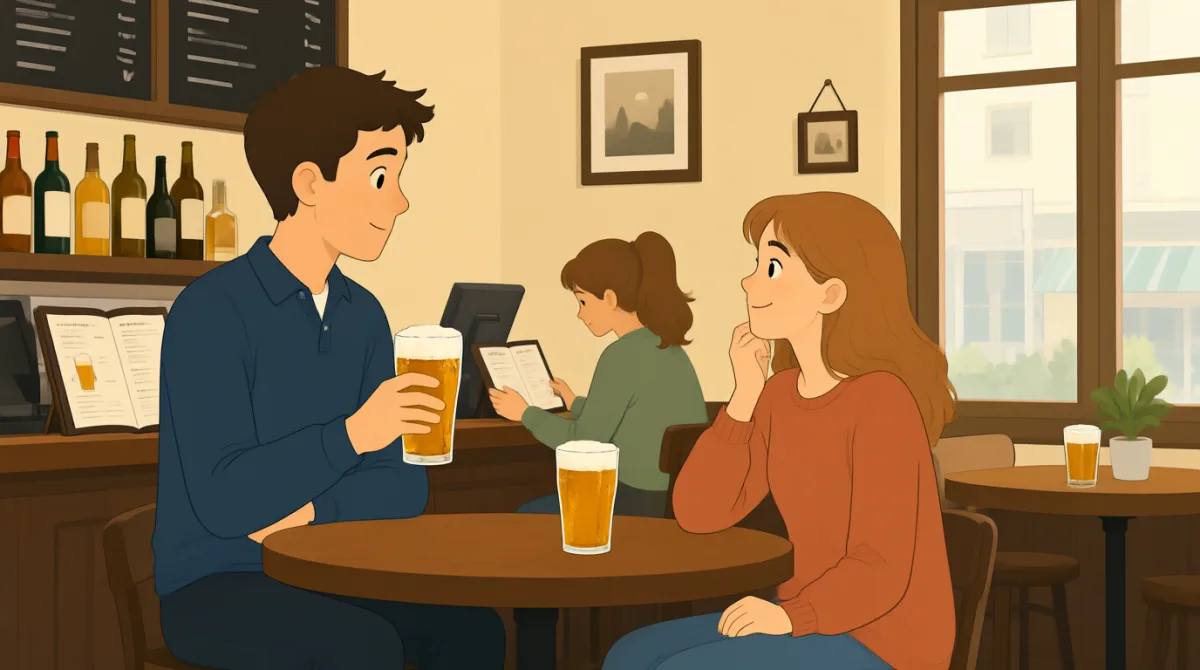
Jack asks Grace what beers are available and what she recommends. He orders a beer while Emma looks at the drinks menu.
Jack pergunta a Grace quais cervejas estão disponíveis e qual ela recomenda. Ele pede uma cerveja enquanto Emma olha o cardápio de bebidas.
Diálogo8

Grace, what beers do you have on tap tonight?
Grace, que cervejas vocês têm na torneira hoje à noite?

We have a light lager, an IPA, and a dark stout.
Temos uma lager leve, uma IPA e uma stout escura.
Which one do you recommend? I like something not too bitter.
Qual você recomenda? Gosto de cervejas que não sejam muito amargas.
The lager is smooth and easy to drink. I think you'll like it.
A lager é suave e fácil de beber. Acho que você vai gostar.
Sounds good. I'll have a pint of the lager, please.
Parece ótimo. Vou querer um pint de lager, por favor.
Sure. Would you like it in a glass or a bottle?
Claro. Você prefere em um copo ou em uma garrafa?
A glass, please. Emma, take your time with the menu.
Um copo, por favor. Emma, pode olhar o cardápio sem pressa.

Thanks. There are so many choices. I'll look for a moment.
Obrigada. Tem tantas opções. Vou dar uma olhada por um instante.
Vocabulário8
- on tapna torneira
Beer served from a tap, rather than from a bottle or can. You can ask what beers are on tap to find out what is available.
Cerveja servida diretamente da torneira, em vez de vir em garrafa ou lata. Você pode perguntar quais cervejas estão “on tap” para saber quais estão disponíveis.
- light lagerlager leve
A type of light, mild beer. This phrase can help you choose a beer by style.
Um tipo de cerveja leve e suave. Essa expressão pode ajudar você a escolher uma cerveja pelo estilo.
- recommendrecomendar
To suggest something that you think someone will like. Ask “Which one do you recommend?” when you want advice.
Sugerir algo que você acha que outra pessoa vai gostar. Pergunte “Which one do you recommend?” quando quiser uma recomendação.
- not too bitternão muito amarga
This describes a taste that is only a little bitter. Use it to explain what kind of beer you prefer.
Descreve um sabor levemente amargo. Use essa expressão para explicar de que tipo de cerveja você gosta.
- easy to drinkfácil de beber
This describes a drink with a smooth, mild taste. You can use it when talking about a drink that is pleasant and not strong-tasting.
Descreve uma bebida de sabor suave e leve. Você pode usar essa expressão para falar de uma bebida agradável e que não tem um sabor muito forte.
- I'll have a pint of the lager, please.Vou querer um pint de lager, por favor.
A polite way to order a specific amount of beer. You can reuse “I'll have a pint of the [beer], please” when ordering another type.
Uma forma educada de pedir uma quantidade específica de cerveja. Você pode reutilizar “I'll have a pint of the [beer], please” ao pedir outro tipo.
- take your timesem pressa
A friendly way to tell someone there is no need to hurry. You can say this when someone is choosing from a menu.
Uma forma simpática de dizer a alguém que não precisa se apressar. Você pode dizer isso quando alguém está escolhendo algo no cardápio.
- look for a momentdar uma olhada por um instante
To spend a short time searching or deciding. Use this phrase to tell someone you need a little time to check a menu.
Passar um pouco de tempo procurando ou decidindo. Use essa expressão para dizer que precisa de um tempinho para olhar o cardápio.
Frases-chave8
- 1
Grace, what beers do you have on tap tonight?
Grace, que cervejas vocês têm na torneira hoje à noite?
A useful way to ask which draft beers are available. Change “beers” to another drink or “tonight” to another time.
Uma forma útil de perguntar quais cervejas de barril estão disponíveis. Troque “beers” por outra bebida ou “tonight” por outro momento.
- 2
Which one do you recommend?
Qual você recomenda?
Ask this when you want someone to suggest the best choice. You can use “Which one” to ask about any options you have been shown.
Pergunte isso quando quiser que alguém sugira a melhor opção. Você pode usar “Which one” para perguntar sobre qualquer conjunto de opções que tenham apresentado a você.
- 3
I like something not too bitter.
Gosto de cervejas que não sejam muito amargas.
This tells the server what kind of taste you prefer. Replace “not too bitter” with another simple description, such as “not too sweet.”
Com essa frase, você informa ao atendente que tipo de sabor prefere. Troque “not too bitter” por outra descrição simples, como “not too sweet”.
- 4
The lager is smooth and easy to drink.
A lager é suave e fácil de beber.
This sentence describes a drink in simple terms. You can use “smooth and easy to drink” to describe other mild drinks.
Essa frase descreve uma bebida de forma simples. Você pode usar “smooth and easy to drink” para descrever outras bebidas leves.
- 5
I'll have a pint of the lager, please.
Vou querer um pint de lager, por favor.
A clear, polite way to place an order. Replace “a pint of the lager” with the amount and drink you want.
Uma forma clara e educada de fazer um pedido. Troque “a pint of the lager” pela quantidade e pela bebida que você quer.
- 6
Would you like it in a glass or a bottle?
Você prefere em um copo ou em uma garrafa?
This is a useful question for asking how a drink should be served. You can change the choices to offer other options.
Uma pergunta útil para saber como alguém quer que a bebida seja servida. Você pode mudar as opções para oferecer outras possibilidades.
- 7
Emma, take your time with the menu.
Emma, pode olhar o cardápio sem pressa.
Say this to let someone know they do not need to hurry while choosing. Replace “the menu” with another thing they are deciding about.
Diga isso para mostrar a alguém que não precisa se apressar enquanto escolhe. Troque “the menu” por outra coisa sobre a qual a pessoa esteja decidindo.
- 8
There are so many choices.
Tem tantas opções.
Use this sentence when there are many options and it is hard to decide. You can say it while looking at a menu or choosing a product.
Use essa frase quando há muitas opções e é difícil decidir. Você pode dizê-la enquanto olha um cardápio ou escolhe um produto.