Asking for a Late Checkout
Emma asks if she can check out later than usual. Jack checks and tells her the latest checkout time.
Dialogue6
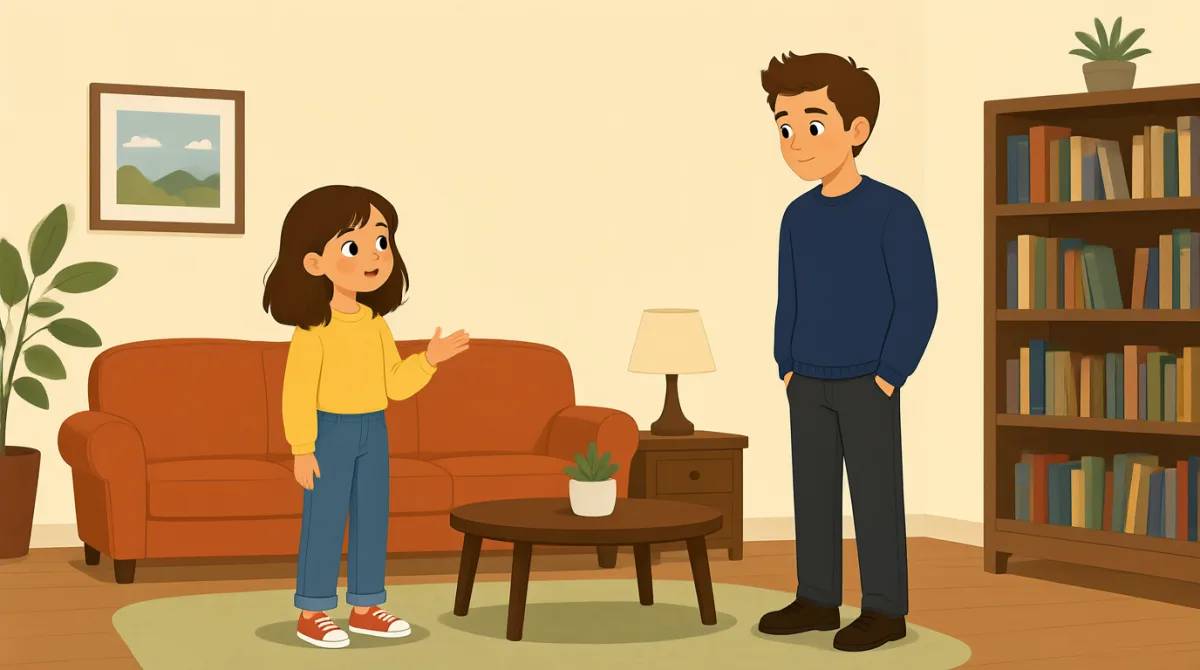

Can I check out later tomorrow?

Sure. What time do you need?
Can I stay until one o’clock?
Let me check. Yes, that’s okay.
Great. Thank you so much.
You’re welcome. Please check out by one.
Vocabulary7
- check out
To leave a hotel and return your room key. Here, Emma asks to leave later than usual.
- later
After the usual time. You can use it to ask for more time.
- What time do you need?
A way to ask what time someone wants. Use it when you need to know their preferred time.
- stay until
To remain somewhere up to a certain time. For example, you can ask to stay until one o’clock.
- Let me check.
A polite way to say you will look for information before answering.
- That’s okay.
A simple way to say that something is allowed or acceptable.
- check out by
To leave no later than a certain time. Here, Jack says Emma must leave by one.
Key Sentences8
- 1
Can I check out later tomorrow?
Use this polite question to ask for a later checkout. Replace “tomorrow” with another day if needed.
- 2
Sure.
This is a short, friendly way to agree. You can use it when someone makes a simple request.
- 3
What time do you need?
Use this question to ask what time someone wants. It is useful when making plans or arranging a service.
- 4
Can I stay until one o’clock?
Use “Can I stay until...” to ask permission to remain somewhere up to a certain time. Change the time to fit your request.
- 5
Let me check.
Use this phrase when you need to look at information before you answer. It is polite and natural in everyday conversations.
- 6
Yes, that’s okay.
Use this to tell someone that their request is allowed. You can replace “okay” with “fine” in many situations.
- 7
Great.
This is a simple way to show that you are happy with an answer. You can use it after someone agrees to your request.
- 8
Please check out by one.
Use “Please ... by [time]” to give a polite deadline. Here, it means Emma needs to leave no later than one o’clock.