Setting Up the Table
मेज़ लगाना
Grace and Jack set up their yard sale table and put out the items. They make sure the prices are easy to see.
ग्रेस और जैक यार्ड सेल के लिए मेज़ लगाते हैं और उस पर सामान रखते हैं। वे यह पक्का करते हैं कि कीमतें आसानी से दिखाई दें।
संवाद8
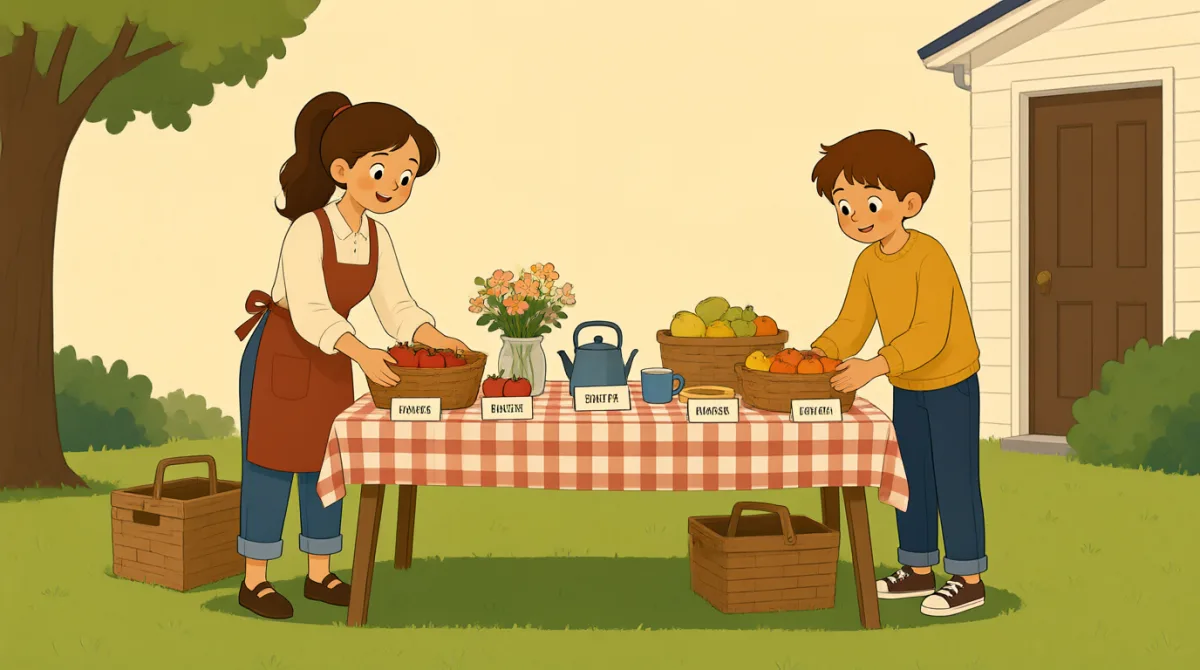

Let’s put the table near the driveway. People will see it from the street.
चलो मेज़ को ड्राइववे के पास लगाते हैं। लोग उसे सड़क से देख पाएँगे।

Good idea. I’ll carry the table over. Can you bring out the boxes?
अच्छा विचार है। मैं मेज़ उठाकर वहाँ ले जाता हूँ। क्या तुम डिब्बे बाहर ला सकती हो?
Sure. Let’s put the books on one side and the kitchen things on the other.
ज़रूर। चलो किताबें एक तरफ़ रखते हैं और रसोई का सामान दूसरी तरफ़।
Where should I put the lamp? I don’t want it to fall off the table.
मैं लैम्प कहाँ रखूँ? मैं नहीं चाहता कि वह मेज़ से नीचे गिर जाए।
Put it in the middle, away from the edge. I’ll set the prices beside everything.
उसे बीच में, किनारे से दूर रखो। मैं हर चीज़ के पास कीमतें लगा दूँगी।
These price tags are small. I’ll write the prices bigger so people can see them.
ये कीमत के टैग छोटे हैं। मैं कीमतें बड़े अक्षरों में लिखूँगा, ताकि लोग उन्हें देख सकें।
Great. Please make sure each tag stays with the right item.
बहुत बढ़िया। ध्यान रखना कि हर टैग सही सामान के साथ ही रहे।
All set. The table looks neat, and every price is easy to read.
सब तैयार है। मेज़ करीने से लगी है और हर कीमत आसानी से पढ़ी जा सकती है।
शब्दावली8
- near the drivewayड्राइववे के पास
Close to the driveway. Use this phrase to say where you want to put something.
ड्राइववे के नज़दीक। किसी चीज़ को कहाँ रखना है, यह बताने के लिए इस वाक्यांश का इस्तेमाल करें।
- carry the table overमेज़ उठाकर वहाँ ले जाना
Move the table to another place by carrying it. You can use “carry ... over” for other things you move by hand.
मेज़ को उठाकर दूसरी जगह ले जाना। हाथ से उठाकर दूसरी जगह ले जाने वाली चीज़ों के लिए “carry ... over” का इस्तेमाल कर सकते हैं।
- bring out the boxesडिब्बे बाहर लाना
Take the boxes from inside to a place outside. “Bring out” is useful when setting up for an event.
डिब्बों को अंदर से बाहर किसी जगह ले जाना। किसी कार्यक्रम की तैयारी करते समय “bring out” काम का वाक्यांश है।
- on one sideएक तरफ़
In one area or part of a space. Use it to describe where you put things.
किसी जगह के एक हिस्से में। चीज़ों को कहाँ रखा है, यह बताने के लिए इसका इस्तेमाल करें।
- fall off the tableमेज़ से नीचे गिरना
Drop from the table onto the ground. Use “fall off” when something moves down from a surface.
मेज़ से ज़मीन पर गिर जाना। जब कोई चीज़ किसी सतह से नीचे गिरती है, तो “fall off” का इस्तेमाल करें।
- away from the edgeकिनारे से दूर
Not close to the outer side of something. Use this phrase to give instructions about where to place an item.
किसी चीज़ के बाहरी किनारे के पास नहीं। कोई सामान कहाँ रखना है, यह बताने के लिए इस वाक्यांश का इस्तेमाल करें।
- price tagsकीमत के टैग
Small labels that show how much things cost. They help shoppers see the prices.
छोटे लेबल जिन पर चीज़ों की कीमत लिखी होती है। इनसे खरीदार कीमतें देख पाते हैं।
- easy to readआसानी से पढ़ा जा सकने वाला
Clear enough to understand by looking at the words or numbers. Use it to describe writing that is not too small or unclear.
लिखे हुए शब्दों या अंकों को देखकर आसानी से समझा जा सके। ऐसी लिखावट के लिए इसका इस्तेमाल करें जो बहुत छोटी या अस्पष्ट न हो।
मुख्य वाक्य8
- 1
Let’s put the table near the driveway.
चलो मेज़ को ड्राइववे के पास लगाते हैं।
Use “Let’s” to suggest doing something together. Replace “the table” and “near the driveway” with another item and location.
“Let’s” का इस्तेमाल साथ मिलकर कुछ करने का सुझाव देने के लिए करें। “the table” और “near the driveway” की जगह कोई दूसरी चीज़ और जगह रख सकते हैं।
- 2
Can you bring out the boxes?
क्या तुम डिब्बे बाहर ला सकती हो?
This is a polite way to ask someone to take things outside. You can replace “the boxes” with other items.
किसी से चीज़ें बाहर ले जाने के लिए कहने का यह एक विनम्र तरीका है। “the boxes” की जगह दूसरी चीज़ों के नाम रख सकते हैं।
- 3
Let’s put the books on one side and the kitchen things on the other.
चलो किताबें एक तरफ़ रखते हैं और रसोई का सामान दूसरी तरफ़।
Use this sentence pattern to organize two groups of items in two places. Replace the items and locations to fit your situation.
दो समूहों की चीज़ों को दो अलग-अलग जगहों पर रखने के लिए इस वाक्य के ढाँचे का इस्तेमाल करें। अपनी स्थिति के अनुसार चीज़ों और जगहों के नाम बदल लें।
- 4
I don’t want it to fall off the table.
मैं नहीं चाहता कि वह मेज़ से नीचे गिर जाए।
Use “I don’t want it to...” to explain what you hope to avoid. You can change the ending to describe another unwanted result.
किसी अनचाही बात से बचने की इच्छा बताने के लिए “I don’t want it to...” का इस्तेमाल करें। अंत को बदलकर किसी दूसरी अनचाही बात का ज़िक्र कर सकते हैं।
- 5
Put it in the middle, away from the edge.
उसे बीच में, किनारे से दूर रखो।
This gives a clear instruction about where to place something. Use it when you want an item to stay safely on a surface.
किसी चीज़ को कहाँ रखना है, यह साफ़-साफ़ बताने के लिए इस वाक्य का इस्तेमाल करें। जब आप चाहते हैं कि कोई चीज़ सतह पर सुरक्षित रहे, तब यह कहें।
- 6
I’ll write the prices bigger so people can see them.
मैं कीमतें बड़े अक्षरों में लिखूँगा, ताकि लोग उन्हें देख सकें।
Use “I’ll” to say what you plan to do. “So” explains the reason for your action.
आप क्या करने की योजना बना रहे हैं, यह बताने के लिए “I’ll” का इस्तेमाल करें। “So” आपके काम का कारण बताता है।
- 7
Please make sure each tag stays with the right item.
ध्यान रखना कि हर टैग सही सामान के साथ ही रहे।
Use “Please make sure” to politely ask someone to check that something is correct. You can replace “each tag” and “the right item” with other things to check.
किसी से यह विनम्रता से जाँचने के लिए कहने में “Please make sure” का इस्तेमाल करें कि सब सही है। जाँच की जाने वाली दूसरी चीज़ों के नाम रखने के लिए “each tag” और “the right item” को बदल सकते हैं।
- 8
The table looks neat, and every price is easy to read.
मेज़ करीने से लगी है और हर कीमत आसानी से पढ़ी जा सकती है।
Use this sentence to describe an organized display and clear prices. Replace “the table” and “every price” to talk about other things.
सामान की सजी हुई और व्यवस्थित प्रदर्शनी और साफ़ दिखाई देने वाली कीमतों का वर्णन करने के लिए इस वाक्य का इस्तेमाल करें। दूसरी चीज़ों के बारे में बात करने के लिए “the table” और “every price” की जगह उनके नाम रखें।