Asking About the Clock Tower
घंटाघर के बारे में पूछना
Emma asks Grace when the clock tower was built and what the bell was used for. Grace gives her a simple answer before the group moves on.
एमा ग्रेस से पूछती है कि घंटाघर कब बनाया गया था और घंटी का इस्तेमाल किस काम के लिए होता था। आगे बढ़ने से पहले ग्रेस उसे सरल जवाब देती है।
संवाद8
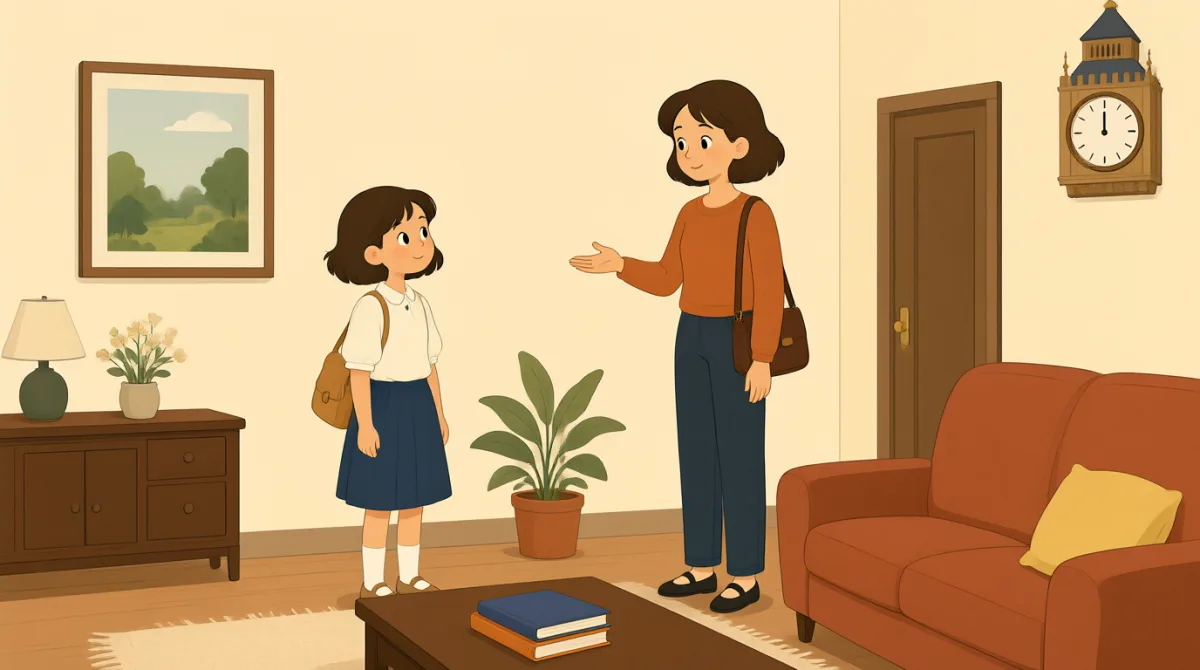

When was the clock tower built? It looks very old.
यह घंटाघर कब बनाया गया था? यह बहुत पुराना लगता है।

It was built about two hundred years ago, in the early 1800s.
इसे लगभग दो सौ साल पहले, 1800 के शुरुआती वर्षों में बनाया गया था।
Wow! Did people use the bell to tell the time?
वाह! क्या लोग समय बताने के लिए घंटी बजाते थे?
Yes, it rang every hour so people could know the time.
हाँ, लोगों को समय पता चल सके, इसलिए यह हर घंटे बजती थी।
Could people hear it from far away?
क्या इसकी आवाज़ दूर तक सुनाई देती थी?
They could hear it all over town, especially on a quiet day.
इसकी आवाज़ पूरे शहर में सुनाई देती थी, खासकर शांत दिनों में।
That must have been helpful before people had phones.
फ़ोन होने से पहले यह बहुत काम की रही होगी।
It was! Now, let's walk around the tower and see the old door.
बिल्कुल! चलो, अब घंटाघर के चारों ओर घूमकर पुराना दरवाज़ा देखते हैं।
शब्दावली8
- clock towerघंटाघर
A tall building or structure with a clock on it. Here, Emma is asking about an old tower in town.
घड़ी लगी हुई कोई ऊँची इमारत या संरचना। यहाँ एमा शहर के एक पुराने घंटाघर के बारे में पूछ रही है।
- builtबनाया गया
Made or constructed. Use “was built” to talk about when a building was made.
निर्मित या तैयार किया गया। किसी इमारत के बनने का समय बताने के लिए “was built” का इस्तेमाल करें।
- two hundred years agoदो सौ साल पहले
A way to say that something happened 200 years in the past. You can use “[number] years ago” to talk about when something happened.
कहने का एक तरीका कि कोई घटना 200 साल पहले हुई थी। किसी घटना का समय बताने के लिए “[number] years ago” का इस्तेमाल कर सकते हैं।
- tell the timeसमय बताना
To show or say what time it is. In the dialogue, people used the bell to help them know the time.
यह दिखाना या बताना कि अभी कितने बजे हैं। संवाद में लोग समय जानने के लिए घंटी की मदद लेते थे।
- rang every hourहर घंटे बजती थी
Made a sound once each hour. Use “rang” to describe the past sound of a bell.
हर घंटे एक बार आवाज़ करती थी। घंटी की पहले की आवाज़ के बारे में बताने के लिए “rang” का इस्तेमाल करें।
- from far awayदूर से
At a great distance. You can ask if someone can hear or see something from far away.
काफ़ी दूरी से। आप पूछ सकते हैं कि क्या कोई चीज़ दूर से सुनाई या दिखाई देती है।
- all over townपूरे शहर में
In every part of the town. It describes how widely people could hear the bell.
शहर के हर हिस्से में। यह बताता है कि घंटी की आवाज़ कितनी दूर तक सुनाई देती थी।
- walk aroundचारों ओर घूमना
To walk along or explore the area around something. You can use it when suggesting a relaxed look at a place.
किसी जगह के आसपास पैदल घूमना या उसे देखना। किसी जगह को आराम से देखने का सुझाव देते समय इसका इस्तेमाल कर सकते हैं।
मुख्य वाक्य7
- 1
When was the clock tower built?
यह घंटाघर कब बनाया गया था?
Use this question to ask when a building or other structure was made. You can replace “the clock tower” with another place or object.
किसी इमारत या दूसरी संरचना के बनने का समय पूछने के लिए इस सवाल का इस्तेमाल करें। “the clock tower” की जगह किसी दूसरी जगह या वस्तु का नाम रख सकते हैं।
- 2
It was built about two hundred years ago, in the early 1800s.
इसे लगभग दो सौ साल पहले, 1800 के शुरुआती वर्षों में बनाया गया था।
This gives an approximate age and a historical time period. Use “It was built…” to answer questions about when something was made.
इससे किसी चीज़ की अनुमानित उम्र और ऐतिहासिक समयावधि पता चलती है। किसी चीज़ के बनने का समय बताने के लिए “It was built…” का इस्तेमाल करें।
- 3
Did people use the bell to tell the time?
क्या लोग समय बताने के लिए घंटी बजाते थे?
Use “Did people use…?” to ask how something was used in the past. Replace “the bell” with another tool or object.
अतीत में किसी चीज़ का इस्तेमाल कैसे होता था, यह पूछने के लिए “Did people use…?” का इस्तेमाल करें। “the bell” की जगह किसी दूसरे औज़ार या वस्तु का नाम रख सकते हैं।
- 4
Yes, it rang every hour so people could know the time.
हाँ, लोगों को समय पता चल सके, इसलिए यह हर घंटे बजती थी।
This explains what the bell did and why. “So people could…” is useful for describing the purpose of something in the past.
इससे पता चलता है कि घंटी क्या करती थी और क्यों। अतीत में किसी चीज़ का उद्देश्य बताने के लिए “So people could…” काम आता है।
- 5
Could people hear it from far away?
क्या इसकी आवाज़ दूर तक सुनाई देती थी?
Use this question to ask whether a sound could be heard at a distance. “Could” is useful for asking about ability in the past.
आवाज़ किसी दूरी से सुनाई दे सकती थी या नहीं, यह पूछने के लिए इस सवाल का इस्तेमाल करें। अतीत की क्षमता के बारे में पूछने के लिए “Could” उपयोगी है।
- 6
They could hear it all over town, especially on a quiet day.
इसकी आवाज़ पूरे शहर में सुनाई देती थी, खासकर शांत दिनों में।
This describes where the sound could be heard and when it was easiest to hear. You can use “especially on…” to point out a helpful condition.
इससे पता चलता है कि आवाज़ कहाँ सुनाई देती थी और कब उसे सुनना सबसे आसान था। किसी मददगार परिस्थिति पर ज़ोर देने के लिए “especially on…” का इस्तेमाल कर सकते हैं।
- 7
Now, let's walk around the tower and see the old door.
चलो, अब घंटाघर के चारों ओर घूमकर पुराना दरवाज़ा देखते हैं।
This is a friendly way to suggest the group move on and look at something. Use “Let's…” to make a simple suggestion.
समूह को आगे बढ़ने और कुछ देखने का सुझाव देने का यह एक दोस्ताना तरीका है। कोई आसान सुझाव देने के लिए “Let's…” का इस्तेमाल करें।