Changing a Dish
व्यंजन में बदलाव
Emma chooses a dish and asks if it can be made without meat. Jack suggests a simple change.
एमा एक व्यंजन चुनती है और पूछती है कि क्या इसे बिना मांस के बनाया जा सकता है। जैक एक आसान बदलाव सुझाता है।
संवाद7
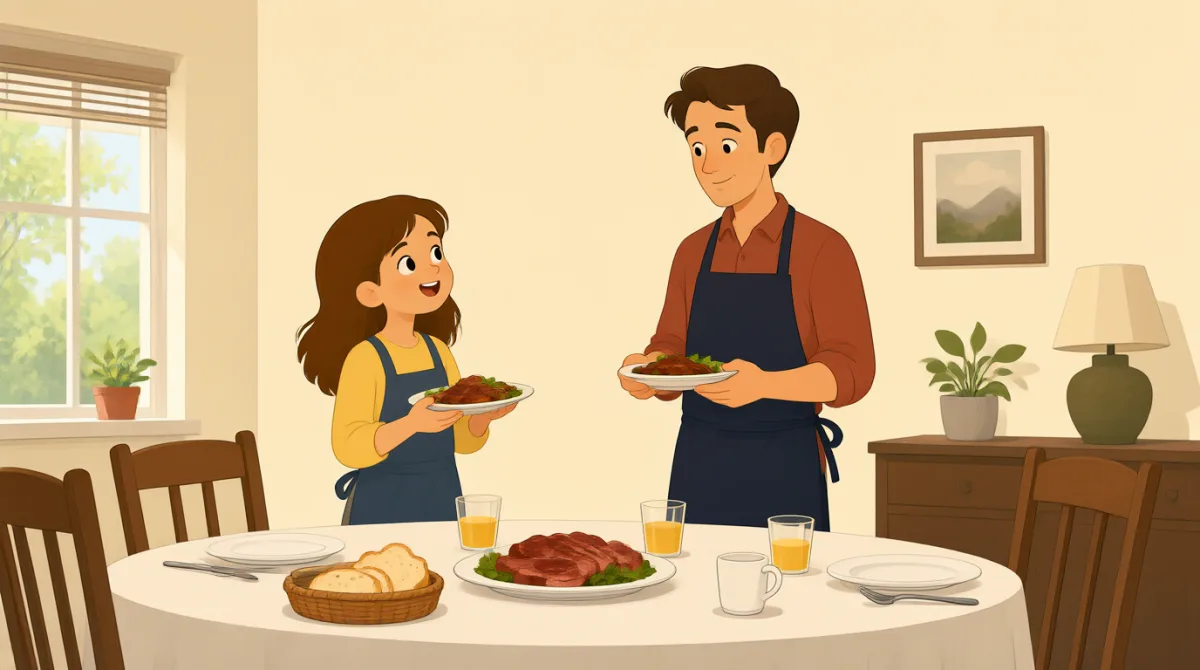

I'd like the pasta, please. Can you make it without meat?
मुझे पास्ता चाहिए, कृपया। क्या आप इसे बिना मांस के बना सकते हैं?

Sure. We can leave out the meat.
ज़रूर। हम इसमें से मांस हटा सकते हैं।
Does it come with meat sauce?
क्या इसके साथ मांस वाली सॉस आती है?
Yes, but I can use tomato sauce instead.
हाँ, लेकिन मैं इसके बजाय टमाटर की सॉस इस्तेमाल कर सकता हूँ।
That sounds good. Does the sauce have meat?
यह अच्छा रहेगा। क्या सॉस में मांस है?
No, it's just tomatoes and herbs.
नहीं, इसमें सिर्फ़ टमाटर और जड़ी-बूटियाँ हैं।
Great. I'll have that, please.
बढ़िया। मैं वही लूँगी, कृपया।
शब्दावली7
- I'd like the pasta, please.मुझे पास्ता चाहिए, कृपया।
Use this polite phrase to order food. You can replace “the pasta” with another dish.
खाना ऑर्डर करने के लिए इस विनम्र वाक्यांश का इस्तेमाल करें। “the pasta” की जगह किसी दूसरे व्यंजन का नाम रख सकते हैं।
- without meatबिना मांस के
This means that you do not want meat in the dish. You can say “without” plus another ingredient.
इसका मतलब है कि आप व्यंजन में मांस नहीं चाहते। “without” के बाद किसी दूसरी सामग्री का नाम भी कह सकते हैं।
- leave out the meatमांस हटाना
This means to make the dish without adding meat. You can say “leave out” plus an ingredient.
इसका मतलब है व्यंजन में मांस डाले बिना उसे बनाना। “leave out” के बाद किसी सामग्री का नाम कह सकते हैं।
- come with meat sauceमांस वाली सॉस के साथ आना
Use “Does it come with...?” to ask what is included with a dish. Here, Emma asks if the pasta has meat sauce.
किसी व्यंजन के साथ क्या-क्या आता है, यह पूछने के लिए “Does it come with...?” कहें। यहाँ एमा पूछती है कि पास्ता के साथ मांस वाली सॉस आती है या नहीं।
- insteadइसके बजाय
Use “instead” when one thing replaces another. Here, tomato sauce replaces meat sauce.
जब एक चीज़ की जगह दूसरी चीज़ इस्तेमाल होती है, तब “instead” कहें। यहाँ टमाटर की सॉस, मांस वाली सॉस की जगह लेती है।
- That sounds good.यह अच्छा लगता है।
Use this phrase to say that an idea or choice is pleasing to you. It is a friendly way to accept a suggestion.
किसी विचार या पसंद को अच्छा बताने के लिए यह वाक्यांश कहें। किसी सुझाव को स्वीकार करने का यह दोस्ताना तरीका है।
- I'll have that, please.मैं वही लूँगा/लूँगी, कृपया।
Use this polite phrase to choose something you have just discussed. You can also use it when ordering from a menu.
अभी जिस चीज़ के बारे में बात हुई है, उसे चुनने के लिए इस विनम्र वाक्यांश का इस्तेमाल करें। मेन्यू से ऑर्डर करते समय भी यह कह सकते हैं।
मुख्य वाक्य8
- 1
I'd like the pasta, please.
मुझे पास्ता चाहिए, कृपया।
This is a polite, simple way to order food. Replace “the pasta” with the dish you want.
खाना ऑर्डर करने का यह विनम्र और आसान तरीका है। “the pasta” की जगह उस व्यंजन का नाम रखें जो आप चाहते हैं।
- 2
Can you make it without meat?
क्या आप इसे बिना मांस के बना सकते हैं?
Use this question to ask if a dish can be prepared without meat. Replace “meat” with another ingredient if needed.
यह पूछने के लिए इस सवाल का इस्तेमाल करें कि क्या कोई व्यंजन बिना मांस के बनाया जा सकता है। ज़रूरत हो तो “meat” की जगह किसी दूसरी सामग्री का नाम रखें।
- 3
Sure. We can leave out the meat.
ज़रूर। हम इसमें से मांस हटा सकते हैं।
This is a simple way to agree to change a dish. You can say “leave out” plus an ingredient.
किसी व्यंजन में बदलाव के लिए सहमति जताने का यह आसान तरीका है। “leave out” के बाद किसी सामग्री का नाम कह सकते हैं।
- 4
Does it come with meat sauce?
क्या इसके साथ मांस वाली सॉस आती है?
Use this question to ask whether a dish includes a particular sauce or ingredient. Replace “meat sauce” with what you want to check.
यह पूछने के लिए इस सवाल का इस्तेमाल करें कि किसी व्यंजन में कोई खास सॉस या सामग्री शामिल है या नहीं। “meat sauce” की जगह उस चीज़ का नाम रखें जिसके बारे में आप पूछना चाहते हैं।
- 5
Yes, but I can use tomato sauce instead.
हाँ, लेकिन मैं इसके बजाय टमाटर की सॉस इस्तेमाल कर सकता हूँ।
This sentence offers a replacement for an ingredient. Use “instead” to show what will be used in its place.
इस वाक्य में किसी सामग्री के बदले दूसरी चीज़ इस्तेमाल करने का सुझाव दिया जाता है। किस चीज़ की जगह क्या इस्तेमाल होगा, यह बताने के लिए “instead” कहें।
- 6
Does the sauce have meat?
क्या सॉस में मांस है?
Use this question to check whether a sauce contains meat. Replace “meat” with another ingredient you need to avoid.
सॉस में मांस है या नहीं, यह जाँचने के लिए यह सवाल पूछें। “meat” की जगह उस दूसरी सामग्री का नाम रखें जिससे आपको परहेज़ करना है।
- 7
No, it's just tomatoes and herbs.
नहीं, इसमें सिर्फ़ टमाटर और जड़ी-बूटियाँ हैं।
This sentence explains what is in the sauce. Use “It’s just...” to describe simple ingredients.
इस वाक्य में बताया गया है कि सॉस में क्या-क्या है। साधारण सामग्री बताने के लिए “It’s just...” कहें।
- 8
I'll have that, please.
मैं वही लूँगा/लूँगी, कृपया।
Use this polite sentence to confirm your choice after discussing a dish. “That” refers to the food you just talked about.
किसी व्यंजन के बारे में बात करने के बाद अपनी पसंद पक्की करने के लिए यह विनम्र वाक्य कहें। “That” का मतलब है वह खाना जिसके बारे में अभी बात हुई।