Responding to a Medical Emergency
चिकित्सा आपातस्थिति में क्या करें
A colleague suddenly collapses in the office, showing signs of a heart attack. You need to assess the situation, call emergency services, and provide initial first aid until paramedics arrive.
ऑफिस में एक सहकर्मी अचानक गिर पड़ता है और उसमें दिल का दौरा पड़ने के लक्षण दिखाई देते हैं। आपको स्थिति का आकलन करना है, आपातकालीन सेवाओं को फोन करना है और पैरामेडिक्स के आने तक शुरुआती प्राथमिक उपचार देना है।
संवाद8
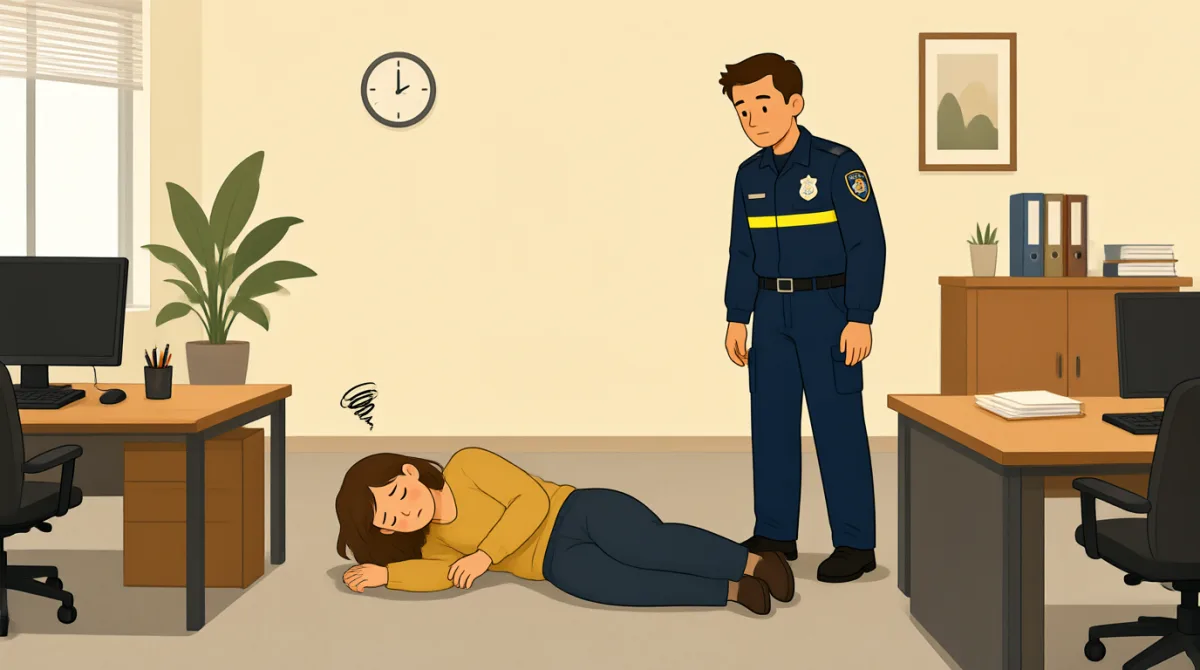

Oh my god, John! Are you okay? He just collapsed!
हे भगवान, जॉन! तुम ठीक हो? वह अभी-अभी गिर पड़ा!

John? John, can you hear me? He's not responding. Call 911, Emma, now!
जॉन? जॉन, क्या तुम मेरी आवाज़ सुन सकते हो? वह कोई जवाब नहीं दे रहा। एमा, अभी 911 पर फोन करो!
Okay, okay, I'm calling. What should I tell them? He's clutching his chest!
ठीक है, ठीक है, मैं फोन कर रही हूँ। उन्हें क्या बताऊँ? वह अपनी छाती पकड़े हुए है!
Tell them we have an unconscious male, possible heart attack, at the office. Give them our full address. And tell them to hurry!
उन्हें बताओ कि ऑफिस में एक बेहोश आदमी है, जिसे शायद दिल का दौरा पड़ा है। उन्हें हमारा पूरा पता बताना। और कहना कि जल्दी आएँ!
They're asking if he's breathing. He is, but it's very shallow and gasping.
वे पूछ रहे हैं कि क्या वह साँस ले रहा है। हाँ, लेकिन उसकी साँस बहुत उथली है और वह हाँफ रहा है।
Alright, tell them that. And try to loosen his tie or any tight clothing around his neck. Someone get the AED from the break room, quickly!
ठीक है, उन्हें यह बता दो। और उसकी टाई या गले के आसपास के तंग कपड़े ढीले करने की कोशिश करो। कोई ब्रेक रूम से AED लेकर आए, जल्दी!
They said paramedics are on their way, estimated 5-7 minutes. The caller ID will show our address automatically for them.
उन्होंने कहा कि पैरामेडिक्स रास्ते में हैं और करीब 5-7 मिनट में पहुँचेंगे। कॉलर आईडी पर उन्हें हमारा पता अपने-आप दिख जाएगा।
Good. Keep an eye on his breathing. Don't move him unless absolutely necessary. We just need to keep him comfortable until they arrive.
अच्छा। उसकी साँस पर नज़र रखो। जब तक बिल्कुल ज़रूरी न हो, उसे मत हिलाना। उनके आने तक बस उसे आरामदायक स्थिति में रखना है।
शब्दावली10
- collapsedगिर पड़ना
Past tense of 'collapse', meaning to suddenly fall down because of illness or injury. Useful in emergencies to describe someone fainting or falling.
'collapsed' का अर्थ है बीमारी या चोट के कारण अचानक गिर पड़ना। किसी के बेहोश होकर या गिर जाने का वर्णन करने के लिए आपातस्थिति में यह शब्द काम आता है।
- respondingजवाब देना
Present participle of 'respond', meaning to react or answer. In emergencies, 'not responding' means the person is unconscious and not reacting to calls or touches.
'responding', 'respond' का वर्तमान कृदंत है और इसका अर्थ है प्रतिक्रिया देना या जवाब देना। आपातस्थिति में 'not responding' का मतलब है कि व्यक्ति बेहोश है और आवाज़ देने या छूने पर प्रतिक्रिया नहीं कर रहा।
- clutchingकसकर पकड़ना
Present participle of 'clutch', meaning to hold something tightly, often in pain. Here, it shows the person is holding their chest due to heart pain.
'clutching', 'clutch' का वर्तमान कृदंत है। इसका अर्थ है किसी चीज़ को कसकर पकड़ना, अक्सर दर्द के कारण। यहाँ यह दिखाता है कि दिल में दर्द होने पर व्यक्ति अपनी छाती पकड़े हुए है।
- unconsciousबेहोश
Adjective describing someone who is not awake and cannot think or react. Important for medical emergencies to tell responders.
'unconscious' वह व्यक्ति होता है जो जाग नहीं रहा और सोच या प्रतिक्रिया नहीं कर सकता। चिकित्सा आपातस्थिति में मदद करने वालों को यह जानकारी देना ज़रूरी है।
- heart attackदिल का दौरा
Noun phrase for a serious medical emergency when blood flow to the heart stops, causing chest pain. Common in dialogues about sudden collapses.
'heart attack' एक गंभीर चिकित्सा आपातस्थिति है, जिसमें दिल तक रक्त का प्रवाह रुक जाता है और छाती में दर्द होता है। अचानक किसी के गिर पड़ने से जुड़ी बातचीत में यह शब्द आम है।
- shallowउथला
Adjective meaning not deep or full. Used for breathing that is light and not strong, a sign of distress in emergencies.
'shallow' का अर्थ है गहरा या पूरा न होना। साँस के लिए इसका मतलब है हल्की और कमज़ोर साँस, जो आपातस्थिति में परेशानी का संकेत हो सकती है।
- gaspingहाँफना
Present participle of 'gasp', meaning to breathe quickly and with difficulty, often making short sounds. Describes labored breathing in crises.
'gasping', 'gasp' का वर्तमान कृदंत है। इसका अर्थ है तेज़ी से और कठिनाई से साँस लेना, अक्सर छोटी-छोटी आवाज़ों के साथ। संकट की स्थिति में यह साँस लेने में तकलीफ़ का वर्णन करता है।
- loosenढीला करना
Verb meaning to make something less tight. In first aid, you loosen clothing to help breathing during emergencies.
'loosen' का अर्थ है किसी चीज़ को कम कसा हुआ करना। प्राथमिक उपचार में आप आपातस्थिति के दौरान साँस लेने में मदद के लिए कपड़े ढीले करते हैं।
- AEDAED (स्वचालित बाह्य डिफिब्रिलेटर)
Acronym for Automated External Defibrillator, a device that shocks the heart to restart it in cardiac arrests. Essential knowledge for office safety.
'AED', Automated External Defibrillator का संक्षिप्त रूप है। यह एक ऐसा उपकरण है जो दिल का दौरा पड़ने पर दिल को फिर से धड़काने के लिए बिजली का झटका देता है। ऑफिस की सुरक्षा के लिए इसकी जानकारी होना ज़रूरी है।
- paramedicsपैरामेडिक्स
Noun for trained medical workers who arrive in ambulances for emergencies. Use this when calling for professional help.
'paramedics' प्रशिक्षित चिकित्सा कर्मी होते हैं, जो आपातस्थिति में एम्बुलेंस से पहुँचते हैं। पेशेवर मदद बुलाते समय इस शब्द का इस्तेमाल करें।
मुख्य वाक्य8
- 1
Oh my god, John! Are you okay? He just collapsed!
हे भगवान, जॉन! तुम ठीक हो? वह अभी-अभी गिर पड़ा!
This shows an exclamation of shock using 'Oh my god' for surprise, a question 'Are you okay?' to check on someone, and 'just' for recent action. Useful for immediate reactions in emergencies to alert others.
यहाँ 'Oh my god' (हे भगवान) से हैरानी जताई गई है, 'Are you okay?' (क्या तुम ठीक हो?) से किसी का हाल पूछा गया है, और 'just' (अभी-अभी) से पता चलता है कि घटना हाल ही में हुई। आपातस्थिति में तुरंत प्रतिक्रिया देने और दूसरों का ध्यान खींचने के लिए यह उपयोगी है।
- 2
John? John, can you hear me? He's not responding.
जॉन? जॉन, क्या तुम मेरी आवाज़ सुन सकते हो? वह कोई जवाब नहीं दे रहा।
Repetition of the name gets attention, followed by a yes/no question 'can you hear me?' to test consciousness. 'Not responding' uses present continuous for ongoing state. Practical for assessing if someone is awake.
नाम दोहराने से व्यक्ति का ध्यान खींचा जाता है। फिर 'can you hear me?' (क्या तुम मेरी आवाज़ सुन सकते हो?) वाले हाँ-या-ना के सवाल से पता किया जाता है कि वह होश में है या नहीं। 'Not responding' (जवाब नहीं दे रहा) में वर्तमान निरंतर काल से जारी स्थिति बताई गई है। यह जानने के लिए उपयोगी है कि कोई जाग रहा है या नहीं।
- 3
Call 911, Emma, now!
एमा, अभी 911 पर फोन करो!
Imperative sentence commanding action with 'call' verb, direct address 'Emma', and 'now' for urgency. In the US, 911 is the emergency number; use this pattern to urgently request help.
'Call' क्रिया वाला आदेश किसी को काम करने के लिए कहता है। 'Emma' से सीधे संबोधित किया गया है और 'now' से तुरंत कार्रवाई की ज़रूरत जताई गई है। अमेरिका में आपातकालीन नंबर 911 है। ज़रूरी मदद के लिए तुरंत कहने के लिए इस ढाँचे का इस्तेमाल करें।
- 4
Tell them we have an unconscious male, possible heart attack, at the office.
उन्हें बताओ कि ऑफिस में एक बेहोश आदमी है, जिसे शायद दिल का दौरा पड़ा है।
Imperative 'tell them' with object clause describing the situation using commas for details. 'Possible' shows uncertainty. Useful for giving clear info to emergency services over the phone.
'tell them' एक आदेश है, जिसके बाद स्थिति बताने वाला वाक्यांश आता है और जानकारी को अल्पविरामों से अलग किया गया है। 'Possible' से अनिश्चितता जताई जाती है। फोन पर आपातकालीन सेवाओं को साफ़ जानकारी देने के लिए यह उपयोगी है।
- 5
He is, but it's very shallow and gasping.
हाँ, वह साँस ले रहा है, लेकिन उसकी साँस बहुत उथली है और वह हाँफ रहा है।
Short affirmative answer 'He is' to a yes/no question, contrasted with 'but' and adjectives describing breathing. Demonstrates how to report symptoms precisely during a call.
'He is' हाँ-या-ना के सवाल का छोटा सकारात्मक जवाब है। इसके बाद 'but' (लेकिन) के ज़रिए साँस का वर्णन करने वाले शब्दों से अंतर दिखाया गया है। फोन पर लक्षणों की सटीक जानकारी देने का यह एक अच्छा उदाहरण है।
- 6
Try to loosen his tie or any tight clothing around his neck.
उसकी टाई या गले के आसपास के तंग कपड़े ढीले करने की कोशिश करो।
Imperative 'try to' suggests action politely, with infinitive 'loosen' and alternatives 'or any'. Includes prepositional phrase 'around his neck'. Key for first aid instructions in crises.
'Try to' किसी काम को करने का सुझाव देता है। इसके बाद क्रिया का मूल रूप 'loosen' और विकल्प देने के लिए 'or any' आता है। वाक्य में 'around his neck' (उसके गले के आसपास) वाला संबंधसूचक वाक्यांश भी है। संकट में प्राथमिक उपचार के निर्देश देने के लिए यह वाक्य काम आता है।
- 7
Paramedics are on their way, estimated 5-7 minutes.
पैरामेडिक्स रास्ते में हैं और करीब 5-7 मिनट में पहुँचेंगे।
Present continuous 'are on their way' for ongoing movement, with 'estimated' for approximate time using numbers. Useful to update others on help arrival time.
'are on their way' वर्तमान निरंतर काल का प्रयोग करके बताता है कि वे अभी रास्ते में हैं। अनुमानित समय बताने के लिए 'estimated' और अंकों का इस्तेमाल किया गया है। मदद कब पहुँचेगी, इसकी जानकारी दूसरों को देने के लिए यह वाक्य उपयोगी है।
- 8
Keep an eye on his breathing. Don't move him unless absolutely necessary.
उसकी साँस पर नज़र रखो। जब तक बिल्कुल ज़रूरी न हो, उसे मत हिलाना।
Imperatives for advice: 'keep an eye on' is an idiom meaning watch closely, negative 'don't move' with conditional 'unless'. Shows safety instructions while waiting for help.
ये निर्देश देने वाले वाक्य हैं। मुहावरा 'keep an eye on' का अर्थ है ध्यान से नज़र रखना। 'Don't move' नकारात्मक आदेश है और 'unless' का अर्थ है 'जब तक ... न हो'। मदद का इंतज़ार करते समय सुरक्षा के निर्देश देने के लिए यह ढाँचा उपयोगी है।