Addressing the General Line
लंबी कतार में अपनी बात रखना
If there's a long line, the person might need to briefly explain their situation to the immediate few people around to avoid causing disruption.
अगर कतार लंबी हो, तो दूसरों को परेशानी से बचाने के लिए व्यक्ति को अपने आसपास के कुछ लोगों को अपनी स्थिति संक्षेप में समझानी पड़ सकती है।
संवाद6
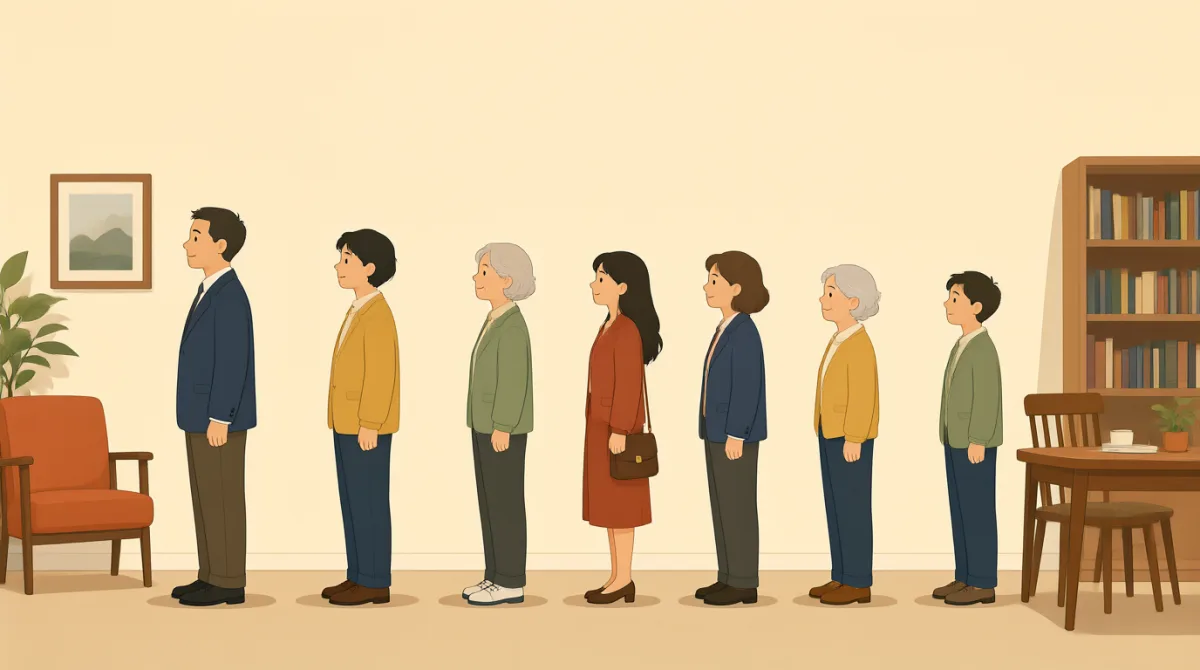

Excuse me, I'm so sorry to interrupt, but I have a really urgent appointment. Would it be alright if I just quickly went ahead?
माफ़ कीजिए, बीच में बोलने के लिए बहुत माफ़ी चाहती हूँ, लेकिन मेरी एक बहुत ज़रूरी अपॉइंटमेंट है। क्या मैं जल्दी से आगे जा सकती हूँ?

Oh, sure, if it's urgent. What's the situation?
ओह, हाँ, अगर ज़रूरी है तो। क्या बात है?
My childcare for my son unexpectedly fell through and I need to pick him up from daycare immediately. They close very soon.
मेरे बेटे की देखभाल का इंतज़ाम अचानक नहीं हो पाया और मुझे उसे तुरंत डेकेयर से लेना है। वहाँ बहुत जल्द बंद होने वाला है।

Daycare, huh? That sounds serious. We're not in a huge rush, are we, Jack?
डेकेयर, अच्छा? यह तो गंभीर लग रहा है। हमें बहुत जल्दी तो नहीं है, है न, जैक?

No, not at all. Go right ahead. We can wait a little longer. Good luck with your son!
नहीं, बिल्कुल नहीं। आप आगे चली जाइए। हम थोड़ी देर और इंतज़ार कर सकते हैं। आपके बेटे के लिए शुभकामनाएँ!
Oh, thank you so much! I really appreciate your understanding. You're a lifesaver!
ओह, आपका बहुत-बहुत धन्यवाद! आपकी समझदारी के लिए मैं सचमुच आभारी हूँ। आपने मेरी बहुत बड़ी मदद की!
शब्दावली7
- interruptबीच में बोलना
To interrupt means to stop someone or something from continuing, often politely in conversations or situations like lines. Use it when apologizing for breaking in, like 'Sorry to interrupt.'
interrupt का मतलब है किसी व्यक्ति या काम को जारी रहने से रोकना। बातचीत में या कतार जैसी स्थिति में बीच में बोलने के लिए माफ़ी माँगते हुए इसका इस्तेमाल करें, जैसे 'Sorry to interrupt.' (बीच में बोलने के लिए माफ़ कीजिए।)
- urgentअत्यावश्यक
Urgent describes something that needs immediate attention because it's important or time-sensitive. It's useful in requests, like 'I have an urgent matter' to explain why you need help quickly.
urgent ऐसी चीज़ के लिए कहते हैं जिस पर तुरंत ध्यान देना ज़रूरी हो, क्योंकि वह महत्वपूर्ण है या उसके लिए समय कम है। जल्दी मदद माँगने की वजह बताने के लिए 'I have an urgent matter' (मेरा एक ज़रूरी काम है) कह सकते हैं।
- appointmentतय मुलाक़ात
An appointment is a planned meeting at a specific time, like with a doctor or for a service. In polite requests, say 'I have an appointment' to justify urgency without details.
appointment किसी तय समय पर होने वाली मुलाक़ात या भेंट होती है, जैसे डॉक्टर से मिलने का समय। विनम्रता से अपनी जल्दी की वजह बताते हुए 'I have an appointment' (मुझे किसी से तय समय पर मिलना है) कह सकते हैं।
- fell throughअचानक इंतज़ाम न हो पाना
Fell through is an idiom meaning a plan or arrangement failed unexpectedly. Use it for situations like 'My plans fell through' to explain why something went wrong suddenly.
fell through एक मुहावरा है। इसका मतलब है कि कोई योजना या इंतज़ाम अचानक नाकाम हो गया। कुछ अचानक बिगड़ जाने की बात बताने के लिए 'My plans fell through' (मेरी योजनाएँ अचानक पूरी नहीं हो पाईं) कह सकते हैं।
- daycareडेकेयर; बच्चों की दिन में देखभाल की जगह
Daycare refers to a place where parents leave young children during the day while working. It's common in English-speaking countries; mention it to explain family emergencies politely.
daycare ऐसी जगह होती है जहाँ माता-पिता काम के दौरान छोटे बच्चों को दिन में देखभाल के लिए छोड़ते हैं। अंग्रेज़ी बोलने वाले देशों में यह आम है। परिवार की किसी ज़रूरी स्थिति को विनम्रता से समझाने के लिए इसका ज़िक्र करें।
- rushजल्दी
Rush means to hurry or be in a hurry. In questions like 'Are you in a rush?', it checks if someone is pressed for time, helping in polite conversations about waiting.
rush का मतलब है जल्दी करना या जल्दी में होना। 'Are you in a rush?' (क्या आपको जल्दी है?) जैसे सवाल से पता चलता है कि किसी के पास समय कम है या नहीं। इंतज़ार के बारे में विनम्रता से बात करते समय यह काम आता है।
- lifesaverबहुत बड़ी मदद करने वाला व्यक्ति
Lifesaver is an idiom for someone who provides crucial help in a difficult situation. Use it to express strong thanks, like 'You're a lifesaver!' to show deep appreciation.
lifesaver उस व्यक्ति के लिए इस्तेमाल होने वाला मुहावरा है जो मुश्किल घड़ी में बहुत अहम मदद करता है। दिल से धन्यवाद देने के लिए 'You're a lifesaver!' (आपने मेरी बहुत बड़ी मदद की!) कह सकते हैं।
मुख्य वाक्य6
- 1
Excuse me, I'm so sorry to interrupt, but I have a really urgent appointment. Would it be alright if I just quickly went ahead?
माफ़ कीजिए, बीच में बोलने के लिए बहुत माफ़ी चाहती हूँ, लेकिन मेरी एक बहुत ज़रूरी अपॉइंटमेंट है। क्या मैं जल्दी से आगे जा सकती हूँ?
This is a polite way to ask to cut in line by apologizing first and briefly explaining the urgency. It's useful for real-life situations like queues; note the conditional 'would it be alright' for soft requests, and 'went ahead' uses past tense for politeness.
कतार में आगे जाने की इजाज़त माँगने का यह विनम्र तरीका है। पहले माफ़ी माँगकर फिर जल्दी की वजह संक्षेप में बताई जाती है। कतार जैसी असल स्थितियों में यह उपयोगी है। ध्यान दें कि 'would it be alright' अनुरोध को नरम बनाता है और 'went ahead' में भूतकाल का इस्तेमाल विनम्रता के लिए हुआ है।
- 2
Oh, sure, if it's urgent. What's the situation?
ओह, हाँ, अगर ज़रूरी है तो। क्या बात है?
This shows agreement with a condition and asks for more details. Use it when someone requests a favor to understand better; 'what's the situation' is a neutral way to inquire without being nosy, common in casual English.
इसमें एक शर्त के साथ सहमति दी जाती है और ज़्यादा जानकारी पूछी जाती है। किसी के अनुरोध को बेहतर समझने के लिए इसका इस्तेमाल करें। 'what's the situation' बिना दखलंदाज़ी किए बात पूछने का सहज तरीका है, जो अनौपचारिक अंग्रेज़ी में आम है।
- 3
My childcare for my son unexpectedly fell through and I need to pick him up from daycare immediately.
मेरे बेटे की देखभाल का इंतज़ाम अचानक नहीं हो पाया और मुझे उसे तुरंत डेकेयर से लेना है।
This explains a personal emergency clearly and concisely. It's practical for justifying urgency in family matters; 'fell through' is an idiom for failure, and 'immediately' emphasizes time pressure, helping build empathy.
यह निजी आपात स्थिति को साफ़ और संक्षेप में समझाता है। परिवार से जुड़ी किसी बात में जल्दी की वजह बताने के लिए यह उपयोगी है। 'fell through' का मतलब है कि कोई इंतज़ाम नाकाम हो गया, जबकि 'immediately' तुरंत होने की ज़रूरत पर ज़ोर देता है और सामने वाले को स्थिति समझने में मदद करता है।
- 4
We're not in a huge rush, are we, Jack?
हमें बहुत जल्दी तो नहीं है, है न, जैक?
This is a tag question seeking agreement from others in a group. Use it in lines or group decisions to check if waiting is okay; the rising tone on 'are we' invites confirmation, making it collaborative and polite.
यह ऐसा सवाल है जिसमें बोलने वाला समूह के दूसरे लोगों से सहमति चाहता है। कतार में या समूह के फ़ैसले लेते समय यह पूछने के लिए इस्तेमाल करें कि थोड़ा और इंतज़ार करना ठीक रहेगा या नहीं। 'are we' के अंत में उठता हुआ स्वर जवाब की पुष्टि माँगता है, जिससे बात सहयोगपूर्ण और विनम्र लगती है।
- 5
Go right ahead. We can wait a little longer.
आप आगे चली जाइए। हम थोड़ी देर और इंतज़ार कर सकते हैं।
This grants permission directly and reassuringly. It's useful for agreeing to let someone go first; 'go right ahead' is an idiomatic expression meaning 'proceed,' and it shows willingness to accommodate without resentment.
यह सीधे और भरोसा दिलाते हुए अनुमति देता है। किसी को पहले जाने देने के लिए यह उपयोगी है। 'go right ahead' का मुहावरेदार अर्थ है 'आगे बढ़िए', और इससे पता चलता है कि आप बिना किसी नाराज़गी के दूसरे की सुविधा के लिए तैयार हैं।
- 6
Oh, thank you so much! I really appreciate your understanding. You're a lifesaver!
ओह, आपका बहुत-बहुत धन्यवाद! आपकी समझदारी के लिए मैं सचमुच आभारी हूँ। आपने मेरी बहुत बड़ी मदद की!
This expresses strong gratitude after receiving help. Use it to thank people sincerely; 'I really appreciate' adds emphasis, and 'lifesaver' is a warm idiom, common in American English to build positive relationships.
मदद मिलने के बाद आभार जताने का यह तरीका है। लोगों को दिल से धन्यवाद देने के लिए इसका इस्तेमाल करें। 'I really appreciate' आभार पर ज़ोर देता है, और 'lifesaver' एक अपनापन भरा मुहावरा है, जो अमेरिकी अंग्रेज़ी में अच्छे संबंध बनाने के लिए आम है।