Asking for Directions
रास्ता पूछना
You need to ask someone who is currently engaged in a conversation for directions.
आपको रास्ता पूछने के लिए किसी ऐसे व्यक्ति से बात करनी है जो अभी बातचीत में व्यस्त है।
संवाद6
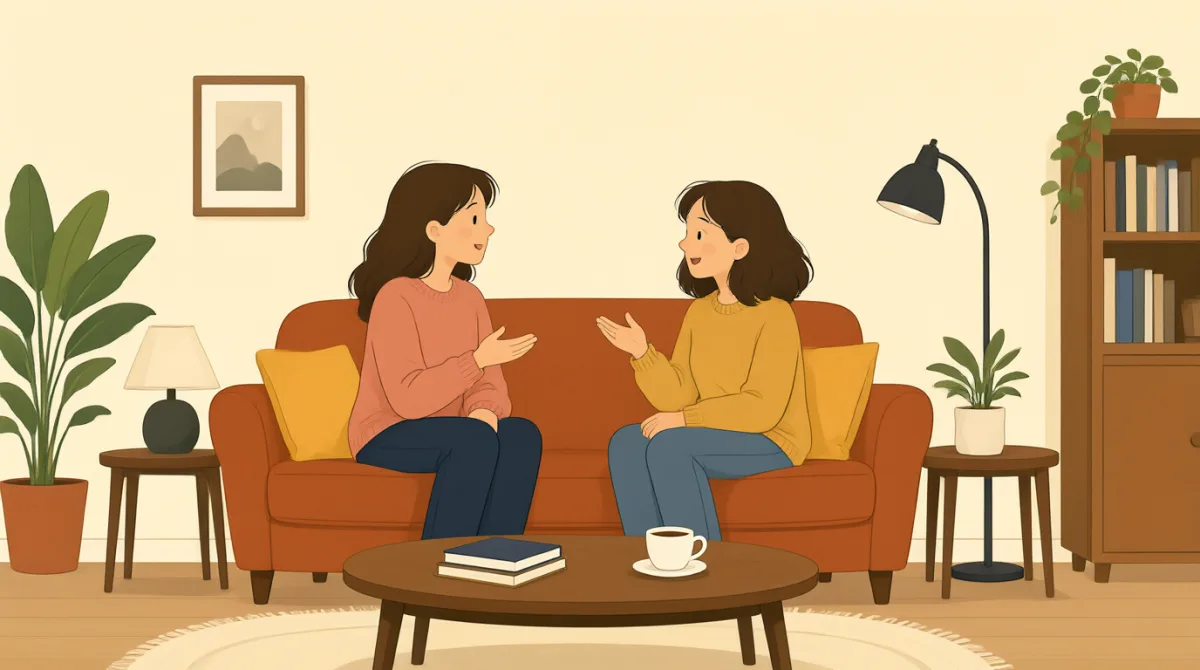

Excuse me, I'm so sorry to interrupt.
माफ़ कीजिए, बीच में टोकने के लिए मुझे बहुत अफ़सोस है।

No worries, how can I help you?
कोई बात नहीं, मैं आपकी क्या मदद कर सकता हूँ?
I'm looking for the main library. Could you point me in the right direction?
मैं मुख्य पुस्तकालय ढूँढ़ रहा हूँ। क्या आप मुझे सही रास्ता बता सकते हैं?
Of course! Go straight down this street for about two blocks, then turn left. You'll see it on your right.
ज़रूर! इस सड़क पर लगभग दो ब्लॉक सीधे जाइए, फिर बाएँ मुड़िए। वह आपको दाईं ओर दिख जाएगा।
So, two blocks straight, then left, and it's on the right. Got it. Thank you so much!
तो, दो ब्लॉक सीधे, फिर बाएँ, और वह दाईं ओर है। समझ गया। आपका बहुत-बहुत धन्यवाद!
You're welcome. Have a good day!
आपका स्वागत है। आपका दिन अच्छा रहे!
शब्दावली6
- interruptबीच में टोकना
To interrupt means to stop someone from doing or saying something, often by speaking or acting suddenly. Use it when you need to break into a conversation politely.
interrupt का मतलब है किसी को कुछ करने या कहने से रोकना, अक्सर अचानक बोलकर या कोई काम करके। बातचीत में विनम्रता से अपनी बात शुरू करने के लिए इसका इस्तेमाल करें।
- worriesचिंताएँ
Worries are things that make you anxious or concerned. In 'no worries,' it means no problem or don't be concerned, a casual way to say it's okay.
worries ऐसी बातें होती हैं जो आपको बेचैन या चिंतित करती हैं। 'no worries' में इसका मतलब है कोई बात नहीं या चिंता न करें—यह कहने का अनौपचारिक तरीका है कि सब ठीक है।
- looking forढूँढ़ना
This phrase means searching for something or someone. It's commonly used when asking about locations, like finding a place.
looking for का मतलब है किसी चीज़ या व्यक्ति को तलाशना। किसी जगह का पता पूछते समय, जैसे कोई स्थान ढूँढ़ने के लिए, यह आम तौर पर इस्तेमाल होता है।
- point me in the right directionसही रास्ता बताना
This idiom means to give basic guidance or show the correct way to go. It's useful for asking for simple directions without needing full details.
point me in the right direction एक मुहावरा है, जिसका मतलब है बुनियादी मार्गदर्शन देना या सही रास्ता दिखाना। पूरी जानकारी माँगे बिना साधारण दिशा पूछने के लिए यह उपयोगी है।
- blocksब्लॉक
In directions, a block refers to the distance between two streets in a city. 'Two blocks' means walking the length of two such sections.
रास्ता बताते समय block का मतलब शहर में दो सड़कों के बीच की दूरी होता है। 'Two blocks' यानी ऐसी दो दूरी तक पैदल चलना।
- got itसमझ गया
This is a casual way to say 'I understand' or 'I comprehend.' Use it to confirm you've grasped instructions or information.
got it, 'मैं समझ गया' कहने का अनौपचारिक तरीका है। निर्देश या जानकारी समझ लेने की पुष्टि करने के लिए इसका इस्तेमाल करें।
मुख्य वाक्य6
- 1
Excuse me, I'm so sorry to interrupt.
माफ़ कीजिए, बीच में टोकने के लिए मुझे बहुत अफ़सोस है।
This is a polite way to start interrupting someone. 'Excuse me' gets attention, and 'I'm so sorry to interrupt' apologizes for the disturbance. Use it when joining a conversation, especially with strangers. It shows respect and good manners.
किसी की बात के बीच में बोलना शुरू करने का यह विनम्र तरीका है। 'Excuse me' से आप उनका ध्यान खींचते हैं और 'I'm so sorry to interrupt' कहकर उन्हें परेशान करने के लिए माफ़ी माँगते हैं। बातचीत में शामिल होते समय, ख़ासकर अनजान लोगों से बात करते हुए, इसका इस्तेमाल करें। इससे आदर और शिष्टाचार झलकता है।
- 2
No worries, how can I help you?
कोई बात नहीं, मैं आपकी क्या मदद कर सकता हूँ?
'No worries' means it's not a problem, a friendly response to an apology. 'How can I help you?' offers assistance. This sentence is useful for responding positively when someone interrupts you, making the interaction smooth.
'No worries' का मतलब है कि कोई परेशानी नहीं है; यह माफ़ी के जवाब में कहे जाने वाला दोस्ताना वाक्यांश है। 'How can I help you?' मदद की पेशकश करता है। जब कोई आपकी बात के बीच में कुछ पूछे, तो सकारात्मक जवाब देने के लिए यह वाक्य उपयोगी है और बातचीत सहज बनाए रखता है।
- 3
I'm looking for the main library. Could you point me in the right direction?
मैं मुख्य पुस्तकालय ढूँढ़ रहा हूँ। क्या आप मुझे सही रास्ता बता सकते हैं?
This combines stating your need ('I'm looking for...') with a polite request ('Could you...'). It's a common pattern for asking directions. The modal 'could' makes it courteous. Use it in travel or new places to get guidance.
इस वाक्य में आप अपनी ज़रूरत बताते हैं ('I'm looking for...') और फिर विनम्रता से अनुरोध करते हैं ('Could you...')। रास्ता पूछने के लिए यह एक आम ढाँचा है। 'could' इसे विनम्र बनाता है। यात्रा करते समय या किसी नई जगह पर मार्गदर्शन पाने के लिए इसका इस्तेमाल करें।
- 4
Go straight down this street for about two blocks, then turn left.
इस सड़क पर लगभग दो ब्लॉक सीधे जाइए, फिर बाएँ मुड़िए।
This gives clear directions using imperatives like 'go' and 'turn.' 'Straight down' means continue without turning, 'for about two blocks' estimates distance. It's useful for explaining routes simply; practice with prepositions like 'down' and 'left' for navigation.
इस वाक्य में 'go' और 'turn' जैसे आदेश देने वाले क्रियापदों से साफ़-साफ़ रास्ता बताया गया है। 'Straight down' का मतलब है बिना मुड़े आगे बढ़ना और 'for about two blocks' दूरी का अनुमान बताता है। रास्ता सरलता से समझाने के लिए यह उपयोगी है; दिशा बताने के लिए 'down' और 'left' जैसे शब्दों का अभ्यास करें।
- 5
So, two blocks straight, then left, and it's on the right. Got it.
तो, दो ब्लॉक सीधे, फिर बाएँ, और वह दाईं ओर है। समझ गया।
This repeats instructions to confirm understanding, starting with 'So' to summarize. 'Got it' affirms comprehension. It's practical for checking details after receiving info, helping avoid mistakes in following directions.
इस वाक्य में आप बात को दोहराकर निर्देश समझने की पुष्टि करते हैं और सारांश देने के लिए 'So' से शुरुआत करते हैं। 'Got it' बताता है कि आपने बात समझ ली है। जानकारी मिलने के बाद बात की पुष्टि करने और रास्ता अपनाते समय ग़लती से बचने के लिए यह उपयोगी है।
- 6
You're welcome. Have a good day!
आपका स्वागत है। आपका दिन अच्छा रहे!
'You're welcome' responds to thanks, a standard polite reply. 'Have a good day' is a friendly goodbye. Use this ending to conversations, especially when helping others, to leave a positive impression.
'You're welcome' धन्यवाद के जवाब में कहा जाता है और यह एक सामान्य विनम्र उत्तर है। 'Have a good day' दोस्ताना ढंग से विदा कहने का तरीका है। बातचीत के अंत में, खासकर दूसरों की मदद करने के बाद, यह वाक्य प्रयोग करें ताकि अच्छा प्रभाव पड़े।