Asking for Directions
রাস্তা জিজ্ঞেস করা
You need to ask someone who is currently engaged in a conversation for directions.
কথায় ব্যস্ত কাউকে রাস্তা জিজ্ঞেস করতে হবে।
সংলাপ6
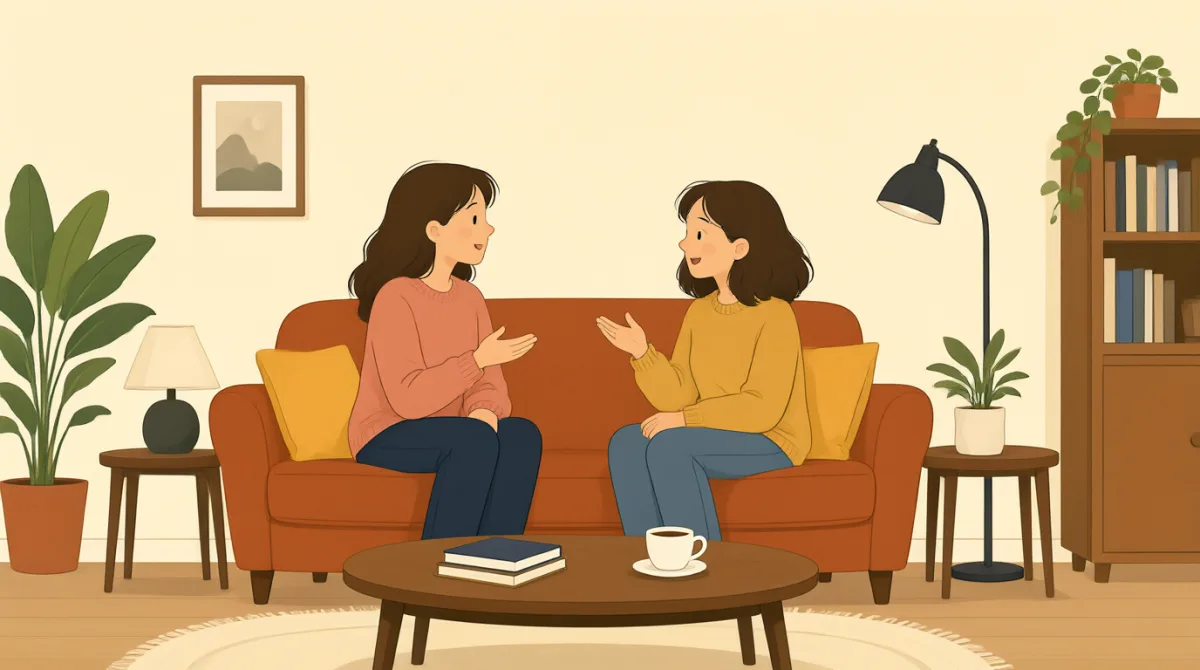

Excuse me, I'm so sorry to interrupt.
মাফ করবেন, কথার মাঝে বাধা দেওয়ার জন্য খুব দুঃখিত।

No worries, how can I help you?
কোনো সমস্যা নেই, কীভাবে সাহায্য করতে পারি?
I'm looking for the main library. Could you point me in the right direction?
আমি মূল লাইব্রেরিটা খুঁজছি। কোন দিকে যেতে হবে একটু বলে দেবেন?
Of course! Go straight down this street for about two blocks, then turn left. You'll see it on your right.
অবশ্যই! এই রাস্তা ধরে সোজা প্রায় দুই ব্লক যান, তারপর বাঁ দিকে মোড় নিন। ডান দিকেই দেখতে পাবেন।
So, two blocks straight, then left, and it's on the right. Got it. Thank you so much!
তাহলে, সোজা দুই ব্লক, তারপর বাঁ দিকে, আর এটা ডান পাশে। বুঝেছি। অনেক ধন্যবাদ!
You're welcome. Have a good day!
স্বাগতম। আপনার দিনটি ভালো কাটুক!
শব্দভান্ডার6
- interruptবাধা দেওয়া
To interrupt means to stop someone from doing or saying something, often by speaking or acting suddenly. Use it when you need to break into a conversation politely.
interrupt মানে কারও কথা বলা বা কোনো কাজ করার মাঝে বাধা দেওয়া, সাধারণত হঠাৎ কথা বলে বা কিছু করে। কথার মাঝে ভদ্রভাবে ঢুকতে হলে এই শব্দটি ব্যবহার করতে পারেন।
- worriesদুশ্চিন্তা
Worries are things that make you anxious or concerned. In 'no worries,' it means no problem or don't be concerned, a casual way to say it's okay.
worries হলো এমন বিষয়, যা আপনাকে উদ্বিগ্ন বা চিন্তিত করে। 'no worries'-এ এর অর্থ ‘কোনো সমস্যা নেই’ বা ‘চিন্তার কিছু নেই’; এটি ঠিক আছে বোঝানোর একটি অনানুষ্ঠানিক উপায়।
- looking forখুঁজছি
This phrase means searching for something or someone. It's commonly used when asking about locations, like finding a place.
looking for কথাটির অর্থ কোনো কিছু বা কাউকে খোঁজা। কোনো জায়গা খুঁজে বের করার কথা বলার সময় এটি প্রায়ই ব্যবহার করা হয়।
- point me in the right directionসঠিক পথটা বলে দেওয়া
This idiom means to give basic guidance or show the correct way to go. It's useful for asking for simple directions without needing full details.
point me in the right direction বাগ্ধারাটির অর্থ হলো মোটামুটি পথনির্দেশ দেওয়া বা কোন পথে যেতে হবে তা দেখিয়ে দেওয়া। বিস্তারিত না জেনেও সহজভাবে রাস্তা জানতে চাইলে এটি কাজে লাগে।
- blocksব্লক
In directions, a block refers to the distance between two streets in a city. 'Two blocks' means walking the length of two such sections.
রাস্তা বোঝানোর সময় block বলতে শহরের একটি রাস্তা থেকে পরের রাস্তা পর্যন্ত দূরত্ব বোঝায়। 'Two blocks' মানে এ রকম দুটি রাস্তার মধ্যবর্তী অংশ হেঁটে যাওয়া।
- got itবুঝেছি
This is a casual way to say 'I understand' or 'I comprehend.' Use it to confirm you've grasped instructions or information.
got it হলো 'I understand' বা 'I comprehend' বলার একটি অনানুষ্ঠানিক উপায়। নির্দেশনা বা তথ্য বুঝেছেন—এ কথা নিশ্চিত করতে এটি ব্যবহার করুন।
গুরুত্বপূর্ণ বাক্য6
- 1
Excuse me, I'm so sorry to interrupt.
মাফ করবেন, কথার মাঝে বাধা দেওয়ার জন্য খুব দুঃখিত।
This is a polite way to start interrupting someone. 'Excuse me' gets attention, and 'I'm so sorry to interrupt' apologizes for the disturbance. Use it when joining a conversation, especially with strangers. It shows respect and good manners.
কাউকে কথার মাঝে থামিয়ে কথা শুরু করার এটি একটি ভদ্র উপায়। 'Excuse me' বলে মনোযোগ আকর্ষণ করা হয়, আর 'I'm so sorry to interrupt' বলে বিরক্ত করার জন্য দুঃখ প্রকাশ করা হয়। বিশেষ করে অপরিচিত কারও কথায় যোগ দেওয়ার সময় এটি ব্যবহার করুন। এতে সম্মান ও ভদ্রতা প্রকাশ পায়।
- 2
No worries, how can I help you?
কোনো সমস্যা নেই, কীভাবে সাহায্য করতে পারি?
'No worries' means it's not a problem, a friendly response to an apology. 'How can I help you?' offers assistance. This sentence is useful for responding positively when someone interrupts you, making the interaction smooth.
'No worries' মানে ‘কোনো সমস্যা নেই’; ক্ষমা চাওয়ার জবাবে এটি বন্ধুত্বপূর্ণভাবে বলা হয়। 'How can I help you?' বলে সাহায্যের প্রস্তাব দেওয়া হয়। কেউ আপনার কথায় বাধা দিলে ইতিবাচকভাবে উত্তর দিতে এবং কথোপকথন সহজ রাখতে এই বাক্যটি কাজে লাগে।
- 3
I'm looking for the main library. Could you point me in the right direction?
আমি মূল লাইব্রেরিটা খুঁজছি। কোন দিকে যেতে হবে একটু বলে দেবেন?
This combines stating your need ('I'm looking for...') with a polite request ('Could you...'). It's a common pattern for asking directions. The modal 'could' makes it courteous. Use it in travel or new places to get guidance.
এখানে নিজের প্রয়োজন জানানো হয়েছে ('I'm looking for...') এবং ভদ্রভাবে অনুরোধ করা হয়েছে ('Could you...')। রাস্তা জানতে চাওয়ার এটি একটি প্রচলিত ধরন। 'could' ব্যবহার করলে অনুরোধটি ভদ্র শোনায়। ভ্রমণে বা নতুন জায়গায় পথনির্দেশ চাইতে এটি ব্যবহার করুন।
- 4
Go straight down this street for about two blocks, then turn left.
এই রাস্তা ধরে সোজা প্রায় দুই ব্লক যান, তারপর বাঁ দিকে মোড় নিন।
This gives clear directions using imperatives like 'go' and 'turn.' 'Straight down' means continue without turning, 'for about two blocks' estimates distance. It's useful for explaining routes simply; practice with prepositions like 'down' and 'left' for navigation.
'go' এবং 'turn'-এর মতো আদেশসূচক ক্রিয়া ব্যবহার করে এখানে স্পষ্ট পথনির্দেশ দেওয়া হয়েছে। 'Straight down' মানে না ঘুরে সোজা এগিয়ে যাওয়া, আর 'for about two blocks' দিয়ে আনুমানিক দূরত্ব বোঝানো হয়েছে। সহজভাবে পথ বোঝাতে এটি কাজে লাগে; দিকনির্দেশনার জন্য 'down' এবং 'left'-এর মতো শব্দ অনুশীলন করুন।
- 5
So, two blocks straight, then left, and it's on the right. Got it.
তাহলে, সোজা দুই ব্লক, তারপর বাঁ দিকে, আর এটা ডান পাশে। বুঝেছি।
This repeats instructions to confirm understanding, starting with 'So' to summarize. 'Got it' affirms comprehension. It's practical for checking details after receiving info, helping avoid mistakes in following directions.
বুঝেছেন কি না নিশ্চিত করতে এখানে নির্দেশনাটি আবার বলা হয়েছে; সারাংশ শুরু হয়েছে 'So' দিয়ে। 'Got it' দিয়ে বোঝানো হয় যে আপনি বুঝেছেন। তথ্য পাওয়ার পর খুঁটিনাটি যাচাই করতে এটি কাজে লাগে, ফলে পথ অনুসরণে ভুল হওয়ার আশঙ্কা কমে।
- 6
You're welcome. Have a good day!
স্বাগতম। আপনার দিনটি ভালো কাটুক!
'You're welcome' responds to thanks, a standard polite reply. 'Have a good day' is a friendly goodbye. Use this ending to conversations, especially when helping others, to leave a positive impression.
'You're welcome' ধন্যবাদের উত্তরে বলা হয়; এটি একটি প্রচলিত ভদ্র জবাব। 'Have a good day' হলো বন্ধুত্বপূর্ণ বিদায়। বিশেষ করে কাউকে সাহায্য করার পর কথোপকথন শেষ করতে এটি ব্যবহার করলে ভালো ছাপ পড়ে।