Holding the Door for Multiple People
कई लोगों के लिए दरवाज़ा थामना
Someone holds a door open for several people, and you are one of the last to pass through, expressing thanks.
कोई कई लोगों के लिए दरवाज़ा खुला रखता है। आप आख़िरी लोगों में से एक हैं और गुज़रते हुए उसे धन्यवाद देते हैं।
संवाद5
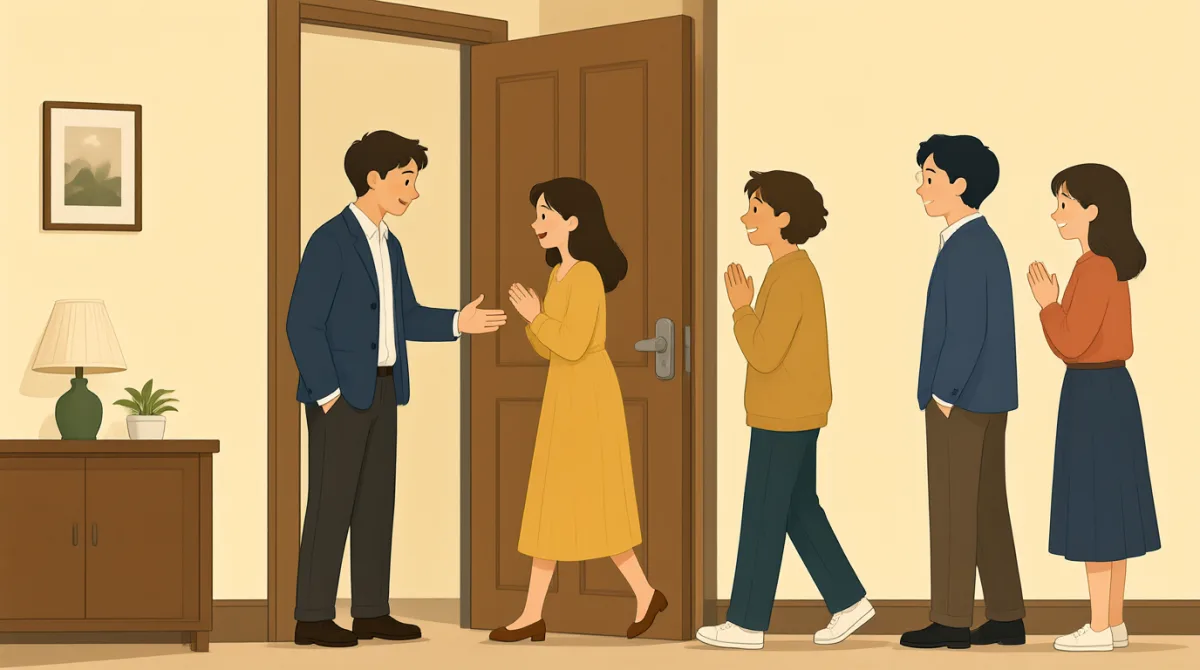

Thanks so much for holding the door!
दरवाज़ा थामने के लिए आपका बहुत-बहुत धन्यवाद!

No problem at all!
कोई बात नहीं!
You've been holding it for quite a while.
आप काफ़ी देर से दरवाज़ा थामे हुए हैं।
Just happy to help. Have a good day!
मदद करके अच्छा लगा। आपका दिन अच्छा बीते!
You too!
आपका भी!
शब्दावली6
- holdingथामना
Holding means keeping something in position, like keeping a door open for others to pass through. It's a common polite action in public places.
“Holding” का मतलब है किसी चीज़ को एक जगह पर बनाए रखना, जैसे दूसरों के गुज़रने के लिए दरवाज़ा खुला रखना। सार्वजनिक जगहों पर ऐसा करना आम तौर पर शिष्टाचार माना जाता है।
- thanks so muchबहुत-बहुत धन्यवाद
This is a way to say 'thank you' with emphasis, showing strong appreciation. Use it when someone does something extra helpful for you.
“Thanks so much” ज़ोर देकर धन्यवाद कहने का एक तरीका है, जिससे आप अपनी गहरी कृतज्ञता जताते हैं। जब कोई आपके लिए कुछ अतिरिक्त मददगार करता है, तब इसका इस्तेमाल करें।
- no problemकोई बात नहीं
This phrase means 'it's not difficult' or 'you're welcome.' It's a casual response to thanks, showing the help was easy to give.
“No problem” का मतलब है “इसमें कोई मुश्किल नहीं” या “आपका स्वागत है।” धन्यवाद के जवाब में यह एक अनौपचारिक प्रतिक्रिया है, जो बताती है कि मदद करना आसान था।
- quite a whileकाफ़ी देर तक
This means 'for a long time' or 'for some time.' Use it to describe something that has been happening for a noticeable duration.
“Quite a while” का मतलब है “लंबे समय तक” या “कुछ समय तक।” किसी ऐसी चीज़ के बारे में बताने के लिए इसका इस्तेमाल करें जो काफ़ी समय से हो रही हो।
- happy to helpमदद करके खुशी होना
This expresses pleasure in assisting someone. It's a polite way to respond to thanks, emphasizing that helping was enjoyable.
“Happy to help” कहने से पता चलता है कि आपको किसी की मदद करके खुशी हुई। धन्यवाद के जवाब में यह एक विनम्र तरीका है, जिससे आप बताते हैं कि मदद करना आपको अच्छा लगा।
- have a good dayआपका दिन अच्छा बीते
A friendly goodbye wish meaning 'enjoy your day.' It's commonly used at the end of short interactions to be polite.
“Have a good day” एक दोस्ताना विदाई की शुभकामना है, जिसका मतलब है “आपका दिन अच्छा बीते।” छोटी बातचीत के अंत में विनम्रता से कहने के लिए इसका आम तौर पर इस्तेमाल किया जाता है।
मुख्य वाक्य5
- 1
Thanks so much for holding the door!
दरवाज़ा थामने के लिए आपका बहुत-बहुत धन्यवाद!
This sentence shows strong gratitude for a specific helpful action. It's useful in everyday situations like entering buildings. The phrase 'thanks so much' adds emphasis, and it's a complete polite expression.
यह वाक्य किसी खास मदद के लिए दिल से आभार जताता है। इमारत में प्रवेश करने जैसी रोज़मर्रा की स्थितियों में यह काम आता है। “Thanks so much” ज़ोर देकर धन्यवाद कहता है और यह एक पूरा, विनम्र अभिव्यक्ति-वाक्य है।
- 2
No problem at all!
कोई बात नहीं!
This is a casual way to say 'you're welcome.' Use it after someone thanks you for small favors. 'At all' strengthens the meaning, making it sound even more reassuring. It's very common in informal English.
यह “आपका स्वागत है” कहने का अनौपचारिक तरीका है। छोटे-मोटे कामों के लिए कोई धन्यवाद दे, तो आप इसका जवाब दे सकते हैं। “At all” बात पर ज़ोर देता है और जवाब को और आश्वस्त करने वाला बनाता है। यह अनौपचारिक अंग्रेज़ी में बहुत आम है।
- 3
You've been holding it for quite a while.
आप काफ़ी देर से दरवाज़ा थामे हुए हैं।
This uses present perfect continuous tense ('have been holding') to describe an action that started in the past and continues now. It's useful to acknowledge someone's effort over time, showing appreciation for their patience.
इस वाक्य में वर्तमान पूर्ण निरंतर काल (“have been holding”) का इस्तेमाल हुआ है। यह ऐसी क्रिया बताता है जो पहले शुरू हुई और अब भी जारी है। किसी के प्रयास को पहचानने और उसके धैर्य के लिए आभार जताने में यह काम आता है।
- 4
Just happy to help. Have a good day!
मदद करके अच्छा लगा। आपका दिन अच्छा बीते!
This combines a response to thanks with a farewell. 'Just happy to help' means simply glad to assist, downplaying the effort. 'Have a good day' is a standard polite ending. Use in quick interactions to wrap up positively.
इसमें धन्यवाद का जवाब देने के साथ विदाई भी शामिल है। “Just happy to help” का मतलब है कि मदद करके बस खुशी हुई; इससे प्रयास को मामूली बताया जाता है। “Have a good day” विदाई का एक आम, विनम्र तरीका है। छोटी बातचीत को अच्छे अंदाज़ में खत्म करने के लिए इसका इस्तेमाल करें।
- 5
You too!
आपका भी!
This is a short, reciprocal response meaning 'you as well.' It's useful when someone wishes you well, like 'have a good day.' It's simple and mirrors the original wish, common in friendly conversations.
यह छोटा-सा जवाब “आपको भी” के अर्थ में है। जब कोई आपके लिए अच्छी कामना करे, जैसे “have a good day,” तो यह जवाब काम आता है। यह सरल है और सामने वाले की शुभकामना का जवाब उसी तरह देता है; दोस्ताना बातचीत में यह आम है।