Holding Heavy Items/Stroller
भारी सामान/बच्चे की गाड़ी संभालना
Someone holds the door when they see you struggling with heavy bags, a stroller, or a wheelchair, and you express deeper gratitude for their thoughtfulness.
जब कोई आपको भारी थैलों, बच्चे की गाड़ी या व्हीलचेयर के साथ जूझते देखकर दरवाज़ा थाम ले, तो आप उनकी इस सोच-समझ के लिए दिल से आभार जताते हैं।
संवाद7
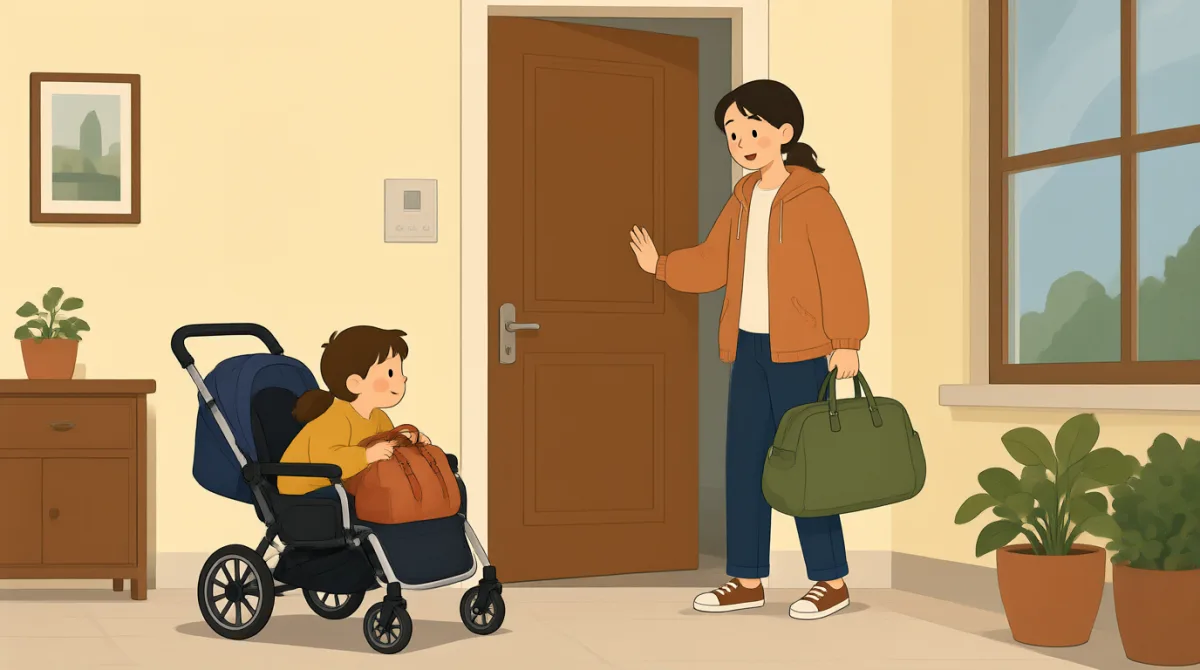

Oh, thank you so much! I really appreciate that. My hands are full.
ओह, आपका बहुत-बहुत धन्यवाद! मैं सच में इसकी बहुत कद्र करती हूँ। मेरे दोनों हाथ भरे हुए हैं।

No problem at all! I saw you coming with the stroller and thought I could help.
कोई बात नहीं! मैंने आपको बच्चे की गाड़ी के साथ आते देखा, तो सोचा कि मदद कर दूँ।
That's so thoughtful of you. It's always a struggle getting through doors with this thing.
आपने बहुत सोच-समझकर मदद की। इस गाड़ी के साथ दरवाज़ों से निकलना हमेशा मुश्किल होता है।
I can imagine! Glad I was here to lend a hand.
मैं समझ सकता हूँ! अच्छा हुआ कि मैं यहाँ था और मदद कर सका।
You're a lifesaver! Seriously, thank you very much.
आपने तो मेरी जान बचा ली! सच में, आपका बहुत-बहुत धन्यवाद।
Anytime! Have a good day.
जब भी ज़रूरत हो! आपका दिन अच्छा गुज़रे।
You too! Thanks again.
आपका भी! एक बार फिर धन्यवाद।
शब्दावली6
- appreciateकद्र करना
To feel grateful for something someone does for you. Use it to express thanks more deeply, like 'I appreciate your help.' It's common in polite conversations.
'appreciate' का मतलब है किसी के आपके लिए किए गए काम के लिए आभारी होना। गहरी कृतज्ञता जताने के लिए इसका इस्तेमाल करें, जैसे 'I appreciate your help.' (मैं आपकी मदद की कद्र करता/करती हूँ।) विनम्र बातचीत में यह आम है।
- thoughtfulदूसरों का ख़याल रखने वाला
Showing care and consideration for others' needs. Say 'That's thoughtful of you' when someone does something kind without being asked. It's a way to compliment politeness.
'thoughtful' का मतलब है दूसरों की ज़रूरतों का ध्यान रखना और उनकी परवाह करना। जब कोई बिना कहे कोई अच्छा काम करे, तो उसकी तारीफ़ में 'That's thoughtful of you' कहें।
- struggleजूझना
To have difficulty or fight against something challenging. Use it for situations like 'I struggle with heavy bags' to describe everyday problems. It's practical for talking about daily challenges.
'struggle' का मतलब है किसी मुश्किल काम में परेशानी होना या उससे जूझना। रोज़मर्रा की दिक्कत बताने के लिए 'I struggle with heavy bags' कह सकते हैं।
- lend a handमदद करना
An idiom meaning to help someone. It's casual and friendly, like 'Can you lend a hand?' Use it in informal settings to offer or accept help.
'lend a hand' एक मुहावरा है, जिसका मतलब है किसी की मदद करना। यह दोस्ताना और अनौपचारिक है, जैसे 'Can you lend a hand?' (क्या आप मेरी मदद कर सकते हैं?) मदद माँगने या मदद की पेशकश करने के लिए अनौपचारिक स्थितियों में इसका इस्तेमाल करें।
- lifesaverमुसीबत में काम आने वाला व्यक्ति
Someone who provides crucial help in a tough situation. It's an exaggeration for emphasis, like 'You're a lifesaver!' Use it to show strong gratitude in casual talks.
'lifesaver' ऐसे व्यक्ति के लिए कहा जाता है जो मुश्किल स्थिति में बहुत अहम मदद करे। 'You're a lifesaver!' कहकर आप ज़ोर देकर आभार जताते हैं। यह अनौपचारिक बातचीत में इस्तेमाल होने वाला अतिशयोक्तिपूर्ण मुहावरा है।
- strollerबच्चे की गाड़ी
A small wheeled vehicle for pushing a baby or young child. Common in American English; say 'I have a stroller' when describing family outings. It's useful for everyday vocabulary.
'stroller' पहियों वाली छोटी गाड़ी होती है, जिसमें बच्चे को बिठाकर धकेला जाता है। यह अमेरिकी अंग्रेज़ी में आम शब्द है। परिवार के साथ बाहर जाने की बात करते हुए 'I have a stroller' कह सकते हैं।
मुख्य वाक्य7
- 1
Oh, thank you so much! I really appreciate that.
ओह, आपका बहुत-बहुत धन्यवाद! मैं सच में इसकी बहुत कद्र करती हूँ।
This expresses strong gratitude. 'Thank you so much' is more emphatic than basic thanks, and 'I really appreciate that' adds sincerity. Use it when someone helps you significantly, like with heavy items. It's a polite pattern for intermediate learners to show deeper thanks.
यह वाक्य गहरा आभार जताता है। 'Thank you so much' साधारण धन्यवाद से ज़्यादा ज़ोरदार है, और 'I really appreciate that' आपकी सच्ची कृतज्ञता दिखाता है। भारी सामान जैसी चीज़ में किसी की बड़ी मदद मिलने पर इसका इस्तेमाल करें।
- 2
No problem at all!
बिलकुल कोई बात नहीं!
A casual way to say 'You're welcome' or it's not a big deal. 'No problem' is informal, and 'at all' softens it further. Use this response when someone thanks you for simple help. It's very common in daily English to keep conversations light.
यह 'You're welcome' कहने या यह जताने का अनौपचारिक तरीका है कि कोई परेशानी नहीं हुई। 'No problem' अनौपचारिक है, और 'at all' इसे और सहज बनाता है। छोटी-मोटी मदद के लिए धन्यवाद मिलने पर इसका जवाब दें। रोज़मर्रा की अंग्रेज़ी में यह बहुत आम है।
- 3
That's so thoughtful of you.
आपने बहुत सोच-समझकर मदद की।
Compliments someone's kindness and consideration. 'That's so' adds emphasis, and 'of you' personalizes it. Use it to acknowledge helpful actions, like holding a door. This sentence teaches how to express appreciation for thoughtfulness in social situations.
यह किसी की दयालुता और दूसरों का ख़याल रखने की तारीफ़ करता है। 'That's so' बात पर ज़ोर देता है, और 'of you' इसे उस व्यक्ति से जोड़ता है। दरवाज़ा थामने जैसी मदद के लिए आभार जताने में इसका इस्तेमाल करें।
- 4
It's always a struggle getting through doors with this thing.
इस गाड़ी के साथ दरवाज़ों से निकलना हमेशा मुश्किल होता है।
Describes a recurring difficulty. 'It's always a struggle' uses present simple for habits, and 'this thing' refers casually to an object like a stroller. Use it to explain challenges and build empathy. Helpful for practicing descriptive sentences about daily life.
यह बार-बार होने वाली परेशानी बताता है। 'It's always a struggle' आदत या नियमित कठिनाई के लिए वर्तमान काल में है, और 'this thing' किसी चीज़, जैसे बच्चे की गाड़ी, का अनौपचारिक उल्लेख है। रोज़मर्रा की मुश्किलें समझाने और सामने वाले को स्थिति समझाने के लिए इसका इस्तेमाल करें।
- 5
Glad I was here to lend a hand.
अच्छा हुआ कि मैं यहाँ था और मदद कर सका।
Shows happiness about being able to help. 'Glad' means pleased, and 'lend a hand' is an idiom for assisting. Use this to respond positively after helping. It demonstrates idiomatic expressions and past continuous for context.
यह बताता है कि मदद कर पाने की खुशी है। 'Glad' का मतलब है ख़ुश या प्रसन्न, और 'lend a hand' मदद करने का मुहावरा है। मदद करने के बाद सकारात्मक जवाब देने के लिए इसका इस्तेमाल करें।
- 6
You're a lifesaver! Seriously, thank you very much.
आपने तो मेरी जान बचा ली! सच में, आपका बहुत-बहुत धन्यवाद।
Exaggerates thanks for big help. 'You're a lifesaver' is idiomatic, 'seriously' adds emphasis, and 'thank you very much' is formal gratitude. Use in situations needing strong appreciation, like with heavy loads. Teaches emphatic language for emotional impact.
यह बड़ी मदद के लिए बढ़ा-चढ़ाकर धन्यवाद जताता है। 'You're a lifesaver' एक मुहावरा है, 'seriously' बात पर ज़ोर देता है, और 'thank you very much' औपचारिक ढंग से आभार जताता है। भारी सामान उठाने जैसी स्थिति में गहरी कृतज्ञता दिखाने के लिए इसका इस्तेमाल करें।
- 7
Anytime! Have a good day.
जब भी ज़रूरत हो! आपका दिन अच्छा गुज़रे।
Means 'You're welcome anytime' and ends politely. 'Anytime' is casual for repeated offers, followed by a farewell. Use to close helpful interactions positively. It's a useful pattern for courteous endings in American English conversations.
'Anytime' का अर्थ है कि ज़रूरत पड़ने पर आप फिर से मदद करने को तैयार हैं। यह अनौपचारिक जवाब है, जिसके बाद विदाई दी जाती है। मददगार बातचीत को अच्छे और विनम्र ढंग से ख़त्म करने के लिए इसका इस्तेमाल करें।